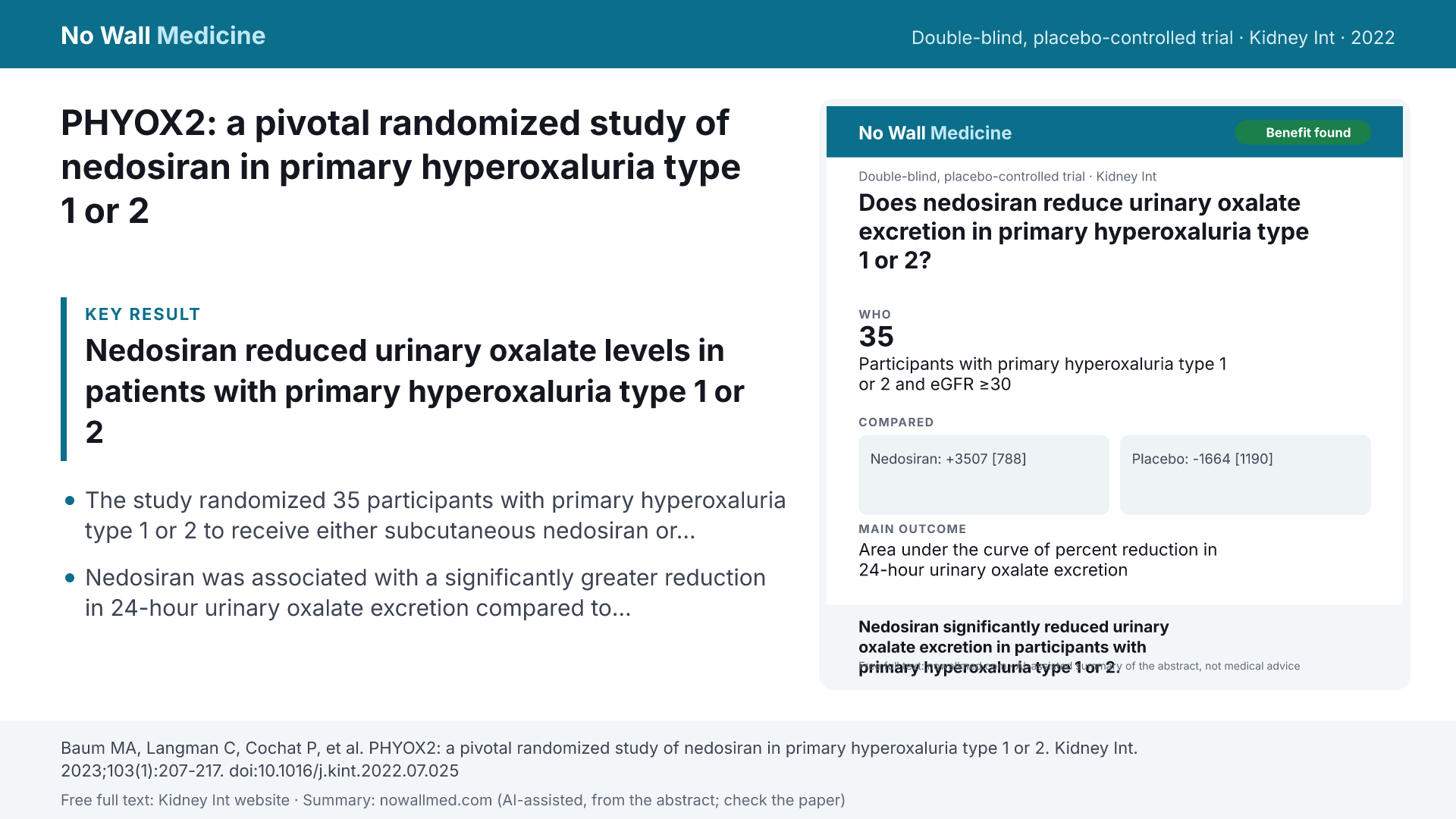
Nedosiran reduced urinary oxalate levels in patients with primary hyperoxaluria type 1 or 2
PHYOX2: a pivotal randomized study of nedosiran in primary hyperoxaluria type 1 or 2
Double-blind, placebo-controlled trialBenefit found
Does nedosiran reduce urinary oxalate excretion in primary hyperoxaluria type 1 or 2?
Who
35
Participants with primary hyperoxaluria type 1 or 2 and eGFR ≥30
Compared
Nedosiran: +3507 [788]
Placebo: -1664 [1190]
Main outcome
Area under the curve of percent reduction in 24-hour urinary oxalate excretion
Result: difference, 5172; 95% CI 2929-7414
Bottom line: Nedosiran significantly reduced urinary oxalate excretion in participants with primary hyperoxaluria type 1 or 2.
Kidney Int · 2022-08-22Download image
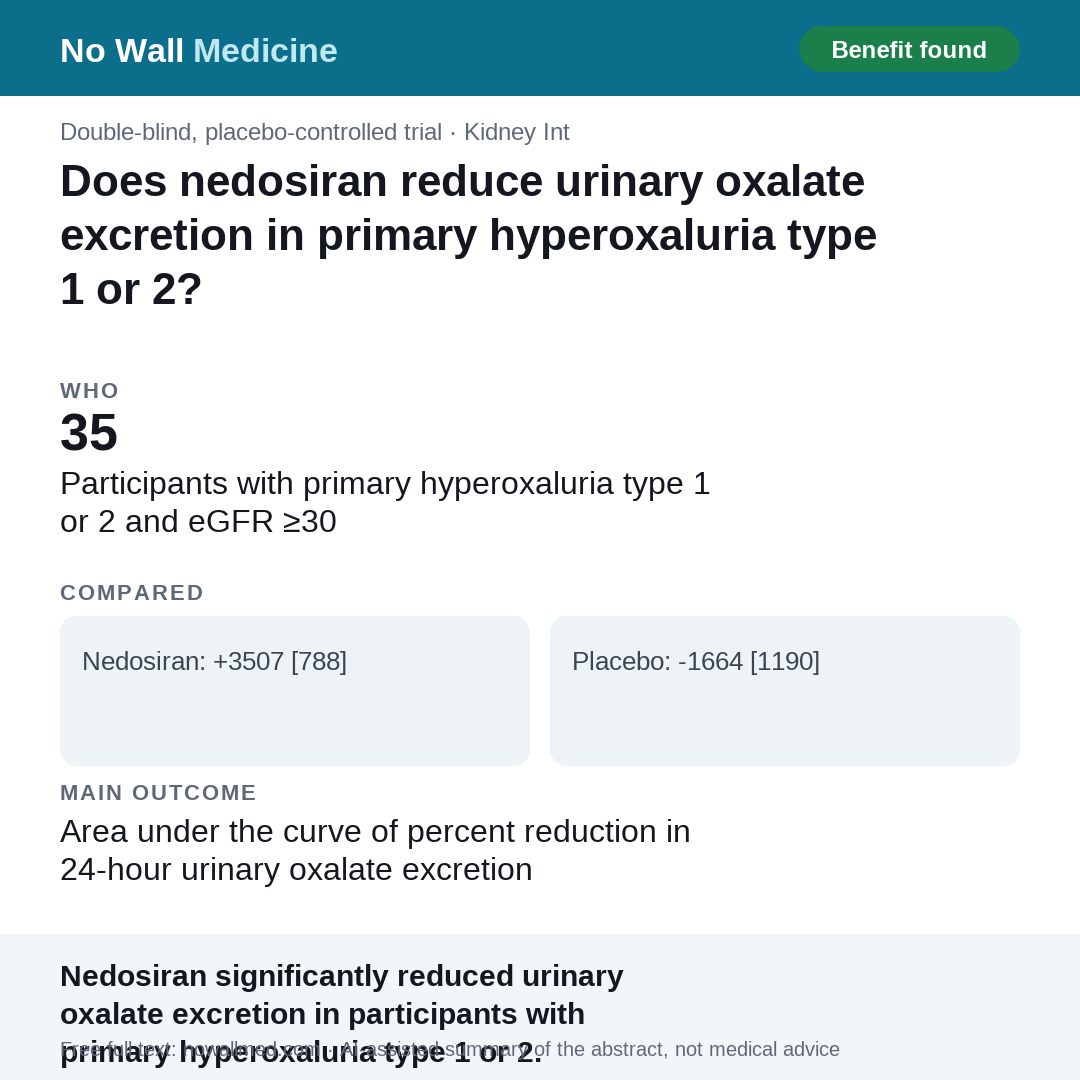
Clinical question: Does nedosiran reduce urinary oxalate excretion in primary hyperoxaluria type 1 or 2?
Why it matters: The treatment options for managing oxalate overproduction in genetic subtypes of primary hyperoxaluria are currently limited.
Key points
- The study randomized 35 participants with primary hyperoxaluria type 1 or 2 to receive either subcutaneous nedosiran or a placebo once monthly for 6 months.
- Nedosiran was associated with a significantly greater reduction in 24-hour urinary oxalate excretion compared to placebo between day 90 and 180.
- Among all participants, 50% of those receiving nedosiran achieved normal or near-normal urinary oxalate excretion on at least 2 consecutive visits compared to 0% in the placebo group.
Headline and key points written with AI from the paper’s abstract, with every number checked against it. Read the paper before relying on them.
Was this summary helpful?
Subject terms
Cite this article
Baum MA, Langman C, Cochat P, et al. PHYOX2: a pivotal randomized study of nedosiran in primary hyperoxaluria type 1 or 2. Kidney Int. 2022. doi:10.1016/j.kint.2022.07.025
Spotted a mistake? Suggest a correction