High-intensity noninvasive positive pressure ventilation lowers carbon dioxide levels more than low-intensity ventilation
Physiological effects of high-intensity versus low-intensity noninvasive positive pressure ventilation in patients with acute exacerbation of chronic obstructive pulmonary disease: a randomised controlled trial
Randomised controlled trialBenefit found
Is high-intensity noninvasive positive pressure ventilation more effective than low-intensity for AECOPD patients?
Who
24
Patients with acute exacerbation of chronic obstructive pulmonary disease
Compared
High-intensity noninvasive positive pressure ventilation: 54.0±11.6 mmHg
Low-intensity noninvasive positive pressure ventilation: 67.4±10.6 mmHg
Main outcome
Arterial carbon dioxide tension 24 hours after randomisation
Bottom line: High-intensity noninvasive positive pressure ventilation more effectively decreases carbon dioxide tension, reduces inspiratory effort, and alleviates dyspnoea.
Ann Intensive Care · 2022-05-19Download image
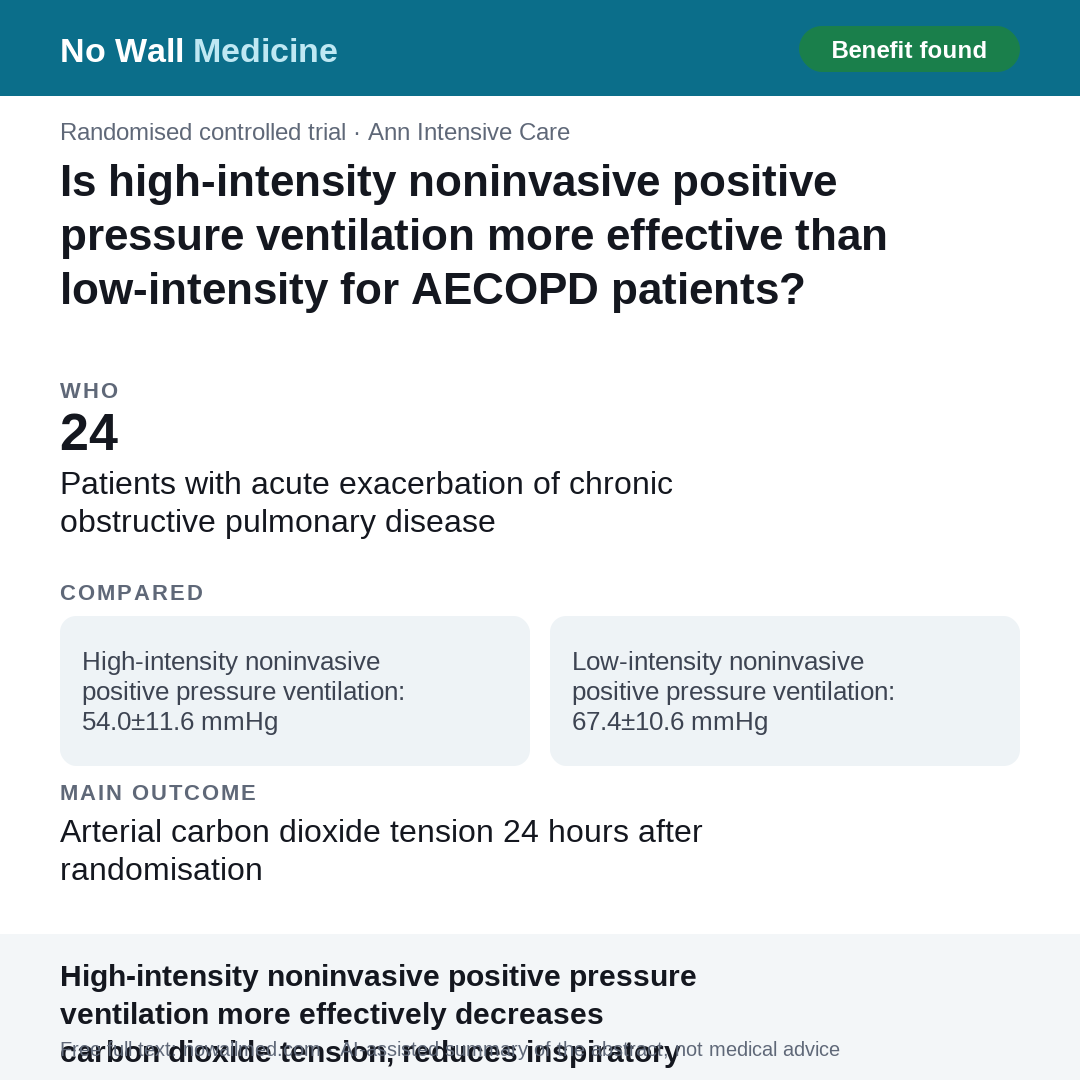
Clinical question: Is high-intensity noninvasive positive pressure ventilation more effective than low-intensity for AECOPD patients?
Key points
- Researchers randomized 24 patients with acute exacerbation of chronic obstructive pulmonary disease to receive either high-intensity or low-intensity noninvasive positive pressure ventilation.
- The high-intensity group had lower carbon dioxide levels of 54.0±11.6 mmHg compared to 67.4±10.6 mmHg in the low-intensity group after 24 hours.
- High-intensity ventilation was associated with lower breathing effort, lower use of accessory muscles, and lower shortness of breath scores than low-intensity ventilation.
Headline and key points written with AI from the paper’s abstract, with every number checked against it. Read the paper before relying on them.
Was this summary helpful?
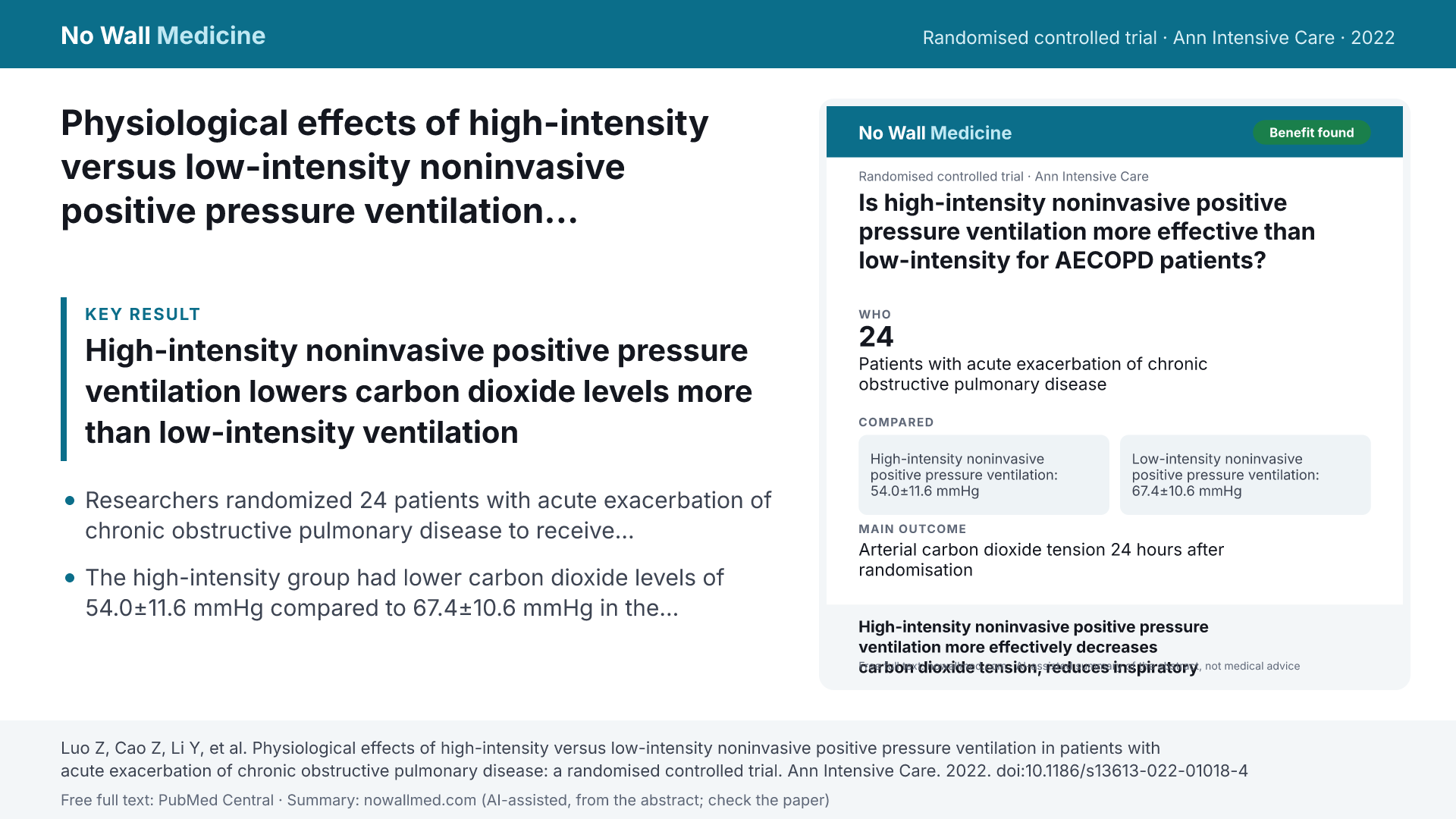
Headline, design, result, key points, caveat and citation as plain text.
Cite this article
Luo Z, Cao Z, Li Y, et al. Physiological effects of high-intensity versus low-intensity noninvasive positive pressure ventilation in patients with acute exacerbation of chronic obstructive pulmonary disease: a randomised controlled trial. Ann Intensive Care. 2022. doi:10.1186/s13613-022-01018-4
Spotted a mistake? Suggest a correction