Physiological effects of high-intensity versus low-intensity noninvasive positive pressure ventilation in patients with acute exacerbation of chronic obstructive pulmonary disease: a randomised controlled trial
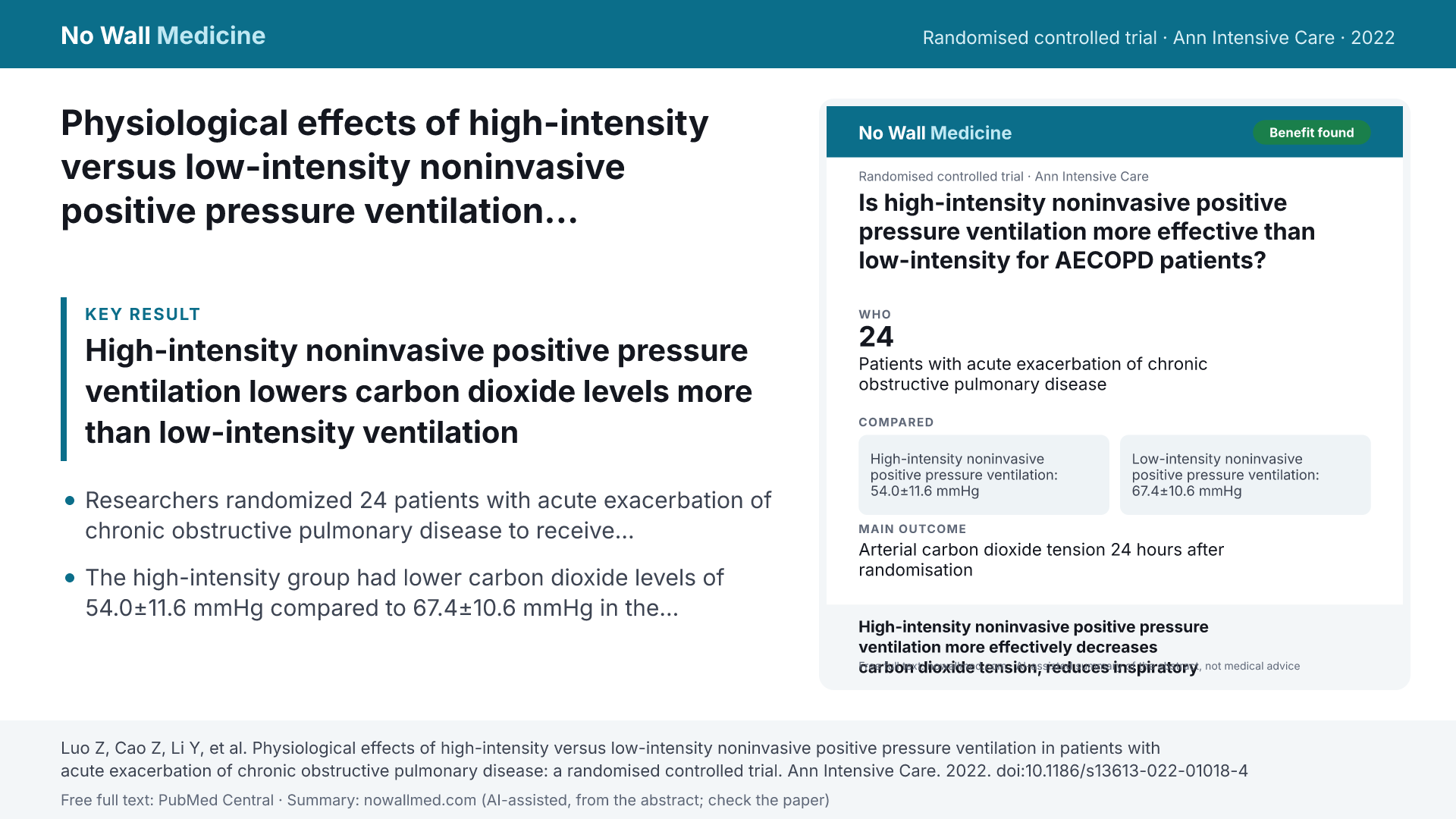
Key result: High-intensity noninvasive positive pressure ventilation lowers carbon dioxide levels more than low-intensity ventilation
Randomised controlled trialBenefit found
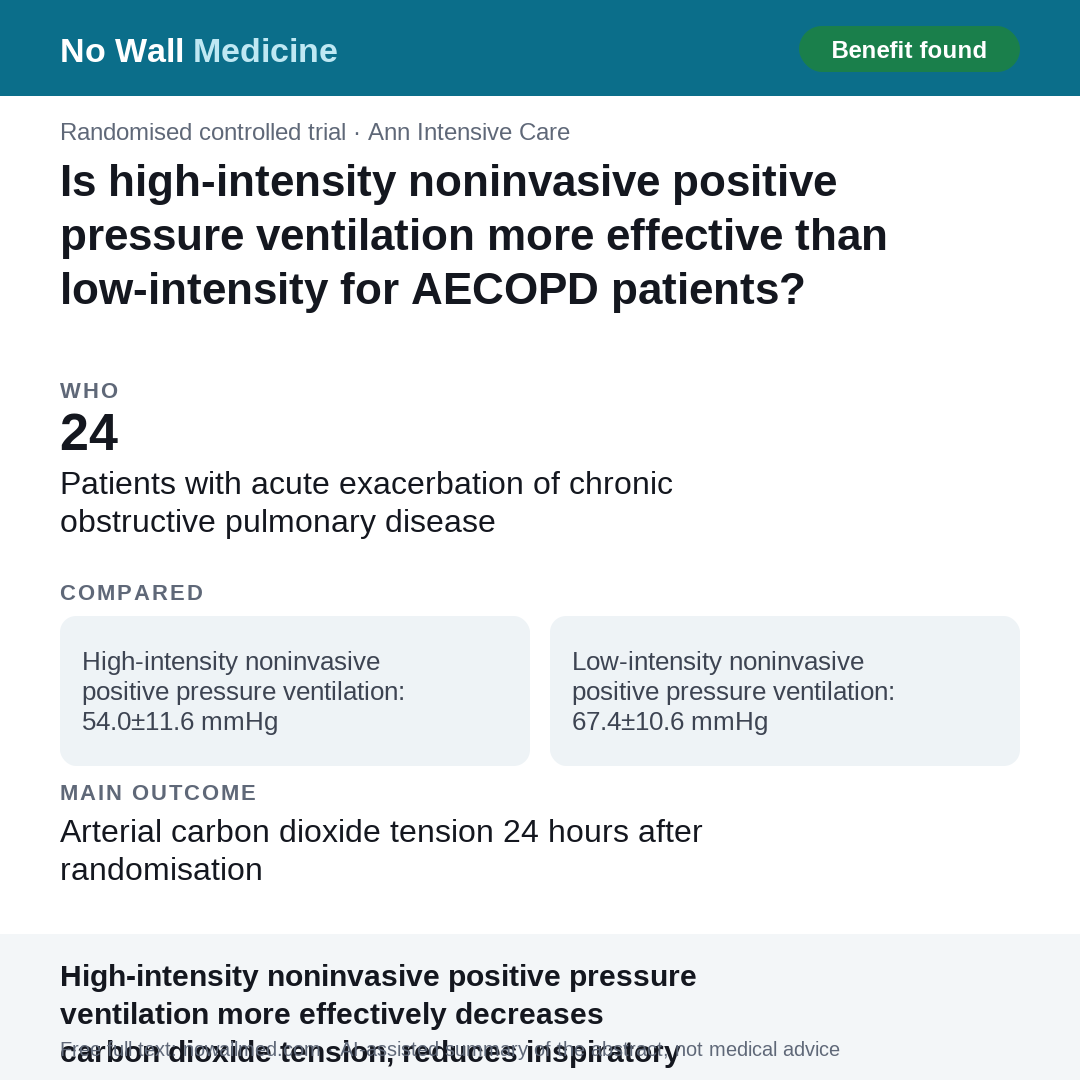
Is high-intensity noninvasive positive pressure ventilation more effective than low-intensity for AECOPD patients?
Who
24
Patients with acute exacerbation of chronic obstructive pulmonary disease
Compared
High-intensity noninvasive positive pressure ventilation: 54.0±11.6 mmHg
Low-intensity noninvasive positive pressure ventilation: 67.4±10.6 mmHg
Main outcome
Arterial carbon dioxide tension 24 hours after randomisation
Bottom line: High-intensity noninvasive positive pressure ventilation more effectively decreases carbon dioxide tension, reduces inspiratory effort, and alleviates dyspnoea.
Ann Intensive Care · 2022-05-19Download image
Key points
- Researchers randomized 24 patients with acute exacerbation of chronic obstructive pulmonary disease to receive either high-intensity or low-intensity noninvasive positive pressure ventilation.
- The high-intensity group had lower carbon dioxide levels of 54.0±11.6 mmHg compared to 67.4±10.6 mmHg in the low-intensity group after 24 hours.
- High-intensity ventilation was associated with lower breathing effort, lower use of accessory muscles, and lower shortness of breath scores than low-intensity ventilation.
Discussion prompts
- Would these patients look like yours? Who was left out?
- Is the main outcome one that matters to patients?
- Is the difference large enough to change what you do?
Cite: Luo Z, Cao Z, Li Y, et al. Physiological effects of high-intensity versus low-intensity noninvasive positive pressure ventilation in patients with acute exacerbation of chronic obstructive pulmonary disease: a randomised controlled trial. Ann Intensive Care. 2022. doi:10.1186/s13613-022-01018-4
Free full text: PubMed Central · Summary and visual abstract: nowallmed.com/a/physiological-effects-of-high-intensity-versus-low-intensity-1ilkuc7/ (AI-assisted from the abstract; check the paper before relying on it).