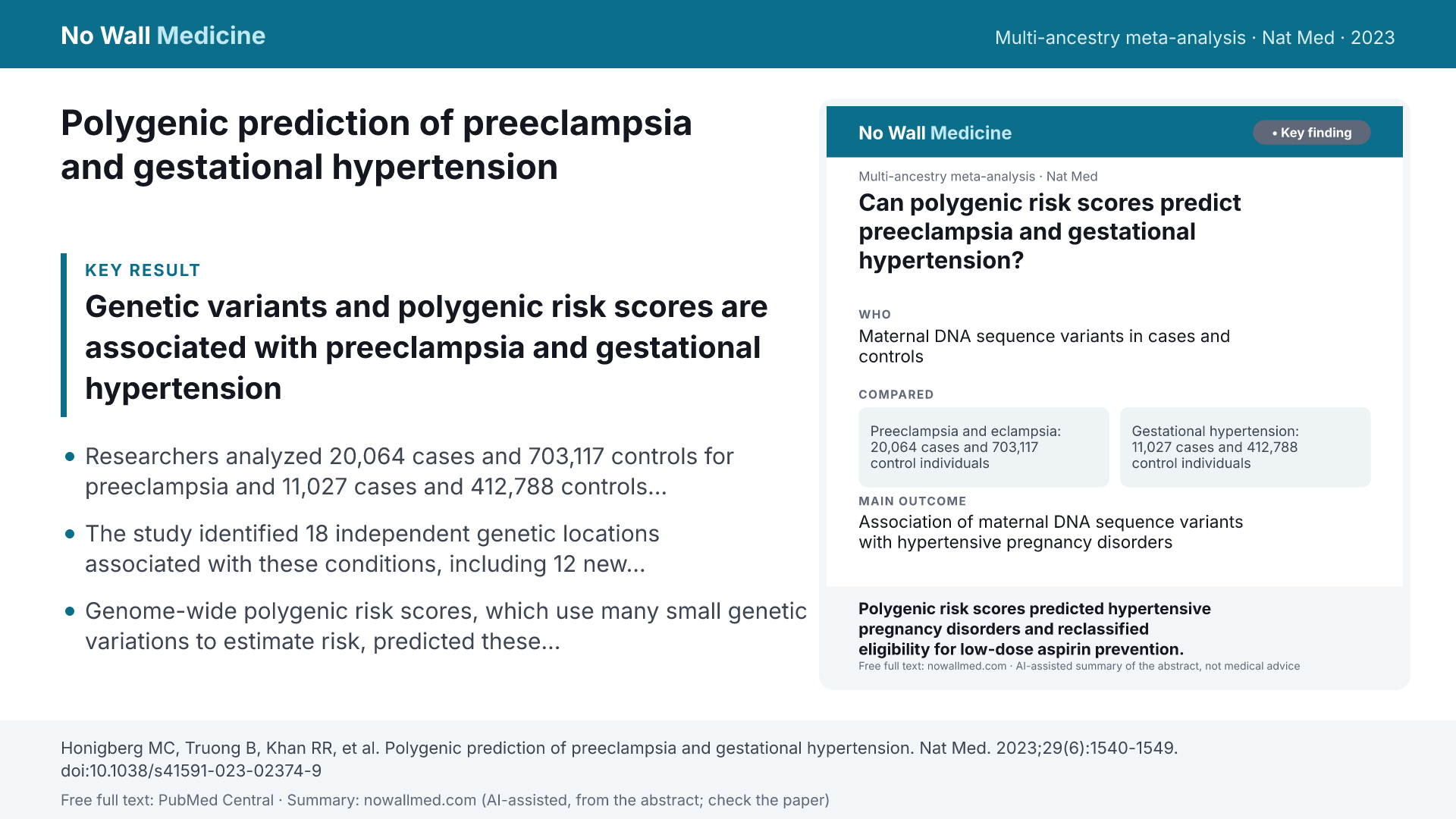
Genetic variants and polygenic risk scores are associated with preeclampsia and gestational hypertension
Polygenic prediction of preeclampsia and gestational hypertension
Multi-ancestry meta-analysisBenefit found
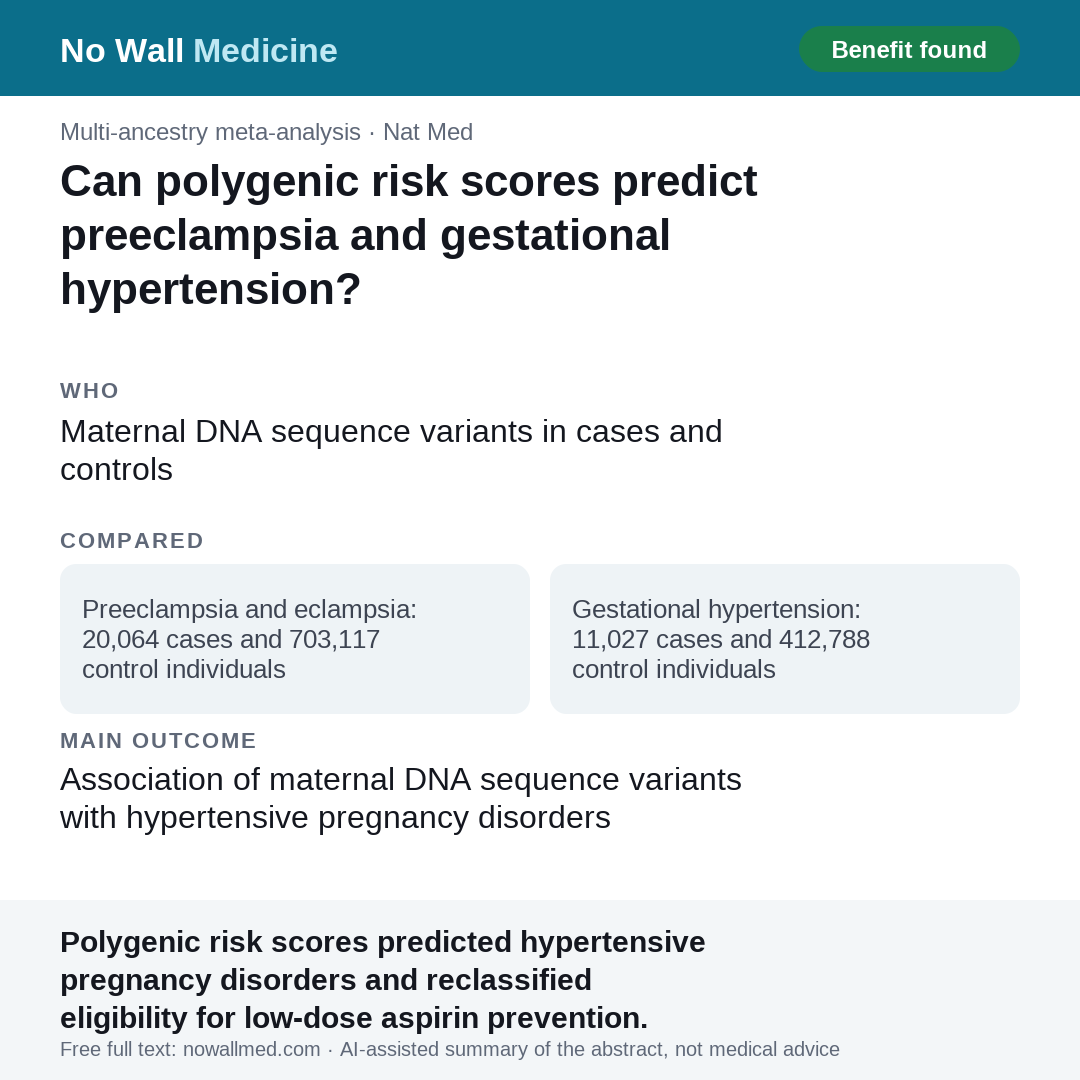
Can polygenic risk scores predict preeclampsia and gestational hypertension?
Who
Maternal DNA sequence variants in cases and controls
Compared
Preeclampsia and eclampsia: 20,064 cases and 703,117 control individuals
Gestational hypertension: 11,027 cases and 412,788 control individuals
Main outcome
Association of maternal DNA sequence variants with hypertensive pregnancy disorders
Bottom line: Polygenic risk scores predicted hypertensive pregnancy disorders and reclassified eligibility for low-dose aspirin prevention.
Nat Med · 2023-05-29Download image
Clinical question: Can polygenic risk scores predict preeclampsia and gestational hypertension?
Why it matters: Current tools for predicting, preventing, and treating preeclampsia and gestational hypertension are limited.
Key points
- Researchers analyzed 20,064 cases and 703,117 controls for preeclampsia and 11,027 cases and 412,788 controls for gestational hypertension using multi-ancestry meta-analysis.
- The study identified 18 independent genetic locations associated with these conditions, including 12 new locations such as MTHFR-CLCN6, WNT3A, NPR3, PGR, and RGL3.
- Genome-wide polygenic risk scores, which use many small genetic variations to estimate risk, predicted these pregnancy complications independently of clinical risk factors.
Headline and key points written with AI from the paper’s abstract, with every number checked against it. Read the paper before relying on them.
Was this summary helpful?
Subject terms
Cite this article
Honigberg MC, Truong B, Khan RR, Xiao B, Bhatta L, Vy HMT. Polygenic prediction of preeclampsia and gestational hypertension. Nat Med. 2023. doi:10.1038/s41591-023-02374-9
Spotted a mistake? Suggest a correction