Polygenic prediction of preeclampsia and gestational hypertension
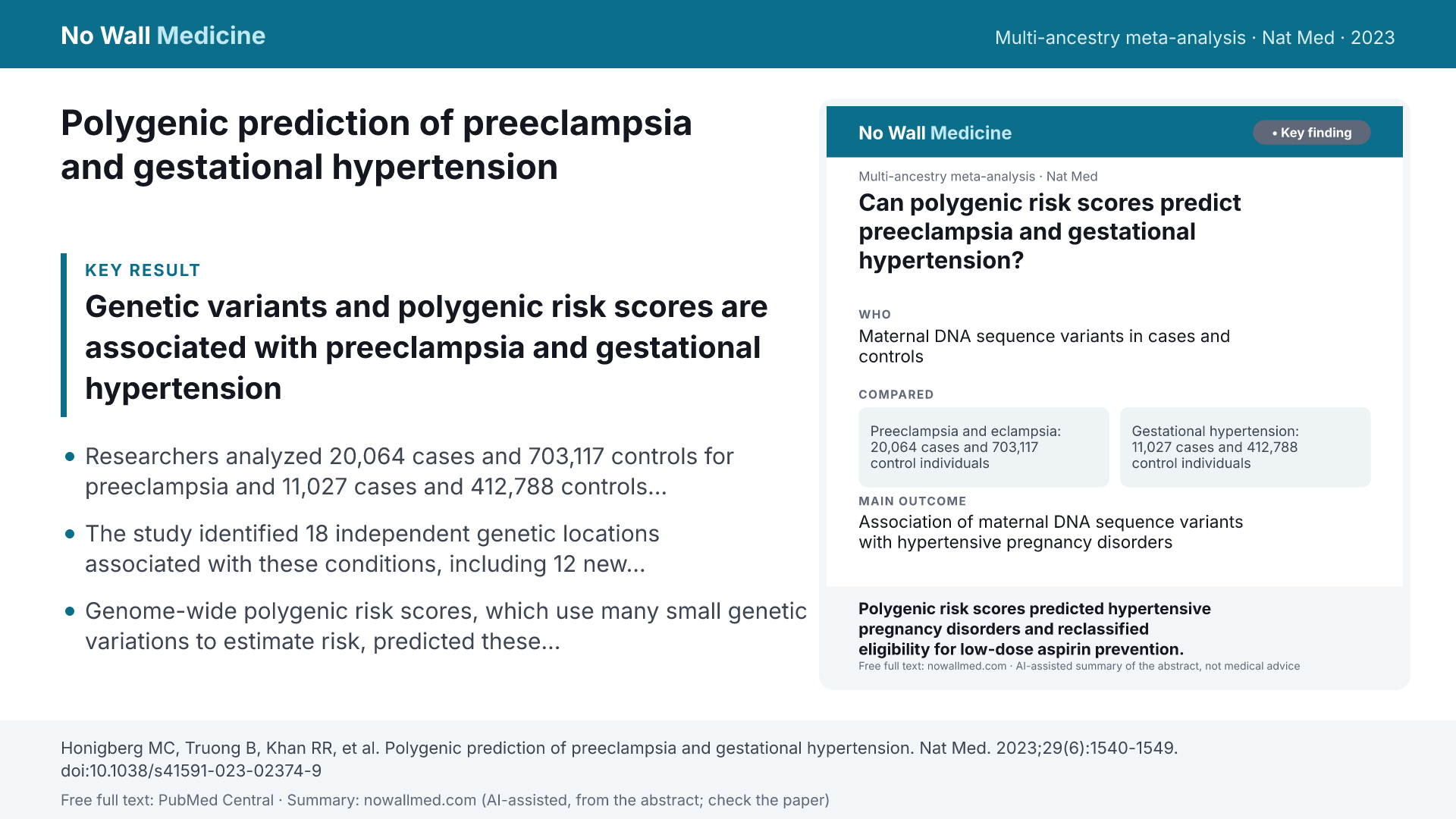
Key result: Genetic variants and polygenic risk scores are associated with preeclampsia and gestational hypertension
Multi-ancestry meta-analysisKey finding
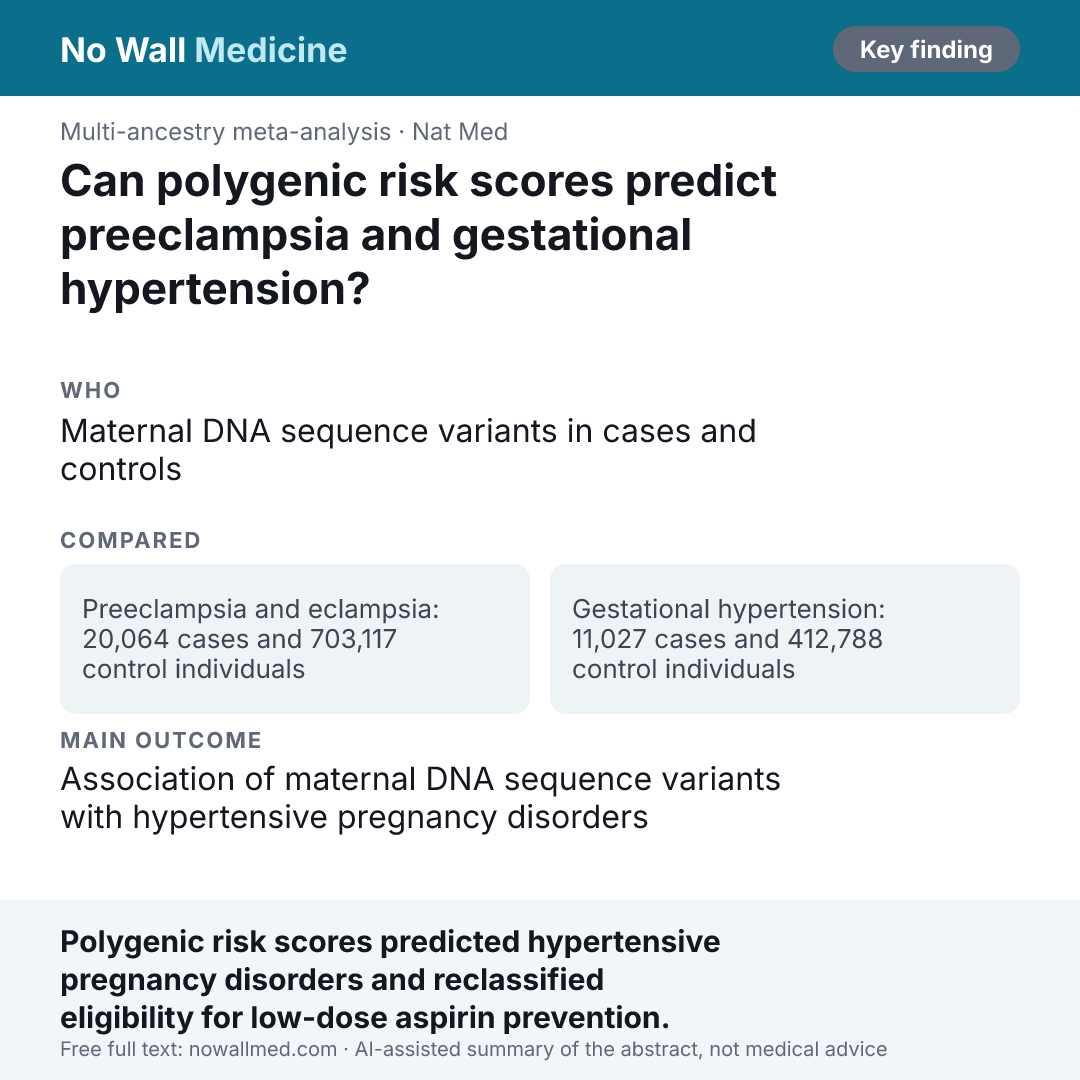
Can polygenic risk scores predict preeclampsia and gestational hypertension?
Who
Maternal DNA sequence variants in cases and controls
Compared
Preeclampsia and eclampsia: 20,064 cases and 703,117 control individuals
Gestational hypertension: 11,027 cases and 412,788 control individuals
Main outcome
Association of maternal DNA sequence variants with hypertensive pregnancy disorders
Bottom line: Polygenic risk scores predicted hypertensive pregnancy disorders and reclassified eligibility for low-dose aspirin prevention.
Nat Med · 2023-05-29 · Save PNG
Key points
- Researchers analyzed 20,064 cases and 703,117 controls for preeclampsia and 11,027 cases and 412,788 controls for gestational hypertension using multi-ancestry meta-analysis.
- The study identified 18 independent genetic locations associated with these conditions, including 12 new locations such as MTHFR-CLCN6, WNT3A, NPR3, PGR, and RGL3.
- Genome-wide polygenic risk scores, which use many small genetic variations to estimate risk, predicted these pregnancy complications independently of clinical risk factors.
Why it matters: Current tools for predicting, preventing, and treating preeclampsia and gestational hypertension are limited.
Discussion prompts
- Would these patients look like yours? Who was left out?
- Is the main outcome one that matters to patients?
- Is the difference large enough to change what you do?
Cite: Honigberg MC, Truong B, Khan RR, et al. Polygenic prediction of preeclampsia and gestational hypertension. Nat Med. 2023;29(6):1540-1549. doi:10.1038/s41591-023-02374-9
Free full text: PubMed Central · Summary and visual abstract: nowallmed.com/a/polygenic-prediction-of-preeclampsia-and-gestational-1efiiiv/ (AI-assisted from the abstract; check the paper before relying on it).