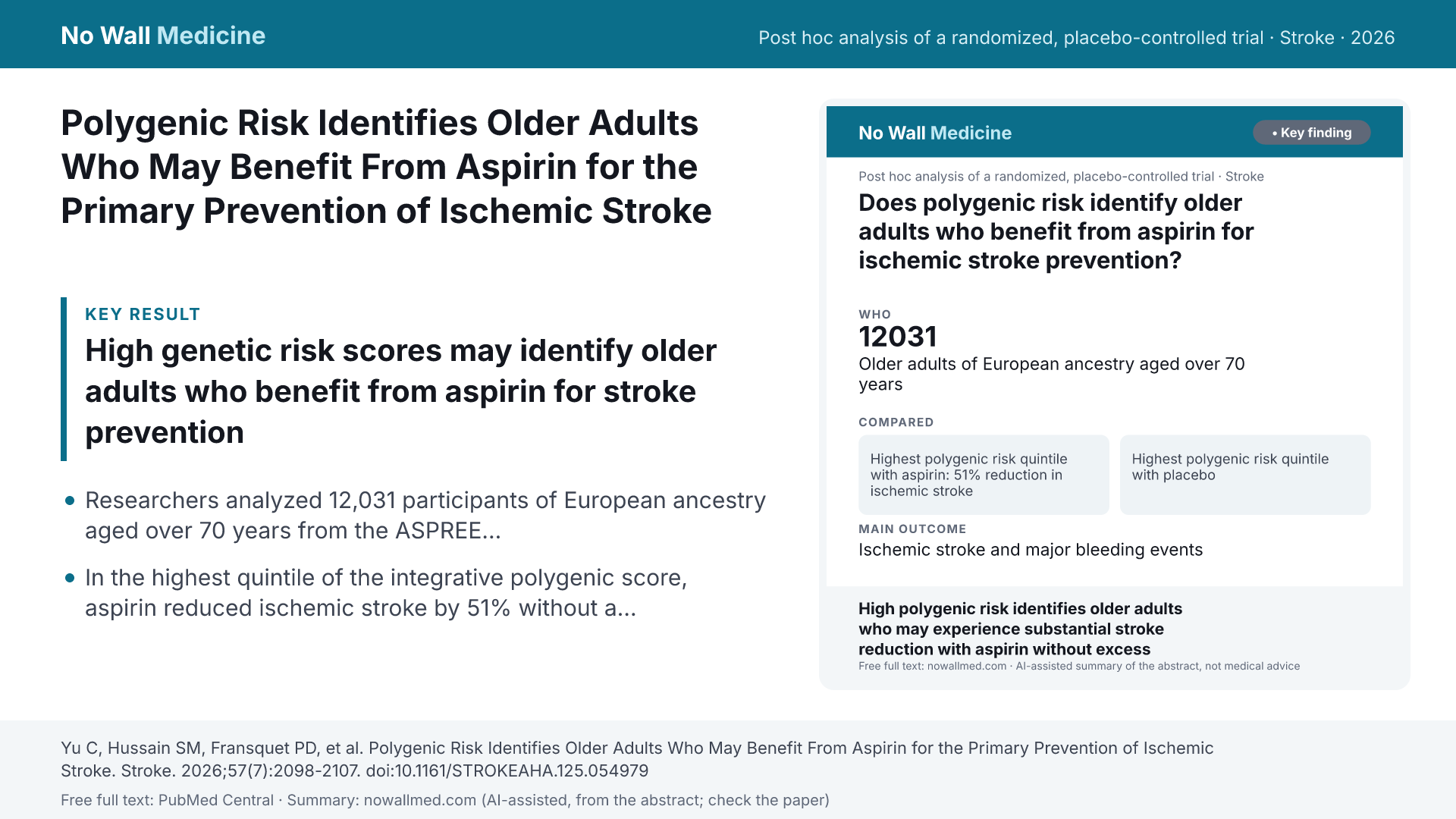
High genetic risk scores may identify older adults who benefit from aspirin for stroke prevention
Polygenic Risk Identifies Older Adults Who May Benefit From Aspirin for the Primary Prevention of Ischemic Stroke
Post hoc analysis of a randomized, placebo-controlled trialBenefit found
Does polygenic risk identify older adults who benefit from aspirin for ischemic stroke prevention?
Who
12031
Older adults of European ancestry aged over 70 years
Compared
Highest polygenic risk quintile with aspirin: 51% reduction in ischemic stroke
Highest polygenic risk quintile with placebo
Main outcome
Ischemic stroke and major bleeding events
Result: hazard ratio 0.49 (95% CI 0.28-0.85)
Bottom line: High polygenic risk identifies older adults who may experience substantial stroke reduction with aspirin without excess bleeding.
Stroke · 2026-05-08Download image
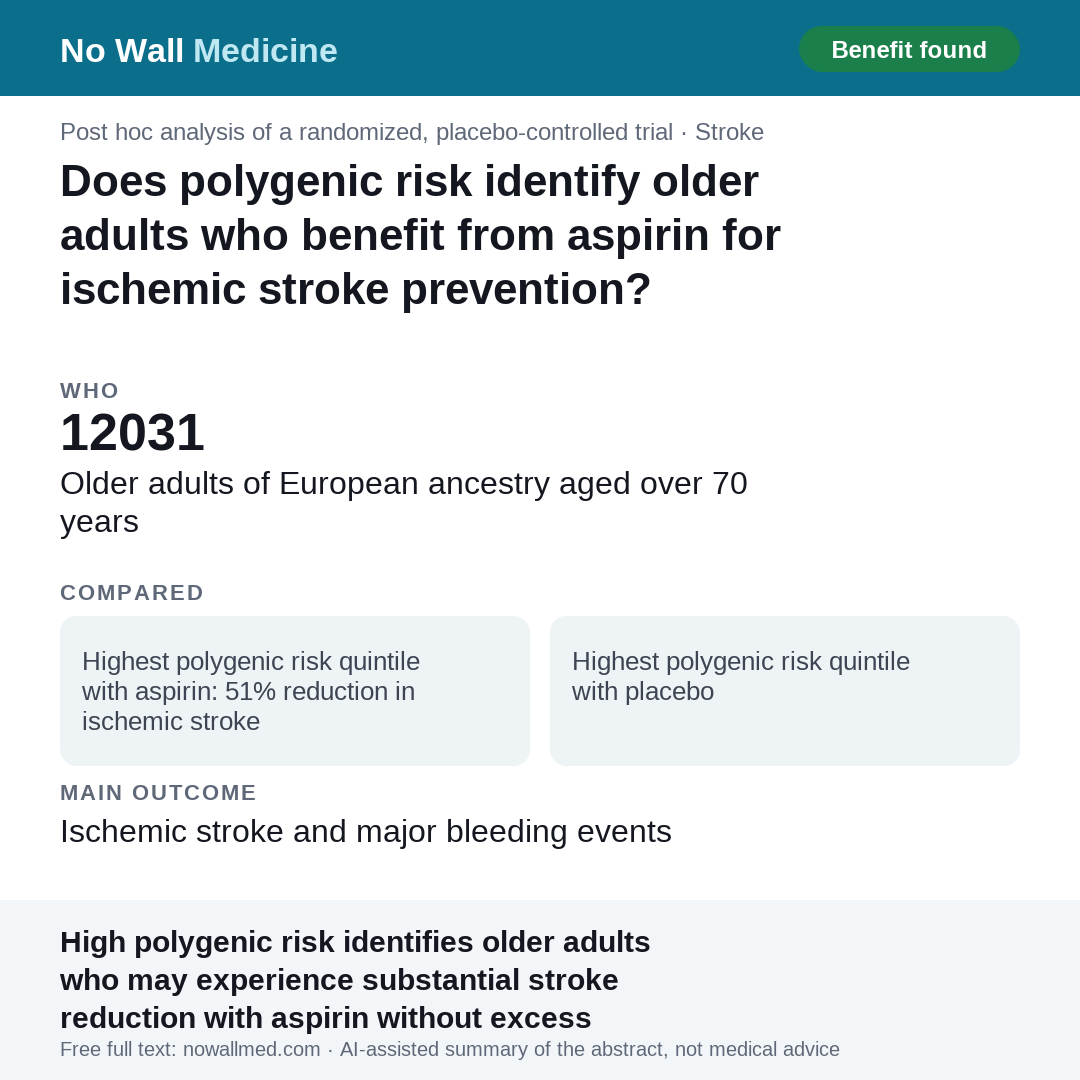
Clinical question: Does polygenic risk identify older adults who benefit from aspirin for ischemic stroke prevention?
Why it matters: Low-dose aspirin is no longer recommended for routine primary prevention in older adults because bleeding risks often outweigh vascular benefits.
Key points
- Researchers analyzed 12,031 participants of European ancestry aged over 70 years from the ASPREE randomized, placebo-controlled trial.
- In the highest quintile of the integrative polygenic score, aspirin reduced ischemic stroke by 51% without a significant increase in major bleeding.
- No benefit from aspirin was observed in the overall group or in those with lower genetic risk scores.
Headline and key points written with AI from the paper’s abstract, with every number checked against it. Read the paper before relying on them.
Was this summary helpful?
Subject terms
Cite this article
Yu C, Hussain SM, Fransquet PD, et al. Polygenic Risk Identifies Older Adults Who May Benefit From Aspirin for the Primary Prevention of Ischemic Stroke. Stroke. 2026. doi:10.1161/STROKEAHA.125.054979
Spotted a mistake? Suggest a correction