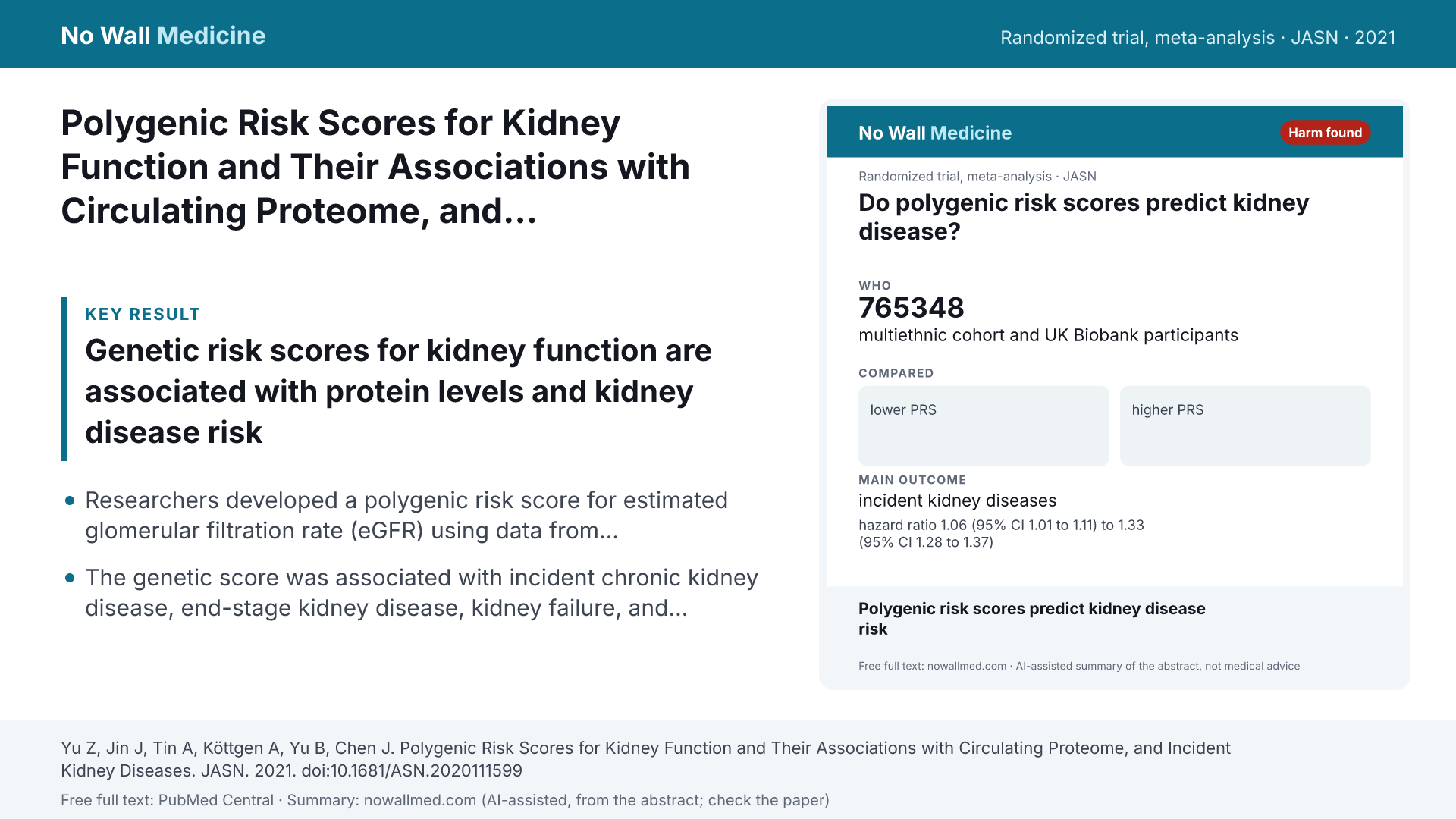
Polygenic Risk Scores for Kidney Function and Their Associations with Circulating Proteome, and Incident Kidney Diseases
Key result: Genetic risk scores for kidney function are associated with protein levels and kidney disease risk
Randomized trial, meta-analysisHarm found
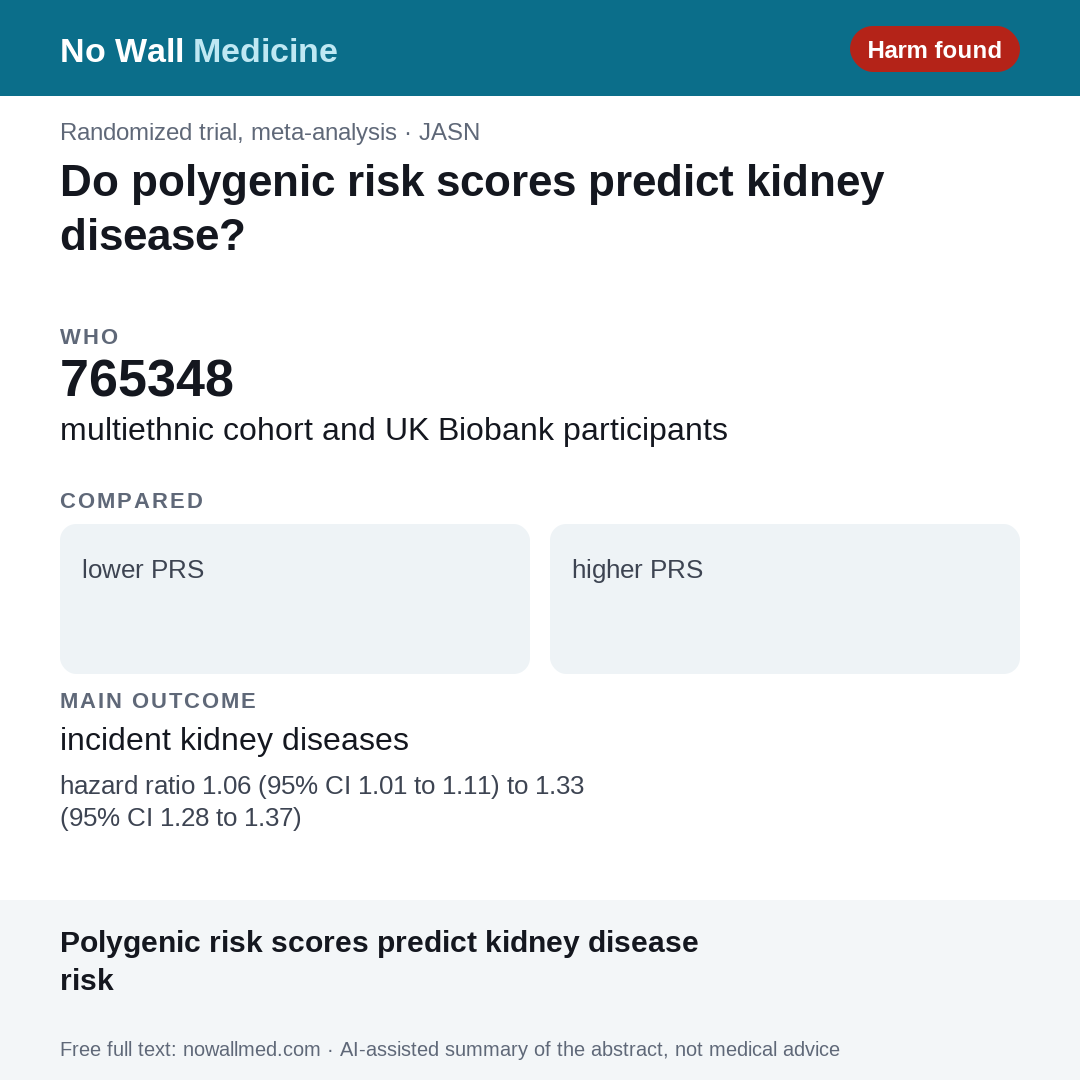
Do polygenic risk scores predict kidney disease?
Who
765348
multiethnic cohort and UK Biobank participants
Compared
lower PRS
higher PRS
Main outcome
incident kidney diseases
Result: hazard ratio 1.06 (95% CI 1.01 to 1.11) to 1.33 (95% CI 1.28 to 1.37)
Bottom line: Polygenic risk scores predict kidney disease risk
JASN · 2021-12-01Download image
Key points
- Researchers developed a polygenic risk score for estimated glomerular filtration rate (eGFR) using data from 765,348 individuals and tested it in 8,866 participants.
- The genetic score was associated with incident chronic kidney disease, end-stage kidney disease, kidney failure, and acute kidney injury, with hazard ratios ranging from 1.06 to 1.33.
- The score was associated with 132 proteins, with the strongest links found in cystatin C, collagen α-1(XV) chain, and desmocollin-2.
Why it matters: The relationship between genetic predictors of kidney function, the risk of future kidney diseases, and the plasma proteome is not known.
Discussion prompts
- Would these patients look like yours? Who was left out?
- Is the main outcome one that matters to patients?
- Is the difference large enough to change what you do?
Cite: Yu Z, Jin J, Tin A, Köttgen A, Yu B, Chen J. Polygenic Risk Scores for Kidney Function and Their Associations with Circulating Proteome, and Incident Kidney Diseases. JASN. 2021. doi:10.1681/ASN.2020111599
Free full text: PubMed Central · Summary and visual abstract: nowallmed.com/a/polygenic-risk-scores-for-kidney-function-and-their-associations-with-30jfft/ (AI-assisted from the abstract; check the paper before relying on it).