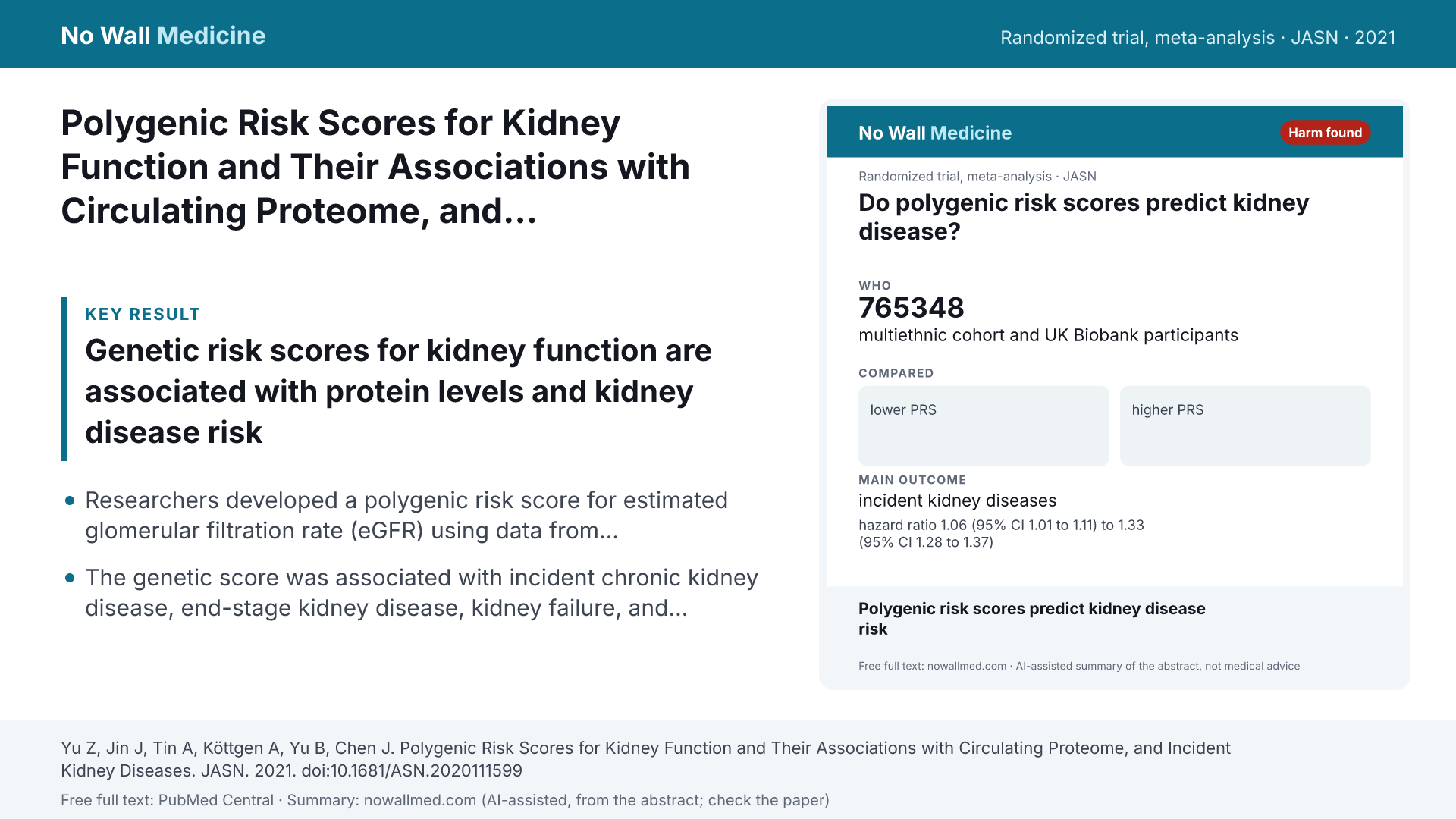
Genetic risk scores for kidney function are associated with protein levels and kidney disease risk
Polygenic Risk Scores for Kidney Function and Their Associations with Circulating Proteome, and Incident Kidney Diseases
Randomized trial, meta-analysisHarm found
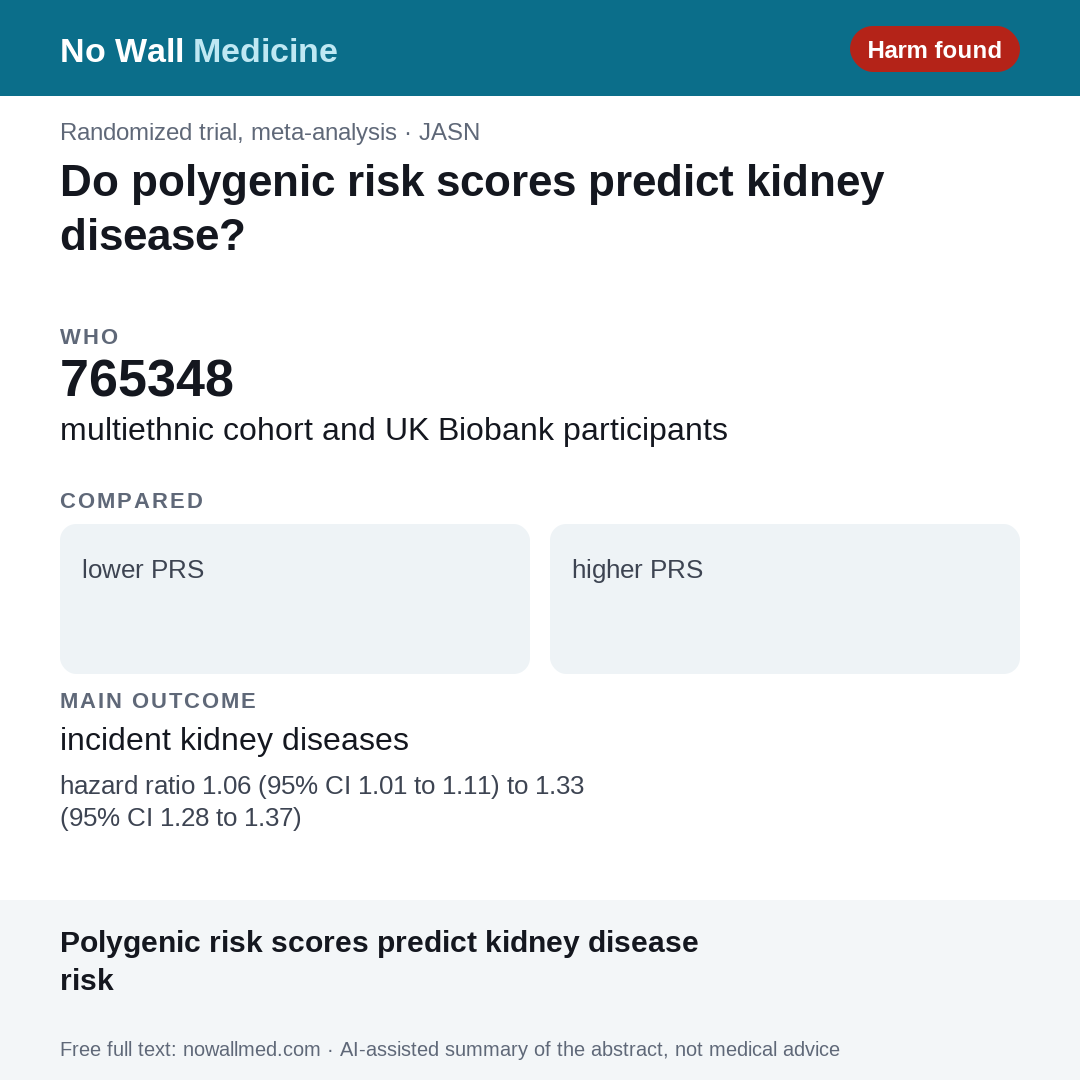
Do polygenic risk scores predict kidney disease?
Who
765348
multiethnic cohort and UK Biobank participants
Compared
lower PRS
higher PRS
Main outcome
incident kidney diseases
Result: hazard ratio 1.06 (95% CI 1.01 to 1.11) to 1.33 (95% CI 1.28 to 1.37)
Bottom line: Polygenic risk scores predict kidney disease risk
JASN · 2021-12-01Download image
Clinical question: Do polygenic risk scores predict kidney disease?
Why it matters: The relationship between genetic predictors of kidney function, the risk of future kidney diseases, and the plasma proteome is not known.
Key points
- Researchers developed a polygenic risk score for estimated glomerular filtration rate (eGFR) using data from 765,348 individuals and tested it in 8,866 participants.
- The genetic score was associated with incident chronic kidney disease, end-stage kidney disease, kidney failure, and acute kidney injury, with hazard ratios ranging from 1.06 to 1.33.
- The score was associated with 132 proteins, with the strongest links found in cystatin C, collagen α-1(XV) chain, and desmocollin-2.
Headline and key points written with AI from the paper’s abstract, with every number checked against it. Read the paper before relying on them.
Was this summary helpful?
Subject terms
Cite this article
Yu Z, Jin J, Tin A, Köttgen A, Yu B, Chen J. Polygenic Risk Scores for Kidney Function and Their Associations with Circulating Proteome, and Incident Kidney Diseases. JASN. 2021. doi:10.1681/ASN.2020111599
Spotted a mistake? Suggest a correction