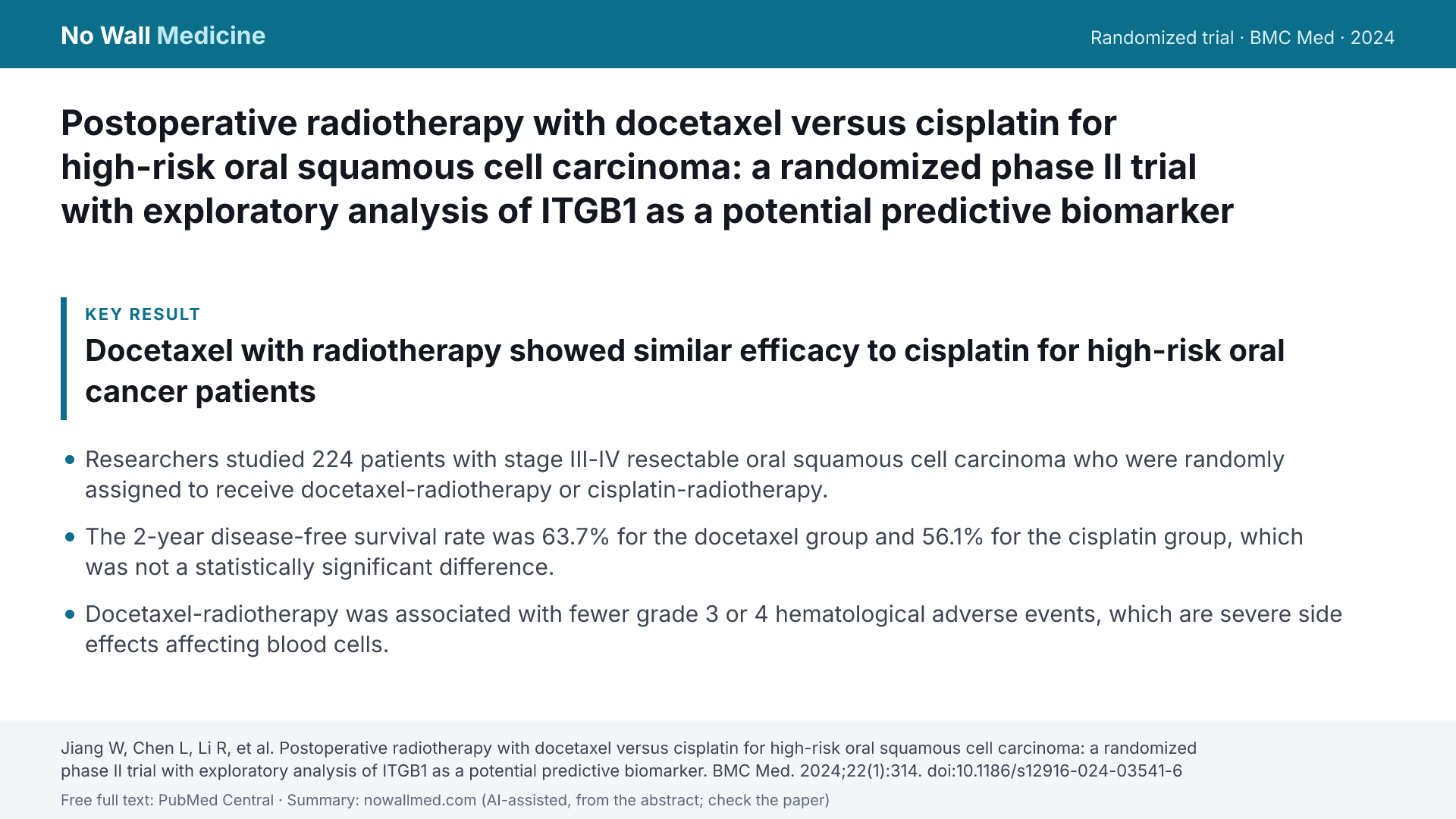
Docetaxel with radiotherapy showed similar efficacy to cisplatin for high-risk oral cancer patients
Postoperative radiotherapy with docetaxel versus cisplatin for high-risk oral squamous cell carcinoma: a randomized phase II trial with exploratory analysis of ITGB1 as a potential predictive biomarker
Why it matters: Cisplatin-related toxicity limits the use of the current standard treatment for patients with high-risk oral squamous cell carcinoma.
Key points
- Researchers studied 224 patients with stage III-IV resectable oral squamous cell carcinoma who were randomly assigned to receive docetaxel-radiotherapy or cisplatin-radiotherapy.
- The 2-year disease-free survival rate was 63.7% for the docetaxel group and 56.1% for the cisplatin group, which was not a statistically significant difference.
- Docetaxel-radiotherapy was associated with fewer grade 3 or 4 hematological adverse events, which are severe side effects affecting blood cells.
Headline and key points written with AI from the paper’s abstract, with every number checked against it. Read the paper before relying on them.
Was this summary helpful?
Subject terms
Cite this article
Jiang W, Chen L, Li R, Li J, Dou S, Ye L. Postoperative radiotherapy with docetaxel versus cisplatin for high-risk oral squamous cell carcinoma: a randomized phase II trial with exploratory analysis of ITGB1 as a potential predictive biomarker. BMC Med. 2024. doi:10.1186/s12916-024-03541-6
Spotted a mistake? Suggest a correction
Top studies every Monday
The week’s key trials and guidelines in your specialties, plus any topics you follow. By email, free.
Get the weekly digest