Postoperative radiotherapy with docetaxel versus cisplatin for high-risk oral squamous cell carcinoma: a randomized phase II trial with exploratory analysis of ITGB1 as a potential predictive biomarker
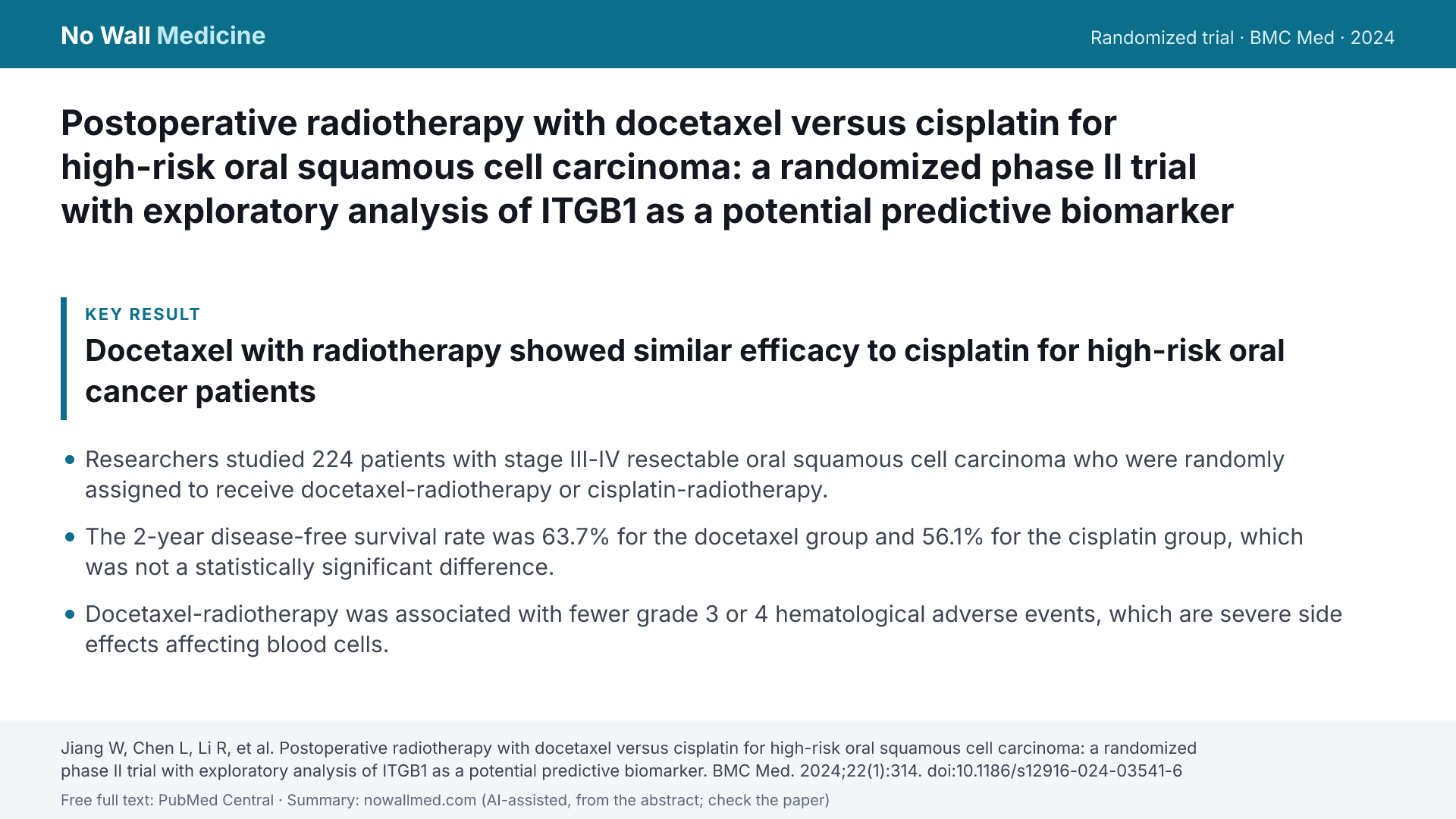
Key result: Docetaxel with radiotherapy showed similar efficacy to cisplatin for high-risk oral cancer patients
Key points
- Researchers studied 224 patients with stage III-IV resectable oral squamous cell carcinoma who were randomly assigned to receive docetaxel-radiotherapy or cisplatin-radiotherapy.
- The 2-year disease-free survival rate was 63.7% for the docetaxel group and 56.1% for the cisplatin group, which was not a statistically significant difference.
- Docetaxel-radiotherapy was associated with fewer grade 3 or 4 hematological adverse events, which are severe side effects affecting blood cells.
Why it matters: Cisplatin-related toxicity limits the use of the current standard treatment for patients with high-risk oral squamous cell carcinoma.
Discussion prompts
- Would these patients look like yours? Who was left out?
- Is the main outcome one that matters to patients?
- Is the difference large enough to change what you do?
Cite: Jiang W, Chen L, Li R, et al. Postoperative radiotherapy with docetaxel versus cisplatin for high-risk oral squamous cell carcinoma: a randomized phase II trial with exploratory analysis of ITGB1 as a potential predictive biomarker. BMC Med. 2024;22(1):314. doi:10.1186/s12916-024-03541-6
Free full text: PubMed Central · Summary and visual abstract: nowallmed.com/a/postoperative-radiotherapy-with-docetaxel-versus-cisplatin-for-high-x9w0gn/ (AI-assisted from the abstract; check the paper before relying on it).