Postpartum maternal and infant haematological effects of second-trimester ferric carboxymaltose versus standard-of-care oral iron in Malawi: longitudinal follow-up of a randomised controlled trial
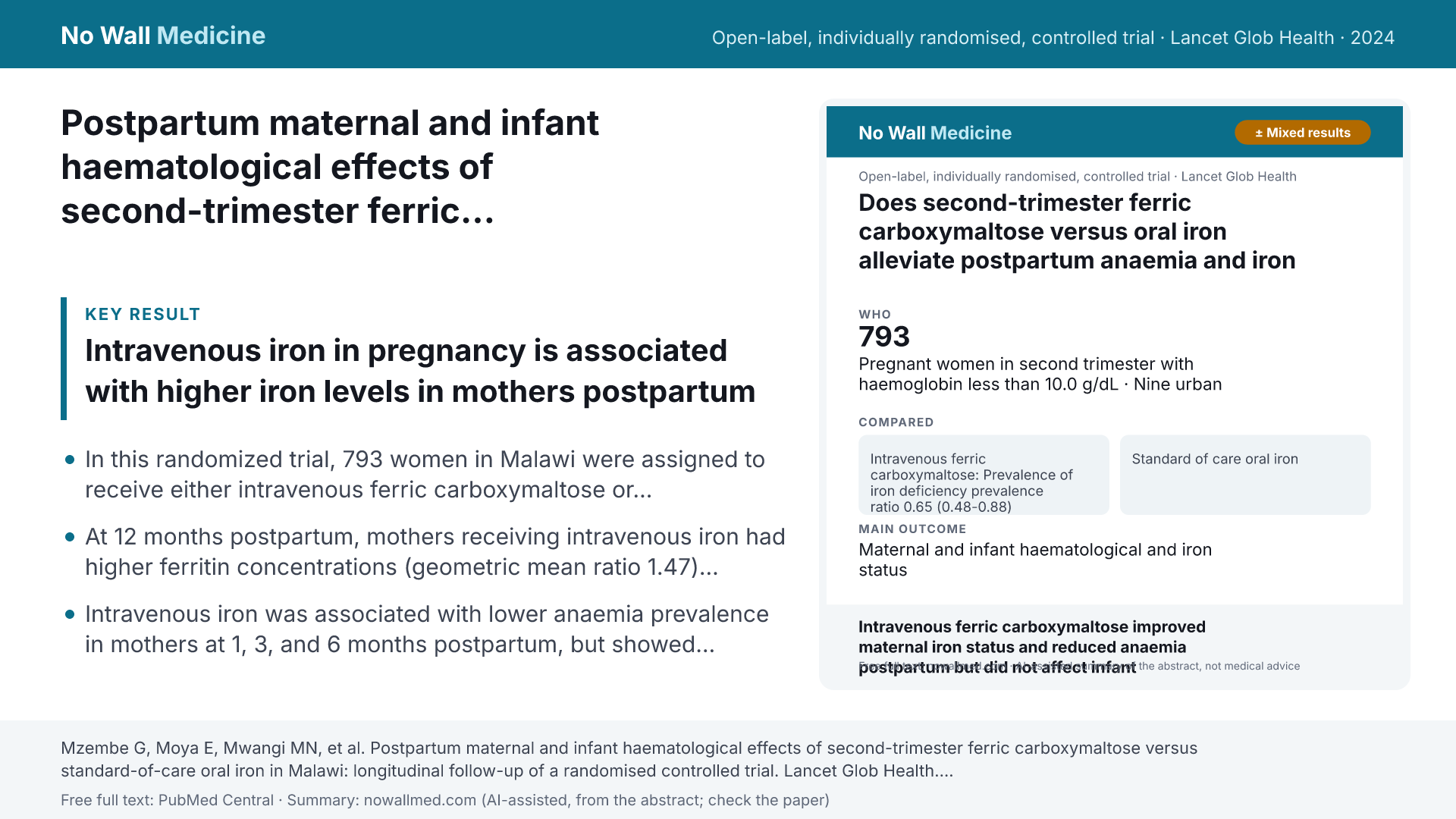
Key result: Intravenous iron in pregnancy is associated with higher iron levels in mothers postpartum
Open-label, individually randomised, controlled trialMixed results
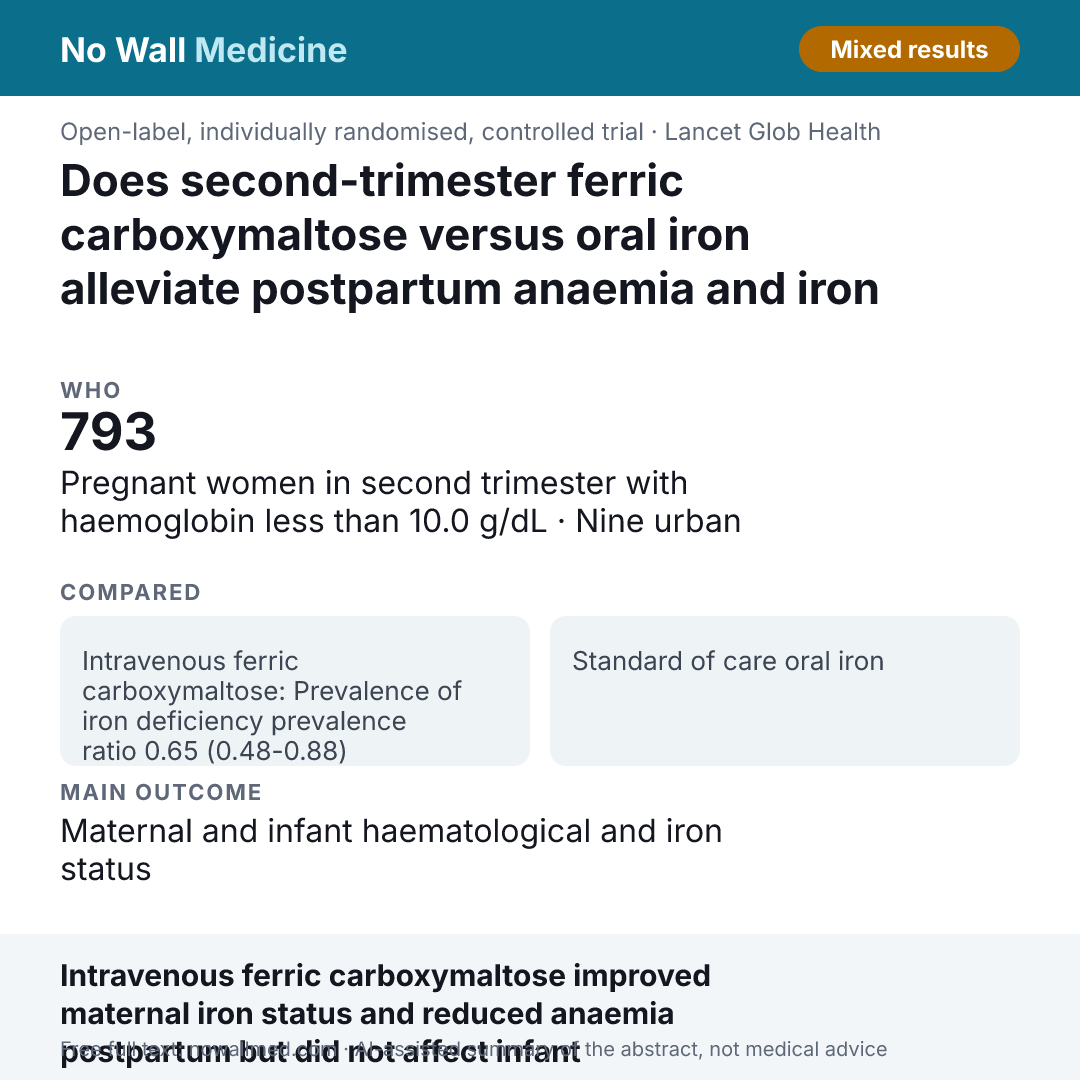
Does second-trimester ferric carboxymaltose versus oral iron alleviate postpartum anaemia and iron deficiency in mothers and infants?
Who
793
Pregnant women in second trimester with haemoglobin less than 10.0 g/dL · Nine urban and five rural health centres in Malawi
Compared
Intravenous ferric carboxymaltose: Prevalence of iron deficiency prevalence ratio 0.65 (0.48-0.88)
Standard of care oral iron
Main outcome
Maternal and infant haematological and iron status
Result: prevalence ratio 0.65 (95% CI 0.48 to 0.88)
Bottom line: Intravenous ferric carboxymaltose improved maternal iron status and reduced anaemia postpartum but did not affect infant haematological outcomes.
Funded by: Bill & Melinda Gates Foundation
Lancet Glob Health · 2024-11-23 · Save PNG
Key points
- In this randomized trial, 793 women in Malawi were assigned to receive either intravenous ferric carboxymaltose or standard oral iron during their second trimester.
- At 12 months postpartum, mothers receiving intravenous iron had higher ferritin concentrations (geometric mean ratio 1.47) and a lower prevalence of iron deficiency (prevalence ratio 0.65).
- Intravenous iron was associated with lower anaemia prevalence in mothers at 1, 3, and 6 months postpartum, but showed no difference in infant iron or haemoglobin levels.
Discussion prompts
- Would these patients look like yours? Who was left out?
- Is the main outcome one that matters to patients?
- Is the difference large enough to change what you do?
Cite: Mzembe G, Moya E, Mwangi MN, et al. Postpartum maternal and infant haematological effects of second-trimester ferric carboxymaltose versus standard-of-care oral iron in Malawi: longitudinal follow-up of a randomised controlled trial. Lancet Glob Health. 2024;12(12):e2049-e2058. doi:10.1016/S2214-109X(24)00380-2
Free full text: PubMed Central · Summary and visual abstract: nowallmed.com/a/postpartum-maternal-and-infant-haematological-effects-of-second-fpibvn/ (AI-assisted from the abstract; check the paper before relying on it).