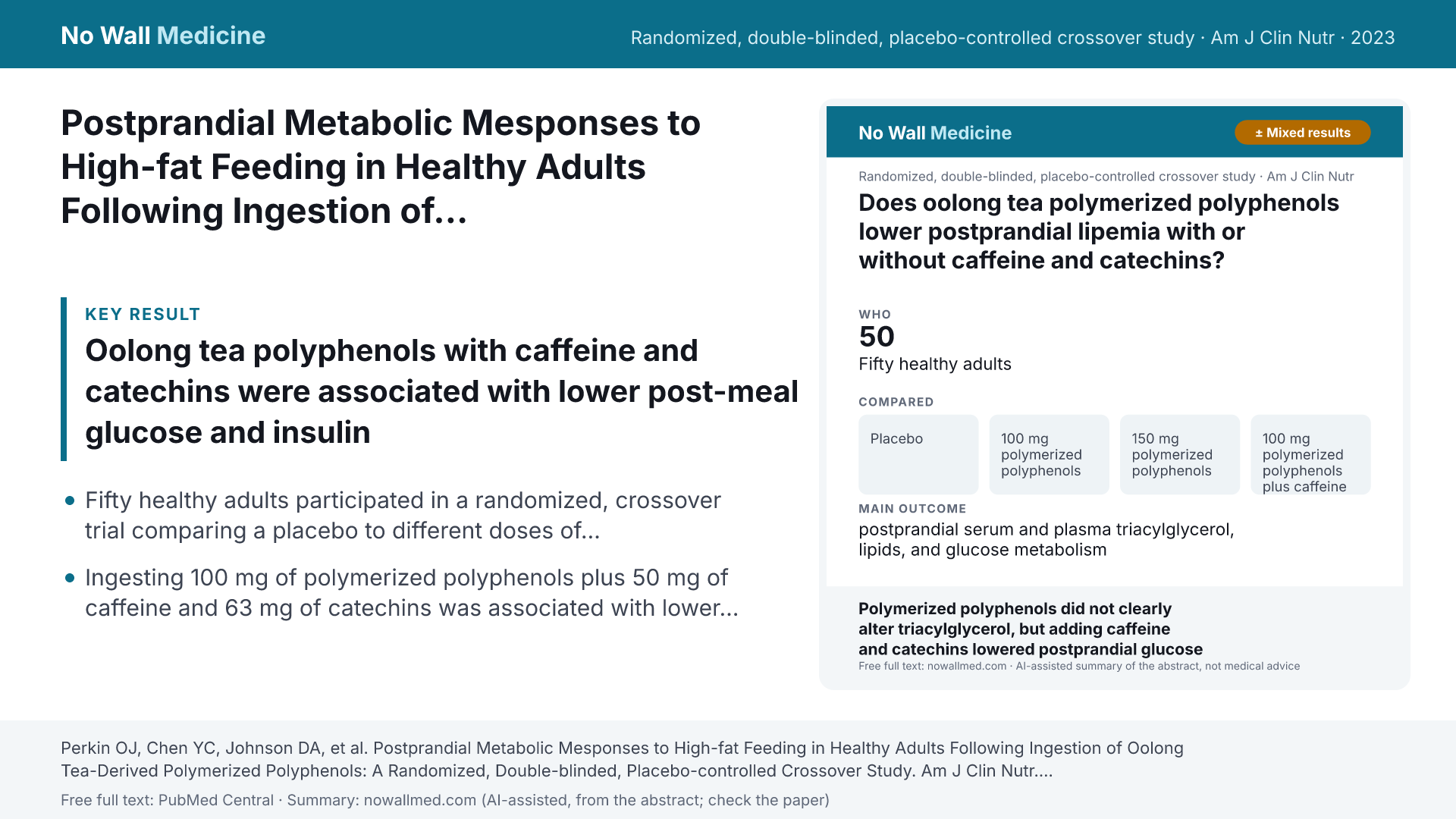
Oolong tea polyphenols with caffeine and catechins were associated with lower post-meal glucose and insulin
Postprandial Metabolic Mesponses to High-fat Feeding in Healthy Adults Following Ingestion of Oolong Tea-Derived Polymerized Polyphenols: A Randomized, Double-blinded, Placebo-controlled Crossover Study
Randomized, double-blinded, placebo-controlled crossover studyMixed results
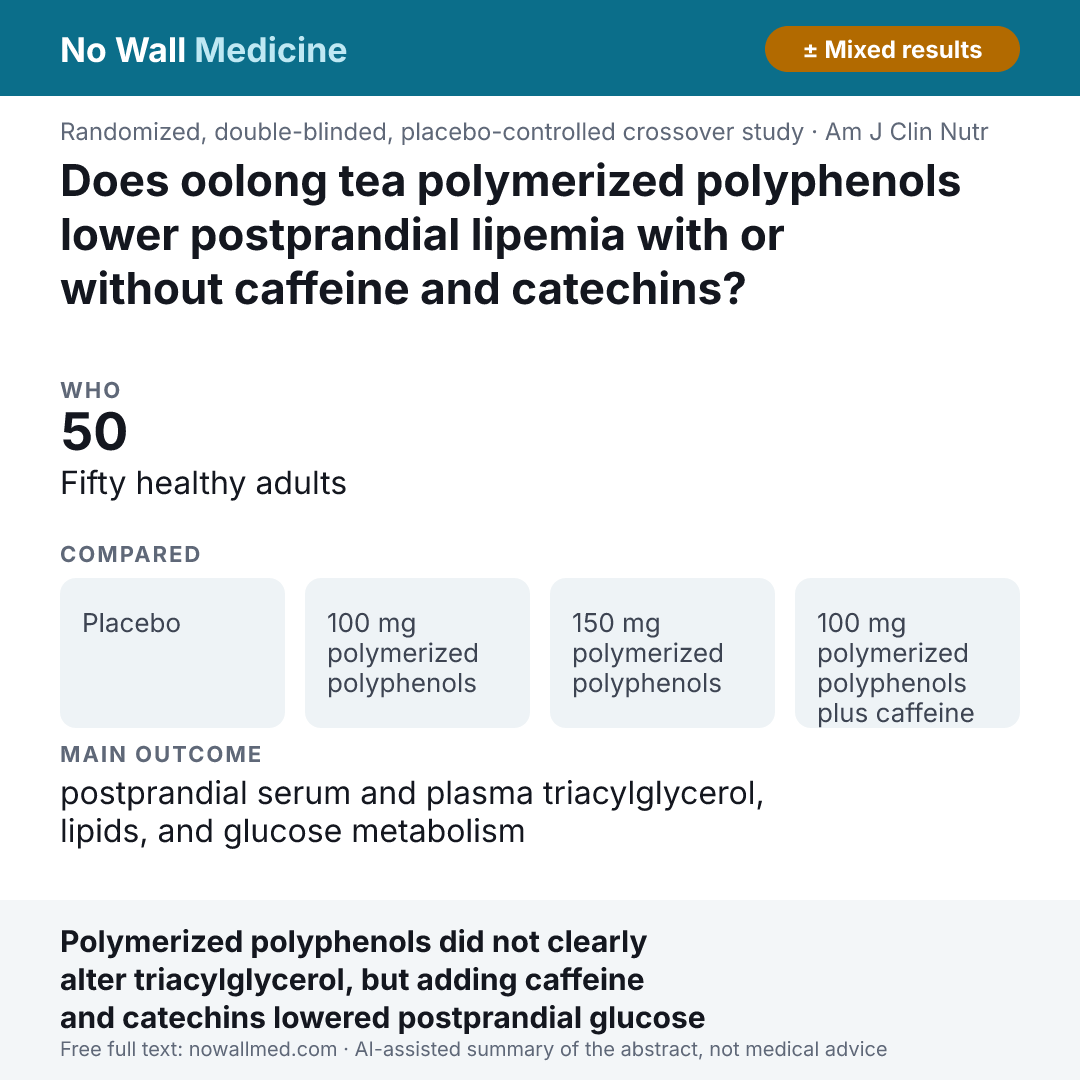
Does oolong tea polymerized polyphenols lower postprandial lipemia with or without caffeine and catechins?
Who
50
Fifty healthy adults
Compared
Placebo
100 mg polymerized polyphenols
150 mg polymerized polyphenols
100 mg polymerized polyphenols plus caffeine and catechins: lowered peak plasma glucose, insulin, and C-peptide concentrations
Main outcome
postprandial serum and plasma triacylglycerol, lipids, and glucose metabolism
Bottom line: Polymerized polyphenols did not clearly alter triacylglycerol, but adding caffeine and catechins lowered postprandial glucose and insulin.
Am J Clin Nutr · 2023-04-18 · Save PNG
Clinical question: Does oolong tea polymerized polyphenols lower postprandial lipemia with or without caffeine and catechins?
Key points
- Fifty healthy adults participated in a randomized, crossover trial comparing a placebo to different doses of polymerized polyphenols, with or without caffeine and catechins, after consuming 40 g of fat.
- Ingesting 100 mg of polymerized polyphenols plus 50 mg of caffeine and 63 mg of catechins was associated with lower peak plasma glucose, insulin, and C-peptide concentrations at 30 min (p < 0.001).
- There were no statistically significant differences in triacylglycerol (fats in the blood) or most other lipid metabolism variables between the different test conditions.
Headline and key points written with AI from the paper’s abstract, with every number checked against it. Read the paper before relying on them.
Was this summary helpful?
Subject terms
Headline, design, result, key points, caveat and citation as plain text.
Cite this article
Perkin OJ, Chen YC, Johnson DA, et al. Postprandial Metabolic Mesponses to High-fat Feeding in Healthy Adults Following Ingestion of Oolong Tea-Derived Polymerized Polyphenols: A Randomized, Double-blinded, Placebo-controlled Crossover Study. Am J Clin Nutr. 2023;118(1):132-140. doi:10.1016/j.ajcnut.2023.04.020
Spotted a mistake? Suggest a correction