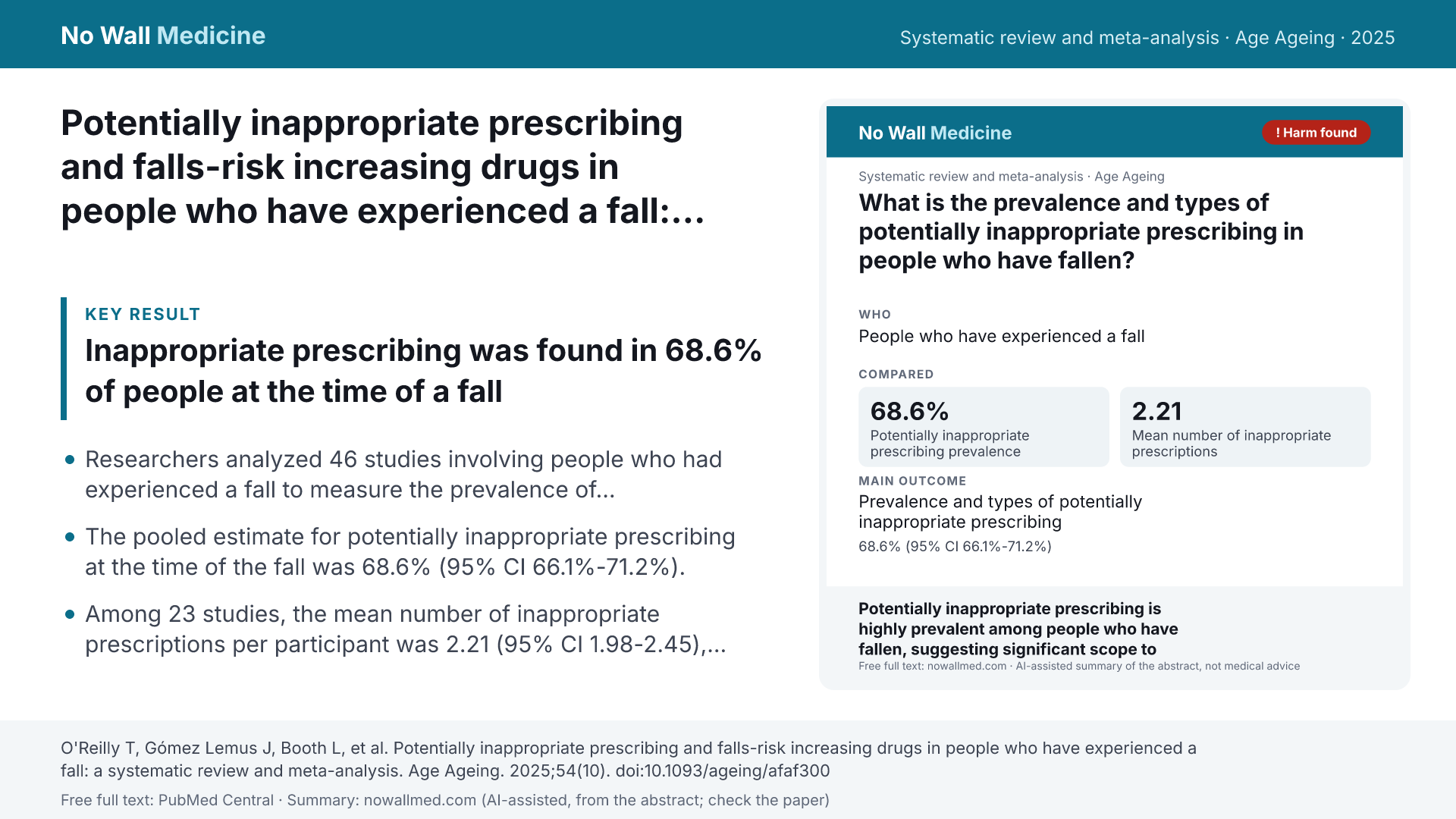
Inappropriate prescribing was found in 68.6% of people at the time of a fall
Potentially inappropriate prescribing and falls-risk increasing drugs in people who have experienced a fall: a systematic review and meta-analysis
Systematic review and meta-analysisHarm found
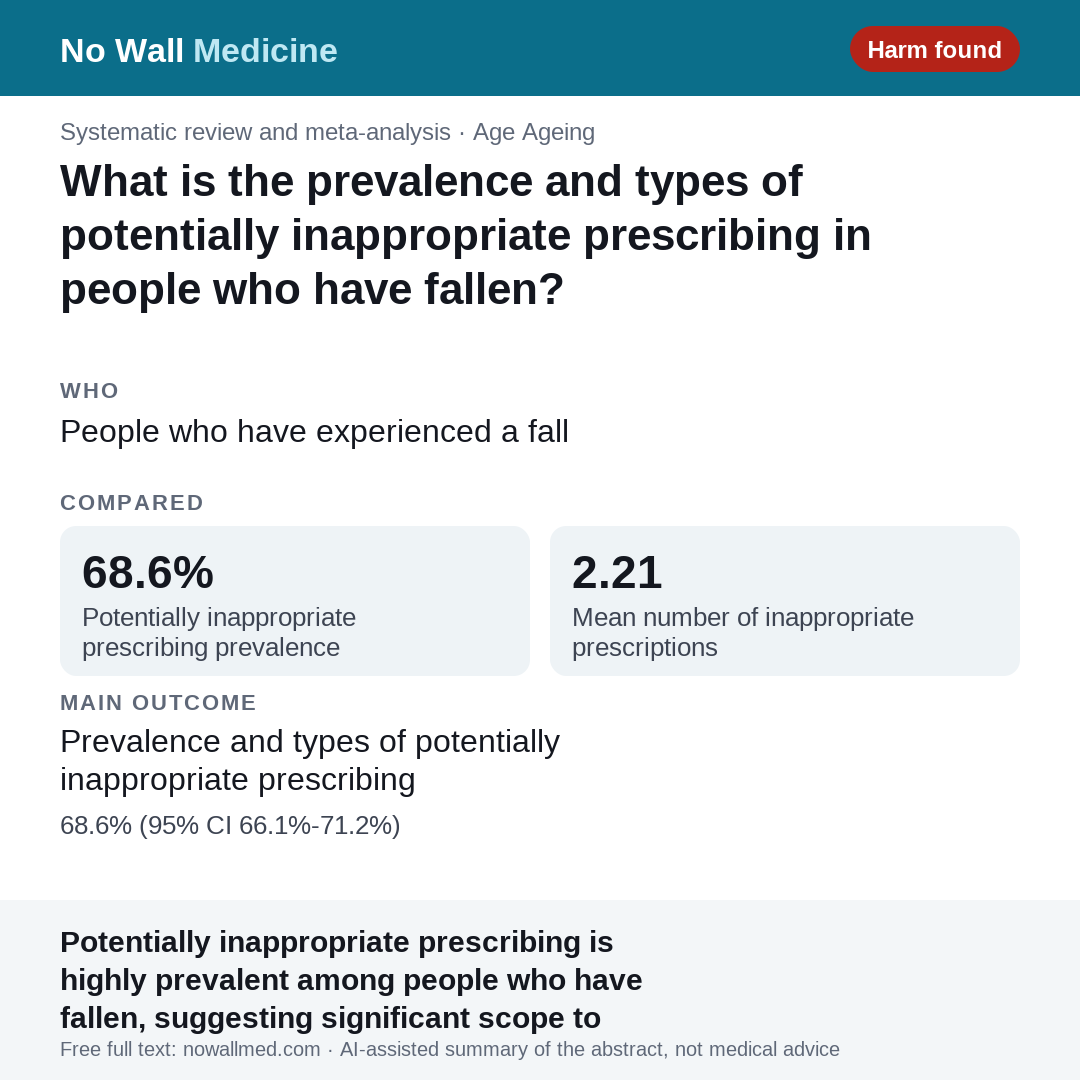
What is the prevalence and types of potentially inappropriate prescribing in people who have fallen?
Who
People who have experienced a fall
Compared
68.6%Potentially inappropriate prescribing prevalence (95% CI 66.1%-71.2%)
2.21Mean number of inappropriate prescriptions (95%CI 1.98-2.45)
Main outcome
Prevalence and types of potentially inappropriate prescribing
Result: 68.6% (95% CI 66.1%-71.2%)
Bottom line: Potentially inappropriate prescribing is highly prevalent among people who have fallen, suggesting significant scope to optimize medicine use.
Age Ageing · 2025-10-21Download image
Clinical question: What is the prevalence and types of potentially inappropriate prescribing in people who have fallen?
Why it matters: It is important to review and optimize medication use in people who have fallen to address the risk of recurrent falls.
Key points
- Researchers analyzed 46 studies involving people who had experienced a fall to measure the prevalence of potentially inappropriate prescribing and falls-risk increasing drugs.
- The pooled estimate for potentially inappropriate prescribing at the time of the fall was 68.6% (95% CI 66.1%-71.2%).
- Among 23 studies, the mean number of inappropriate prescriptions per participant was 2.21 (95% CI 1.98-2.45), with sedatives, opioids, diuretics, and antidepressants being common.
Headline and key points written with AI from the paper’s abstract, with every number checked against it. Read the paper before relying on them.
Was this summary helpful?
Subject terms
Cite this article
O'Reilly T, Gómez Lemus J, Booth L, Clyne B, McCarthy C, Ibrahim K. Potentially inappropriate prescribing and falls-risk increasing drugs in people who have experienced a fall: a systematic review and meta-analysis. Age Ageing. 2025. doi:10.1093/ageing/afaf300
Spotted a mistake? Suggest a correction
Top studies every Monday
The week’s key trials and guidelines in your specialties, plus any topics you follow. By email, free.
Get the weekly digest