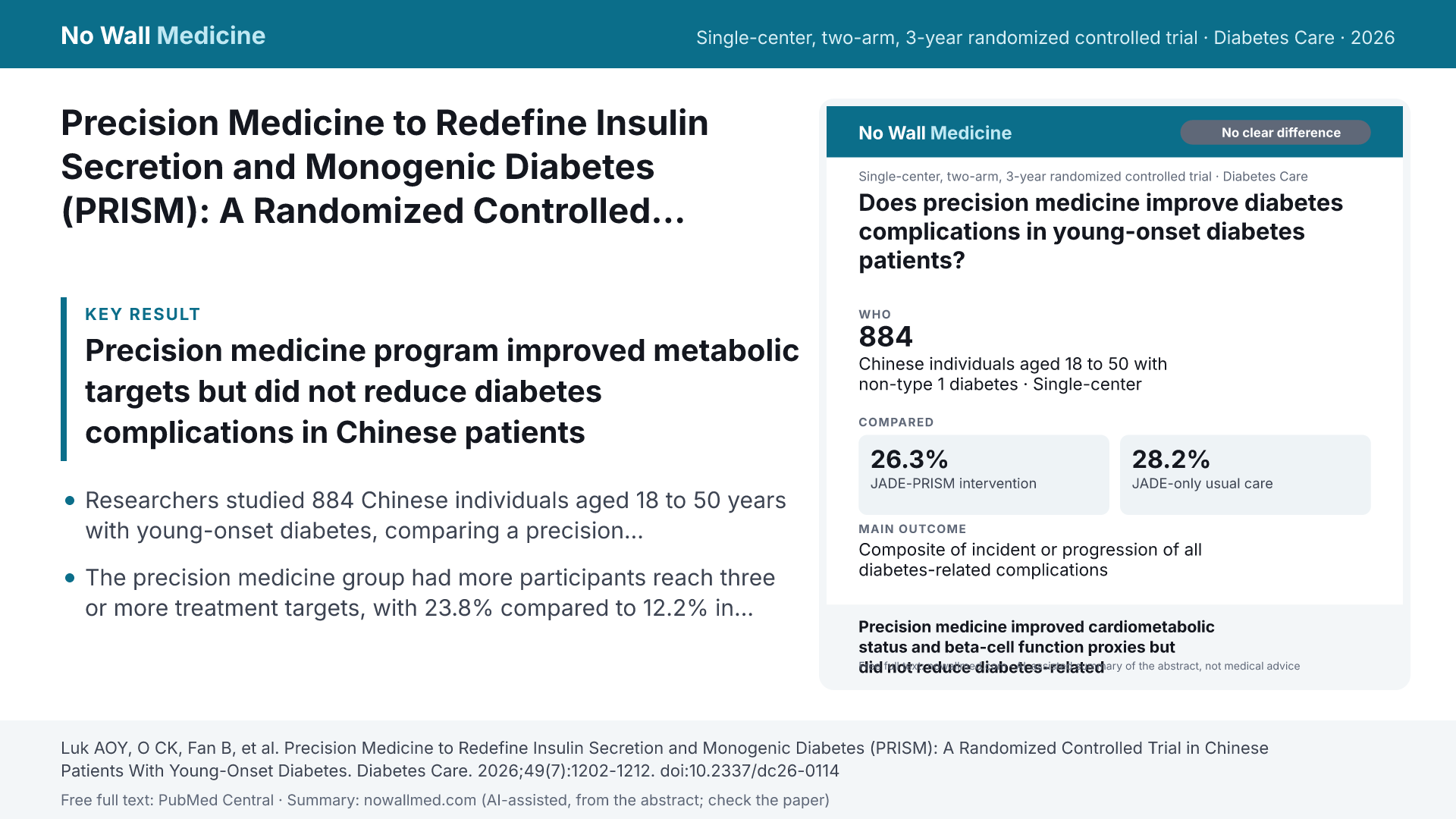
Precision medicine program improved metabolic targets but did not reduce diabetes complications in Chinese patients
Precision Medicine to Redefine Insulin Secretion and Monogenic Diabetes (PRISM): A Randomized Controlled Trial in Chinese Patients With Young-Onset Diabetes
Single-center, two-arm, 3-year randomized controlled trialNo clear difference
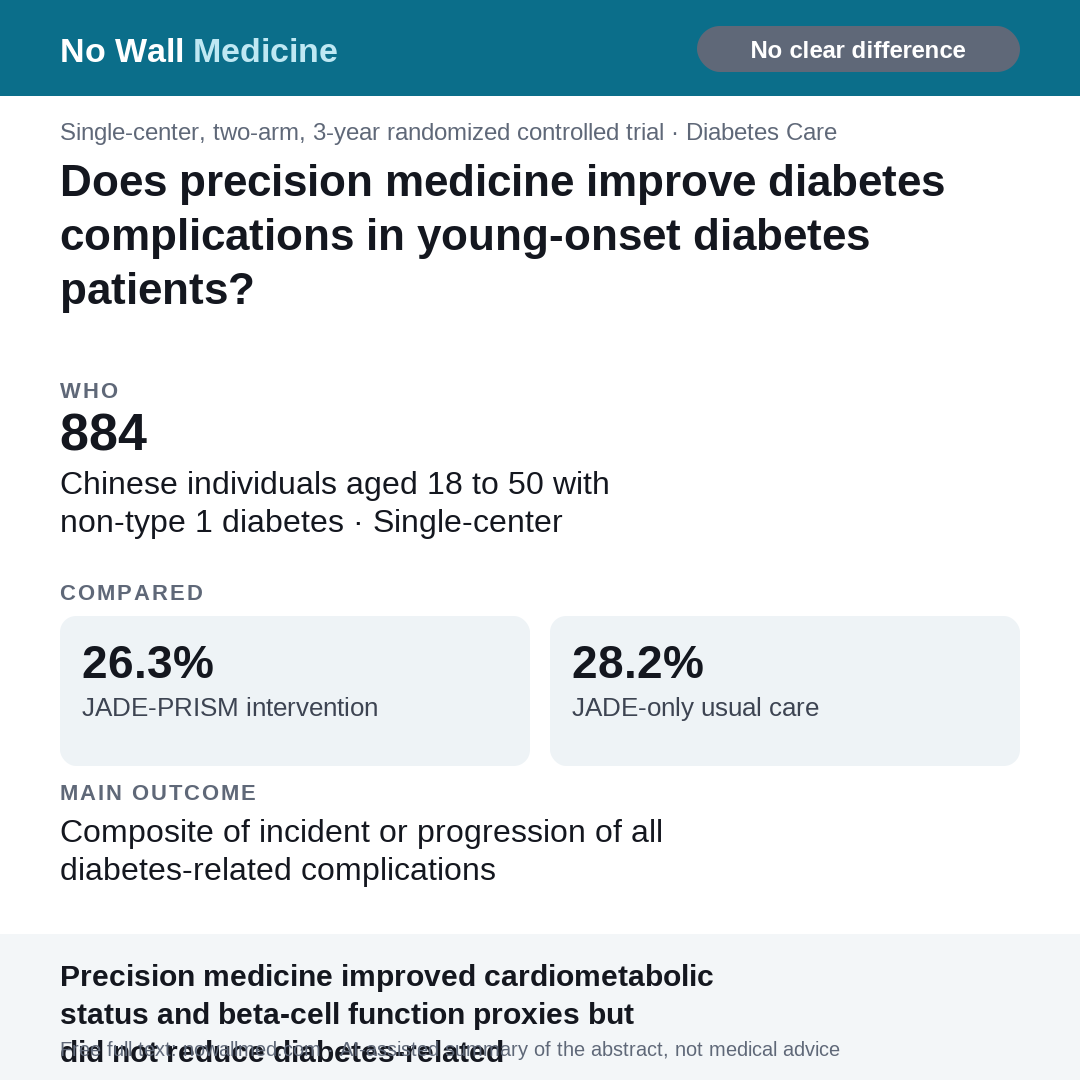
Does precision medicine improve diabetes complications in young-onset diabetes patients?
Who
884
Chinese individuals aged 18 to 50 with non-type 1 diabetes · Single-center
Compared
26.3%JADE-PRISM intervention
28.2%JADE-only usual care
Main outcome
Composite of incident or progression of all diabetes-related complications
Result: odds ratio 0.908 (95% CI 0.675-1.221)
Bottom line: Precision medicine improved cardiometabolic status and beta-cell function proxies but did not reduce diabetes-related complications.
Diabetes Care · 2026-05-12Download image
Clinical question: Does precision medicine improve diabetes complications in young-onset diabetes patients?
Why it matters: Young-onset type 2 diabetes results from complex causes, which creates a need for precision management strategies.
Key points
- Researchers studied 884 Chinese individuals aged 18 to 50 years with young-onset diabetes, comparing a precision medicine intervention to usual clinic-based care.
- The precision medicine group had more participants reach three or more treatment targets, with 23.8% compared to 12.2% in the usual care group.
- The primary outcome of diabetes-related complications occurred in 26.3% of the intervention group versus 28.2% of the usual care group.
Limitation the authors note: This was a single-center study.
Headline and key points written with AI from the paper’s abstract, with every number checked against it. Read the paper before relying on them.
Was this summary helpful?
Subject terms
Cite this article
Luk AOY, O CK, Fan B, et al. Precision Medicine to Redefine Insulin Secretion and Monogenic Diabetes (PRISM): A Randomized Controlled Trial in Chinese Patients With Young-Onset Diabetes. Diabetes Care. 2026. doi:10.2337/dc26-0114
Spotted a mistake? Suggest a correction