Prediction of Left Ventricular Reverse Remodeling and Outcomes by Circulating Collagen-Derived Peptides
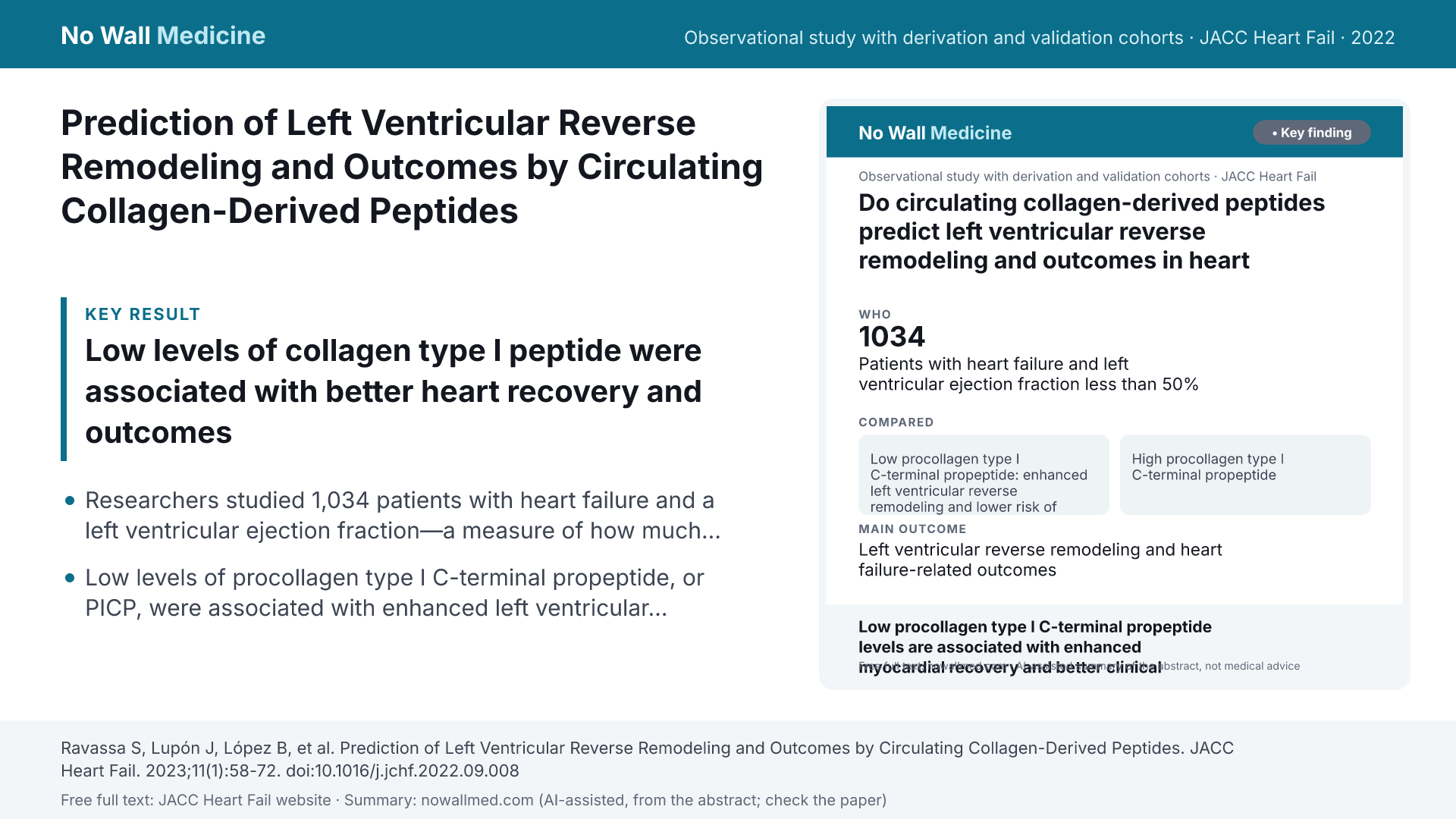
Key result: Low levels of collagen type I peptide were associated with better heart recovery and outcomes
Observational study with derivation and validation cohortsKey finding
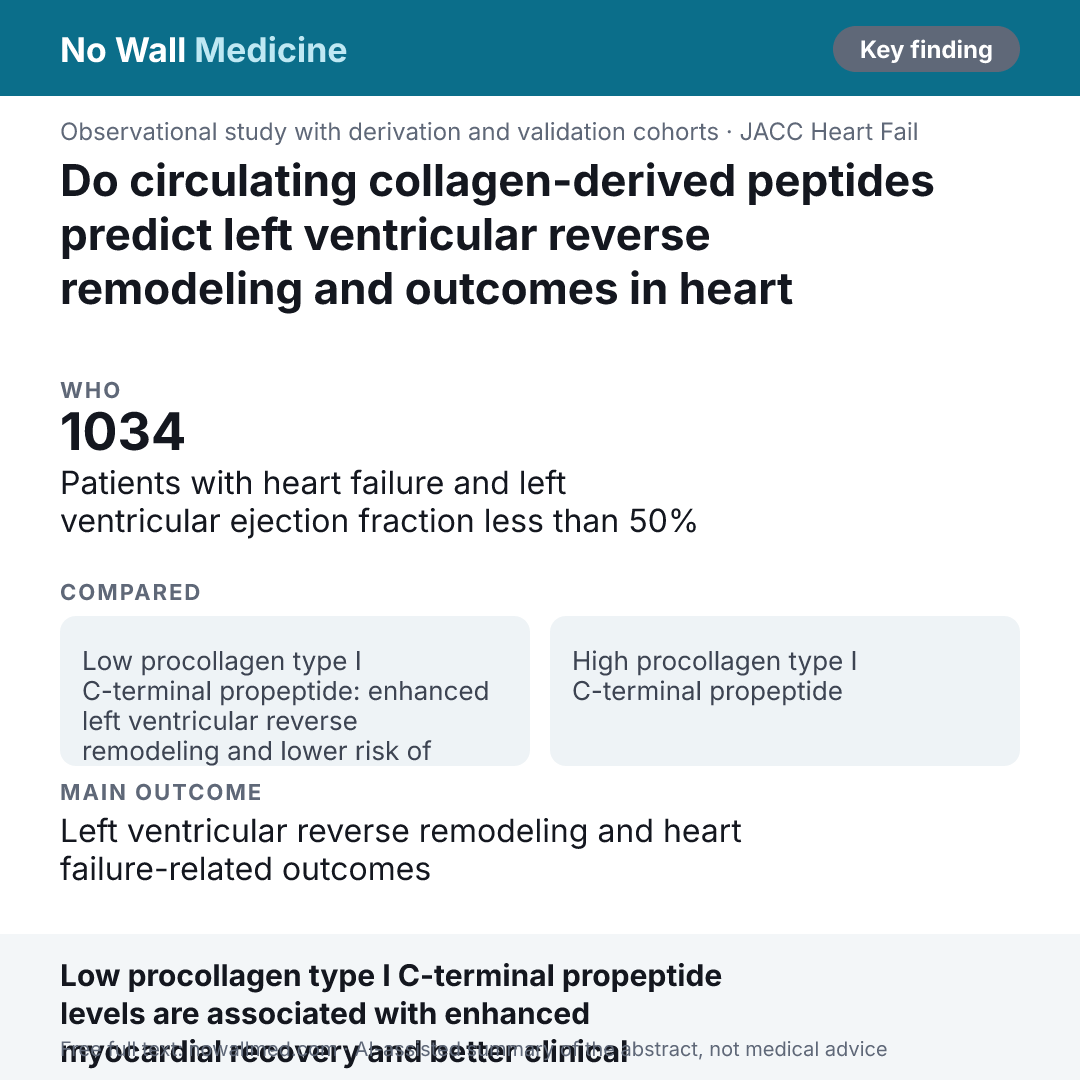
Do circulating collagen-derived peptides predict left ventricular reverse remodeling and outcomes in heart failure?
Who
1034
Patients with heart failure and left ventricular ejection fraction less than 50%
Compared
Low procollagen type I C-terminal propeptide: enhanced left ventricular reverse remodeling and lower risk of heart failure-related outcomes
High procollagen type I C-terminal propeptide
Main outcome
Left ventricular reverse remodeling and heart failure-related outcomes
Bottom line: Low procollagen type I C-terminal propeptide levels are associated with enhanced myocardial recovery and better clinical outcomes.
JACC Heart Fail · 2022-11-09 · Save PNG
Key points
- Researchers studied 1,034 patients with heart failure and a left ventricular ejection fraction—a measure of how much blood the heart pumps out—of less than 50%.
- Low levels of procollagen type I C-terminal propeptide, or PICP, were associated with enhanced left ventricular reverse remodeling and a lower risk of heart failure-related outcomes.
- Patients with both low PICP and improved ejection fraction showed a better clinical evolution than those with nonimproved ejection fraction (P < 0.001).
Discussion prompts
- Would these patients look like yours? Who was left out?
- Is the main outcome one that matters to patients?
- Is the difference large enough to change what you do?
Cite: Ravassa S, Lupón J, López B, et al. Prediction of Left Ventricular Reverse Remodeling and Outcomes by Circulating Collagen-Derived Peptides. JACC Heart Fail. 2023;11(1):58-72. doi:10.1016/j.jchf.2022.09.008
Free full text: JACC Heart Fail website · Summary and visual abstract: nowallmed.com/a/prediction-of-left-ventricular-reverse-remodeling-and-outcomes-by-4n1fz/ (AI-assisted from the abstract; check the paper before relying on it).