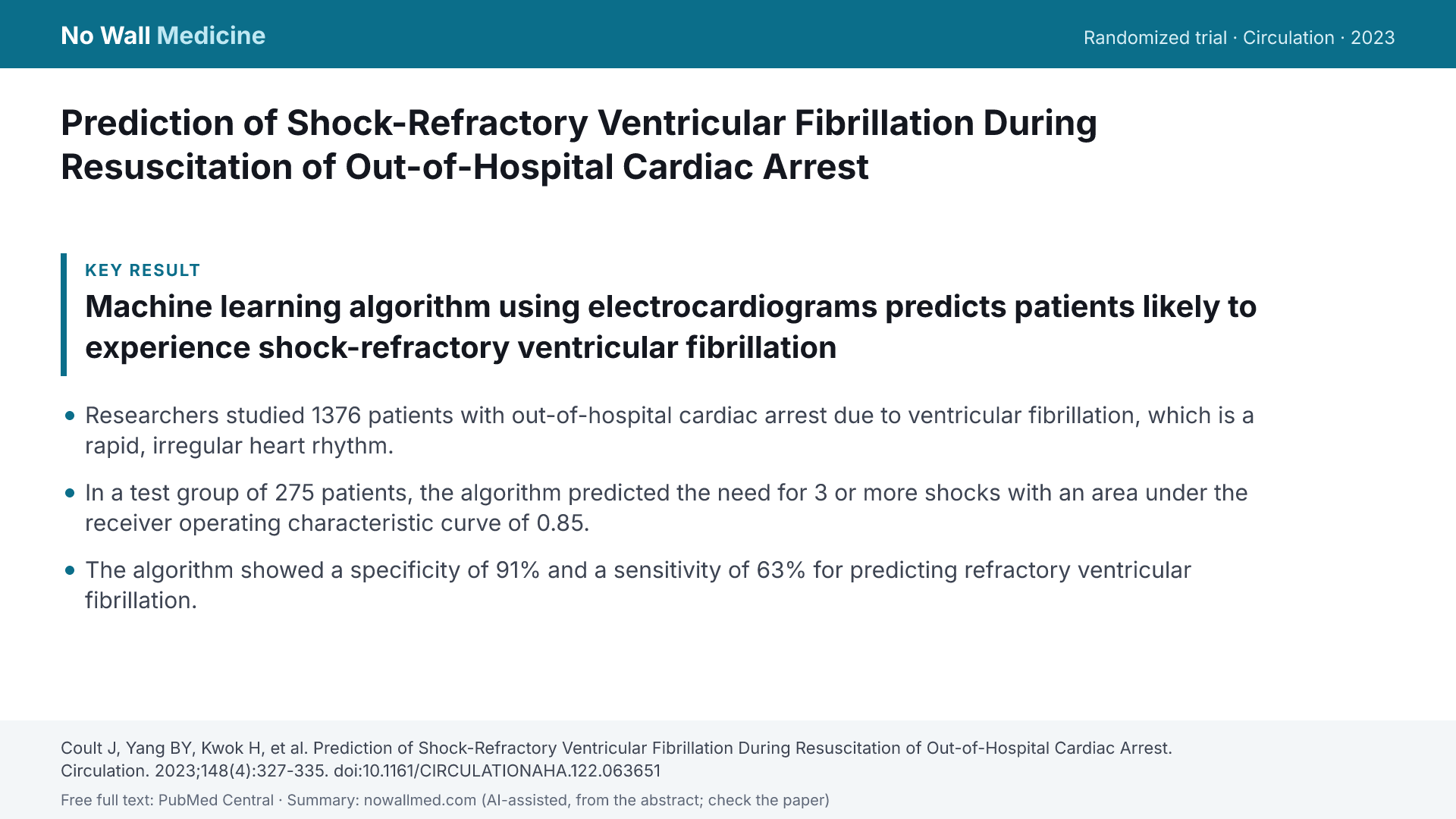
Machine learning algorithm using electrocardiograms predicts patients likely to experience shock-refractory ventricular fibrillation
Prediction of Shock-Refractory Ventricular Fibrillation During Resuscitation of Out-of-Hospital Cardiac Arrest
Randomized cohort studyUnclear result
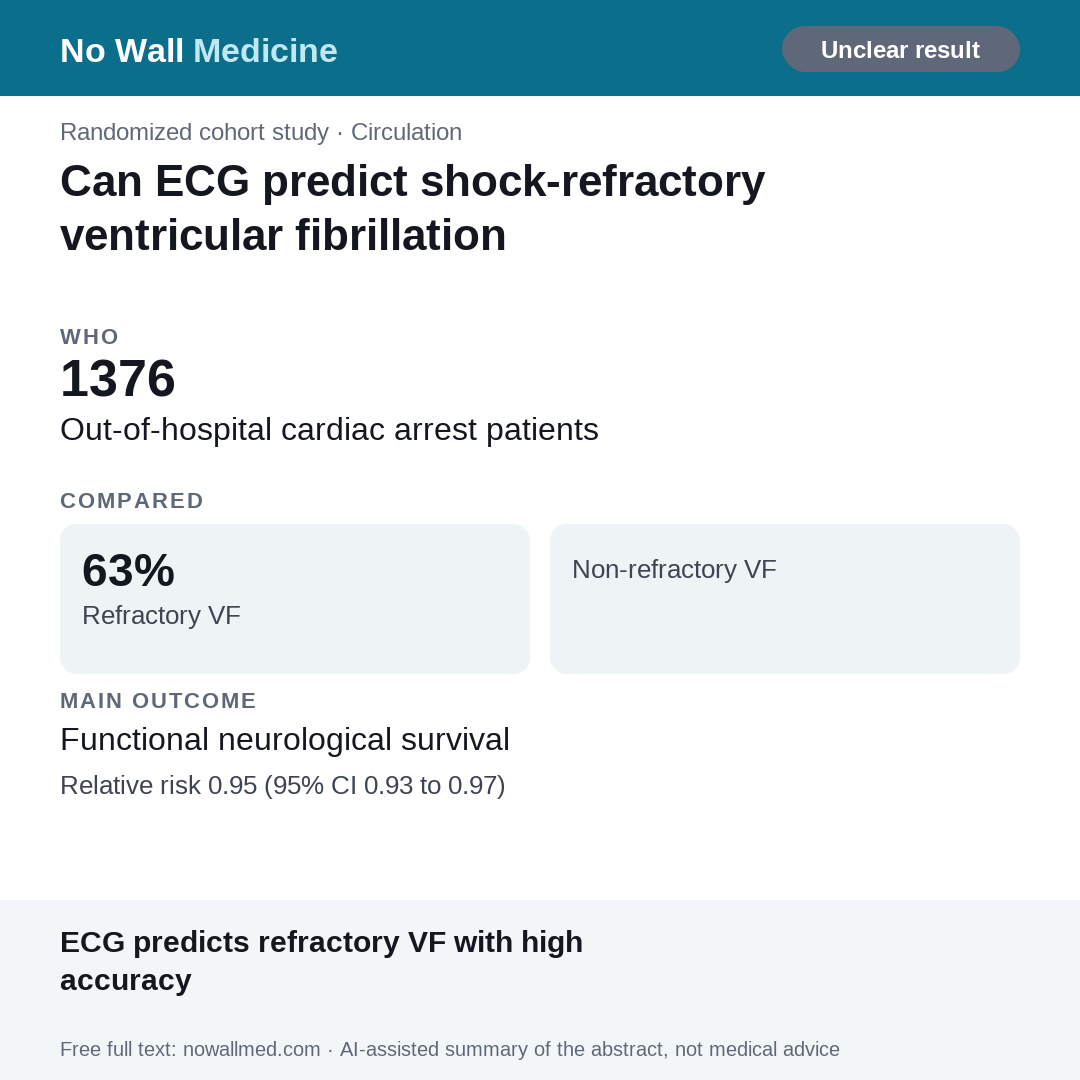
Can ECG predict shock-refractory ventricular fibrillation
Who
1376
Out-of-hospital cardiac arrest patients
Compared
63%Refractory VF (864/1376)
Non-refractory VF
Main outcome
Functional neurological survival
Result: Relative risk 0.95 (95% CI 0.93 to 0.97)
Bottom line: ECG predicts refractory VF with high accuracy
Circulation · 2023-06-02Download image
Why it matters: It is unknown if electrocardiogram patterns surrounding the initial shock can predict when a patient will require multiple shocks during resuscitation.
Key points
- Researchers studied 1376 patients with out-of-hospital cardiac arrest due to ventricular fibrillation, which is a rapid, irregular heart rhythm.
- In a test group of 275 patients, the algorithm predicted the need for 3 or more shocks with an area under the receiver operating characteristic curve of 0.85.
- The algorithm showed a specificity of 91% and a sensitivity of 63% for predicting refractory ventricular fibrillation.
Headline and key points written with AI from the paper’s abstract, with every number checked against it. Read the paper before relying on them.
Was this summary helpful?
Subject terms
Cite this article
Coult J, Yang BY, Kwok H, Kutz JN, Boyle PM, Blackwood J. Prediction of Shock-Refractory Ventricular Fibrillation During Resuscitation of Out-of-Hospital Cardiac Arrest. Circulation. 2023. doi:10.1161/CIRCULATIONAHA.122.063651
Spotted a mistake? Suggest a correction
Top studies every Monday
The week’s key trials and guidelines in your specialties, plus any topics you follow. By email, free.
Get the weekly digest