Prediction of Shock-Refractory Ventricular Fibrillation During Resuscitation of Out-of-Hospital Cardiac Arrest
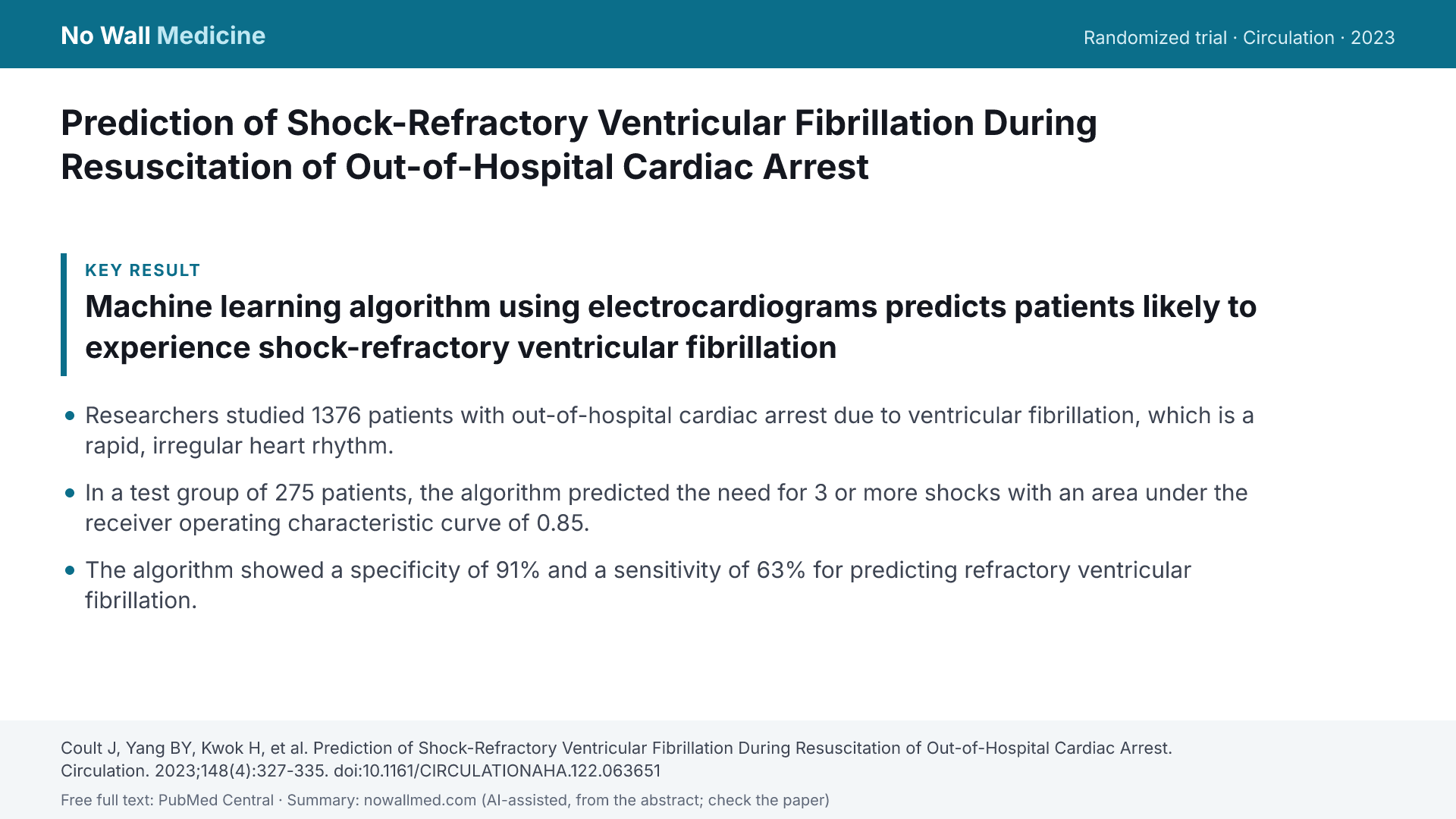
Key result: Machine learning algorithm using electrocardiograms predicts patients likely to experience shock-refractory ventricular fibrillation
Key points
- Researchers studied 1376 patients with out-of-hospital cardiac arrest due to ventricular fibrillation, which is a rapid, irregular heart rhythm.
- In a test group of 275 patients, the algorithm predicted the need for 3 or more shocks with an area under the receiver operating characteristic curve of 0.85.
- The algorithm showed a specificity of 91% and a sensitivity of 63% for predicting refractory ventricular fibrillation.
Discussion prompts
- Would these patients look like yours? Who was left out?
- Is the main outcome one that matters to patients?
- Is the difference large enough to change what you do?
Cite: Coult J, Yang BY, Kwok H, et al. Prediction of Shock-Refractory Ventricular Fibrillation During Resuscitation of Out-of-Hospital Cardiac Arrest. Circulation. 2023;148(4):327-335. doi:10.1161/CIRCULATIONAHA.122.063651
Free full text: PubMed Central · Summary and visual abstract: nowallmed.com/a/prediction-of-shock-refractory-ventricular-fibrillation-during-1ttvctt/ (AI-assisted from the abstract; check the paper before relying on it).