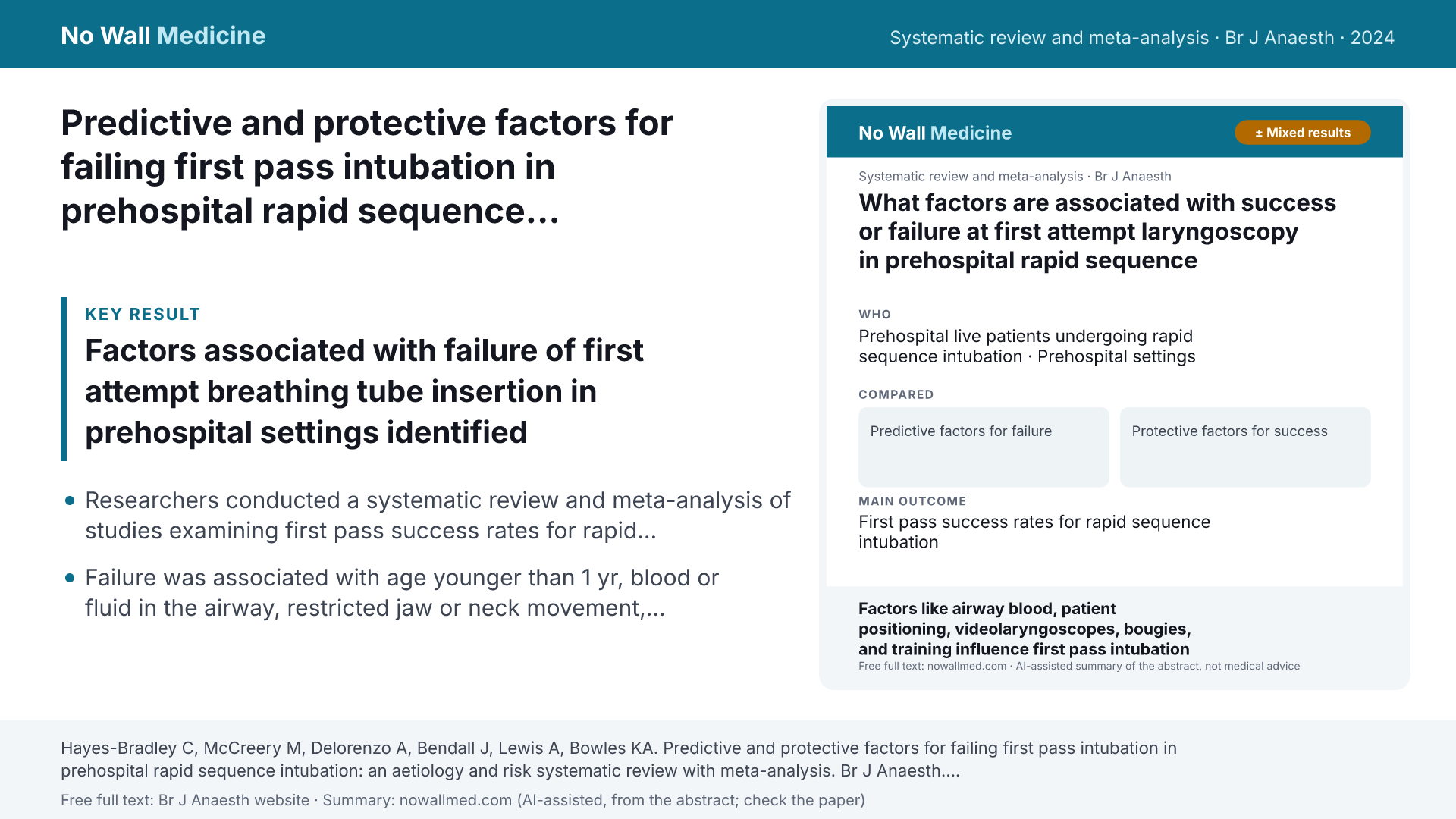
Predictive and protective factors for failing first pass intubation in prehospital rapid sequence intubation: an aetiology and risk systematic review with meta-analysis
Key result: Factors associated with failure of first attempt breathing tube insertion in prehospital settings identified
Key points
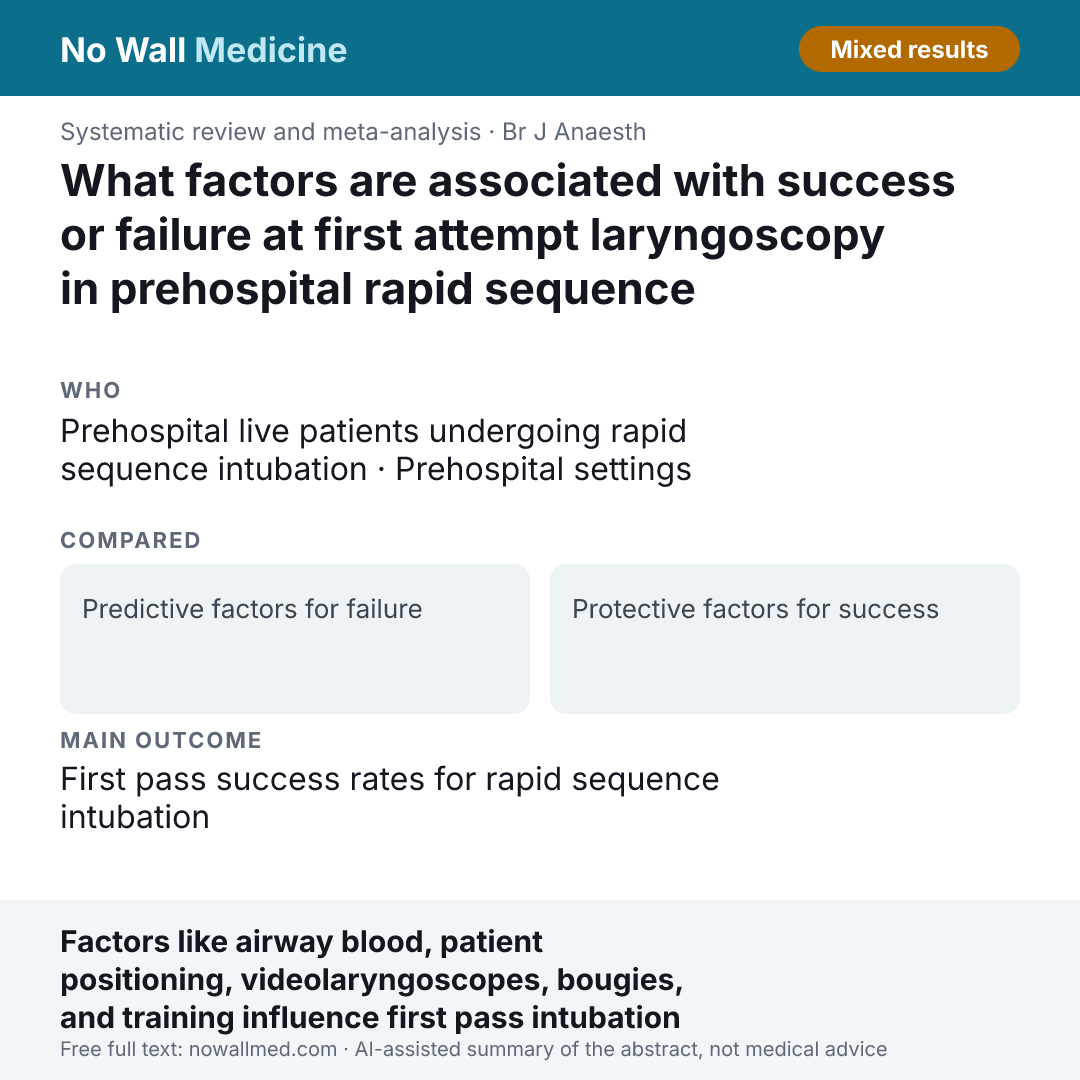
- Researchers conducted a systematic review and meta-analysis of studies examining first pass success rates for rapid sequence intubation, which is the quick insertion of a breathing tube, in prehospital patients.
- Failure was associated with age younger than 1 yr, blood or fluid in the airway, restricted jaw or neck movement, trauma, nighttime procedures, airway anatomy distortions, and equipment issues.
- Protective factors associated with success included an experienced intubator, adequate training, use of certain videolaryngoscopes, elevating the patient on a stretcher, use of a bougie, and laryngeal manoeuvres.
Why it matters: Prehospital first pass success rates for rapid sequence intubation vary between 59% and 98%, and it is unknown which specific factors are associated with success or failure.
Discussion prompts
- Would these patients look like yours? Who was left out?
- Is the main outcome one that matters to patients?
- Is the difference large enough to change what you do?
Cite: Hayes-Bradley C, McCreery M, Delorenzo A, Bendall J, Lewis A, Bowles KA. Predictive and protective factors for failing first pass intubation in prehospital rapid sequence intubation: an aetiology and risk systematic review with meta-analysis. Br J Anaesth. 2024;132(5):918-935. doi:10.1016/j.bja.2024.02.004
Free full text: Br J Anaesth website · Summary and visual abstract: nowallmed.com/a/predictive-and-protective-factors-for-failing-first-pass-intubation-zc0psw/ (AI-assisted from the abstract; check the paper before relying on it).