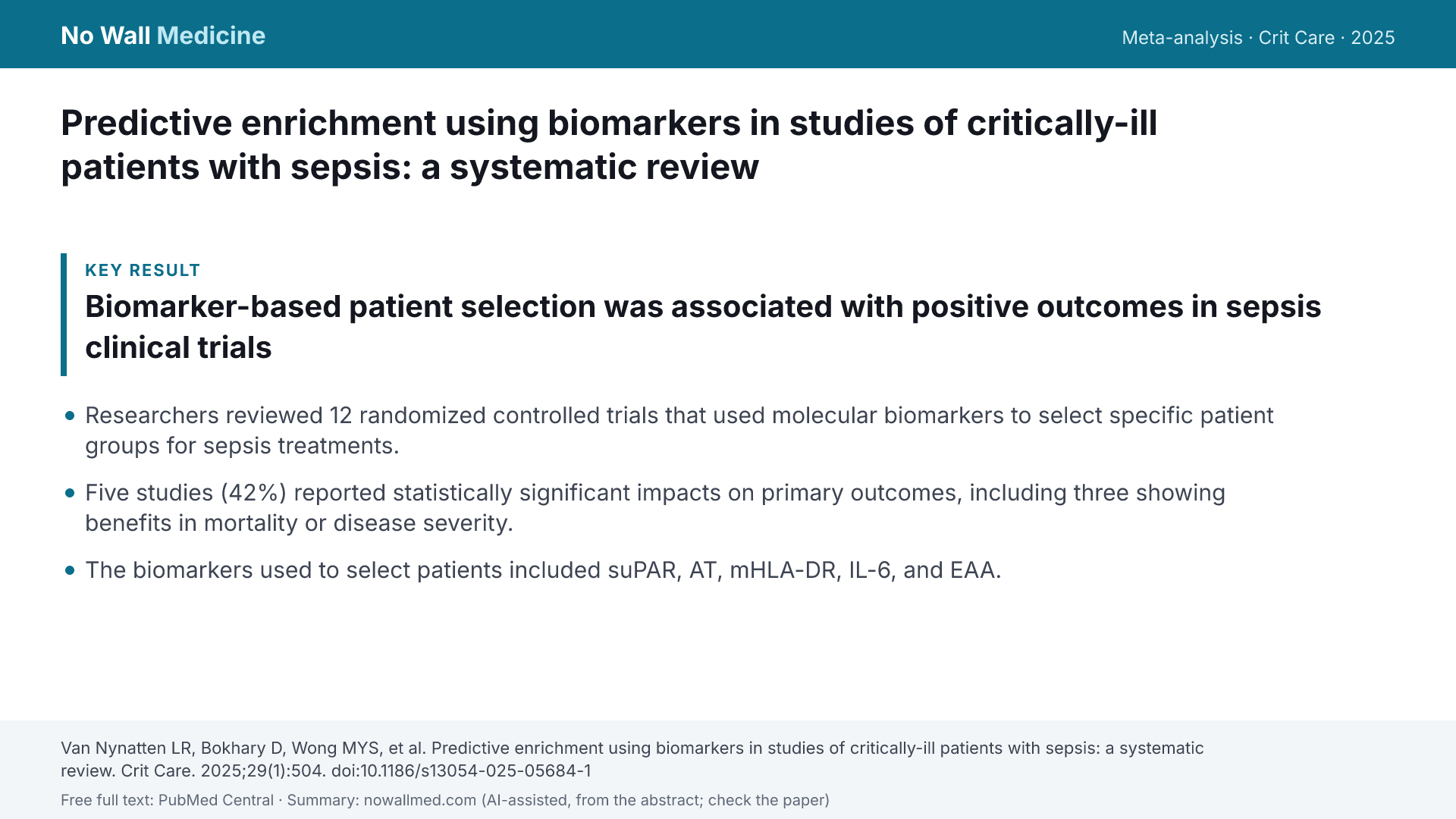
Biomarker-based patient selection was associated with positive outcomes in sepsis clinical trials
Predictive enrichment using biomarkers in studies of critically-ill patients with sepsis: a systematic review
Systematic reviewBenefit found
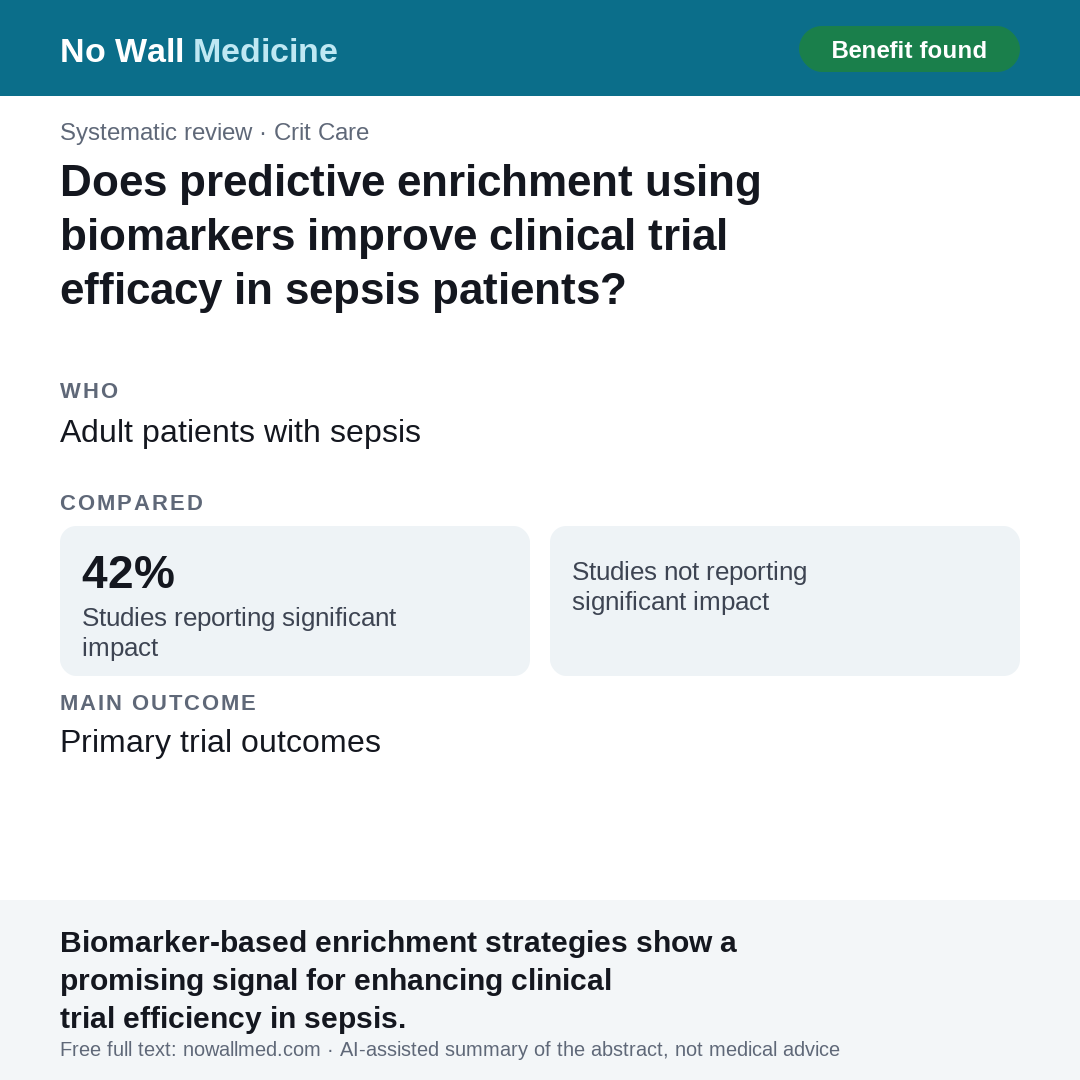
Does predictive enrichment using biomarkers improve clinical trial efficacy in sepsis patients?
Who
Adult patients with sepsis
Compared
42%Studies reporting significant impact
Studies not reporting significant impact
Main outcome
Primary trial outcomes
Bottom line: Biomarker-based enrichment strategies show a promising signal for enhancing clinical trial efficiency in sepsis.
Limitation: Studies were heterogeneous in design and limited in number.
Crit Care · 2025-11-27Download image
Clinical question: Does predictive enrichment using biomarkers improve clinical trial efficacy in sepsis patients?
Why it matters: Many randomized trials for sepsis treatments have failed to identify effective interventions, possibly because the diverse patient populations dilute the observed treatment effects.
Key points
- Researchers reviewed 12 randomized controlled trials that used molecular biomarkers to select specific patient groups for sepsis treatments.
- Five studies (42%) reported statistically significant impacts on primary outcomes, including three showing benefits in mortality or disease severity.
- The biomarkers used to select patients included suPAR, AT, mHLA-DR, IL-6, and EAA.
Limitation the authors note: The studies were heterogeneous in design and limited in number.
Headline and key points written with AI from the paper’s abstract, with every number checked against it. Read the paper before relying on them.
Was this summary helpful?
Subject terms
Cite this article
Van Nynatten LR, Bokhary D, Wong MYS, et al. Predictive enrichment using biomarkers in studies of critically-ill patients with sepsis: a systematic review. Crit Care. 2025. doi:10.1186/s13054-025-05684-1
Spotted a mistake? Suggest a correction