Predictive validity of General Movements Assessment in identifying neurodevelopmental disorders
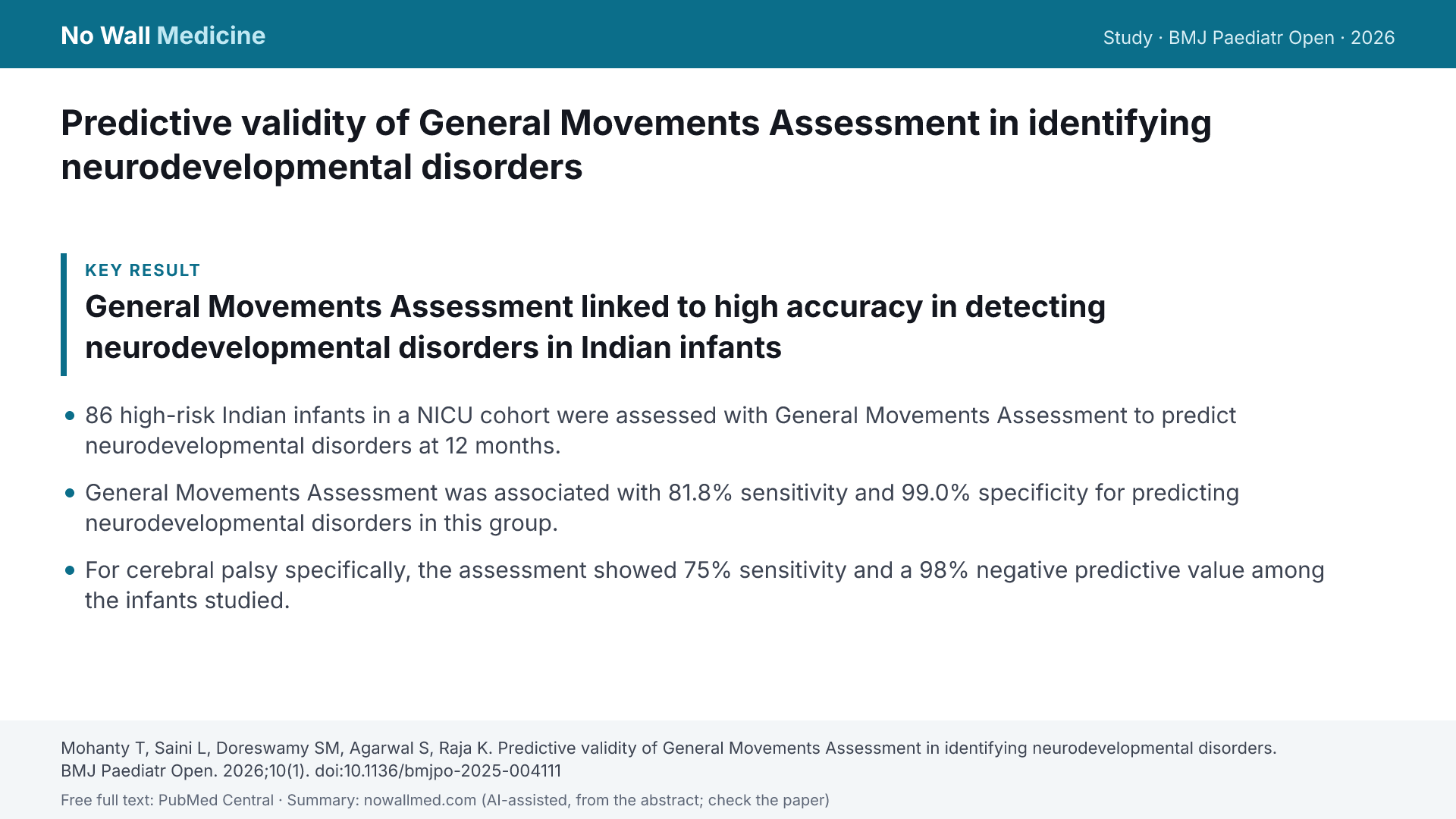
Key result: General Movements Assessment linked to high accuracy in detecting neurodevelopmental disorders in Indian infants
Key points
- 86 high-risk Indian infants in a NICU cohort were assessed with General Movements Assessment to predict neurodevelopmental disorders at 12 months.
- General Movements Assessment was associated with 81.8% sensitivity and 99.0% specificity for predicting neurodevelopmental disorders in this group.
- For cerebral palsy specifically, the assessment showed 75% sensitivity and a 98% negative predictive value among the infants studied.
Why it matters: The predictive validity of the General Movements Assessment for identifying neurodevelopmental disorders in Indian infants with diverse caregiving practices remained underexplored.
Limitation the authors note: The authors highlight the need for larger, multicentre studies, including low-risk cohorts, to validate and generalise these results.
Discussion prompts
- Would these patients look like yours? Who was left out?
- Is the main outcome one that matters to patients?
- Is the difference large enough to change what you do?
Cite: Mohanty T, Saini L, Doreswamy SM, Agarwal S, Raja K. Predictive validity of General Movements Assessment in identifying neurodevelopmental disorders. BMJ Paediatr Open. 2026;10(1). doi:10.1136/bmjpo-2025-004111
Free full text: PubMed Central · Summary and visual abstract: nowallmed.com/a/predictive-validity-of-general-movements-assessment-in-identifying-1do0cek/ (AI-assisted from the abstract; check the paper before relying on it).