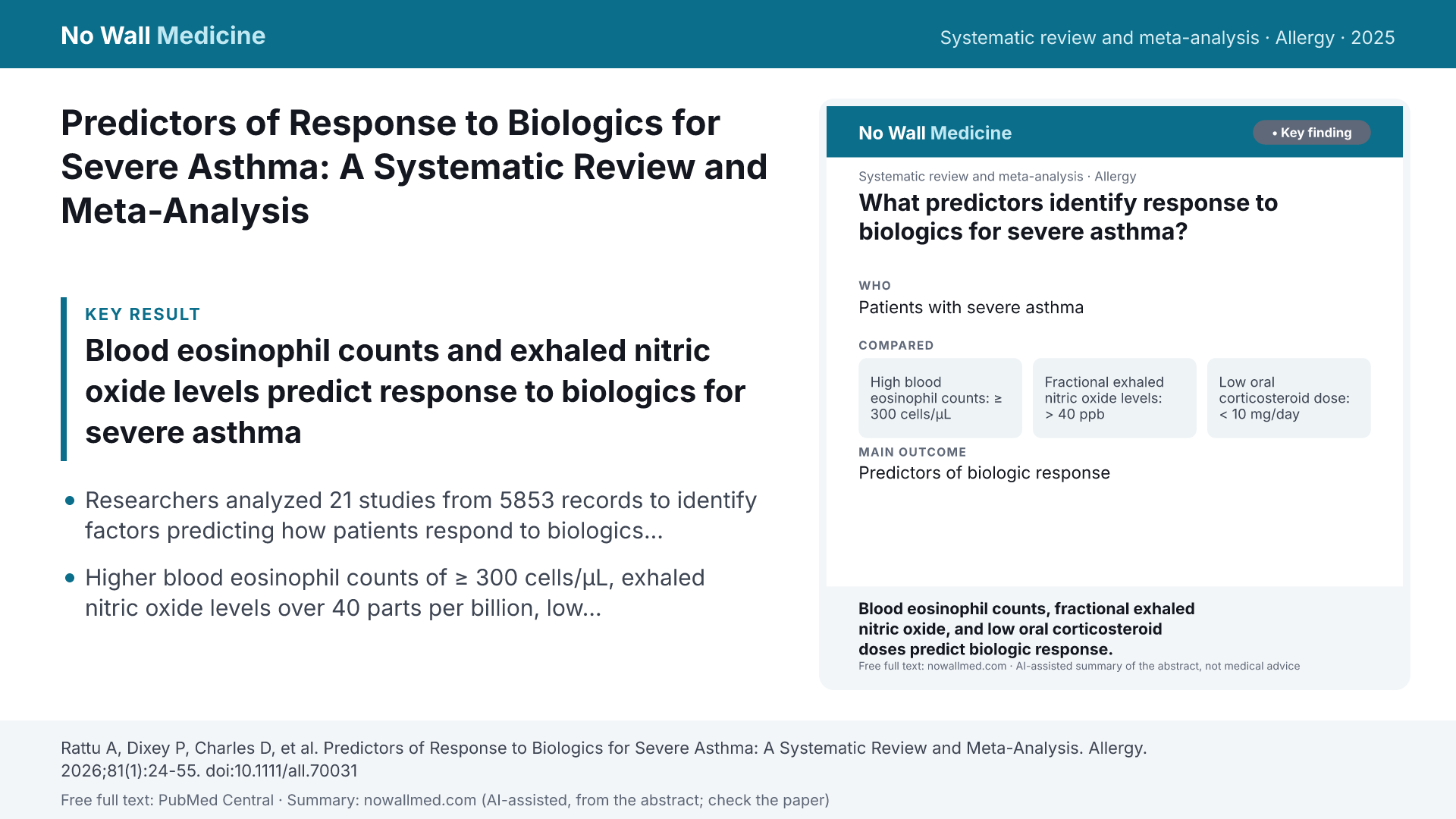
Blood eosinophil counts and exhaled nitric oxide levels predict response to biologics for severe asthma
Predictors of Response to Biologics for Severe Asthma: A Systematic Review and Meta-Analysis
Systematic review and meta-analysisKey finding
What predictors identify response to biologics for severe asthma?
Who
Patients with severe asthma
Compared
High blood eosinophil counts: ≥ 300 cells/μL
Fractional exhaled nitric oxide levels: > 40 ppb
Low oral corticosteroid dose: < 10 mg/day
Main outcome
Predictors of biologic response
Bottom line: Blood eosinophil counts, fractional exhaled nitric oxide, and low oral corticosteroid doses predict biologic response.
Limitation: Heterogeneous response definitions, imprecision, and lack of pediatric data.
Allergy · 2025-09-16 · Save PNG
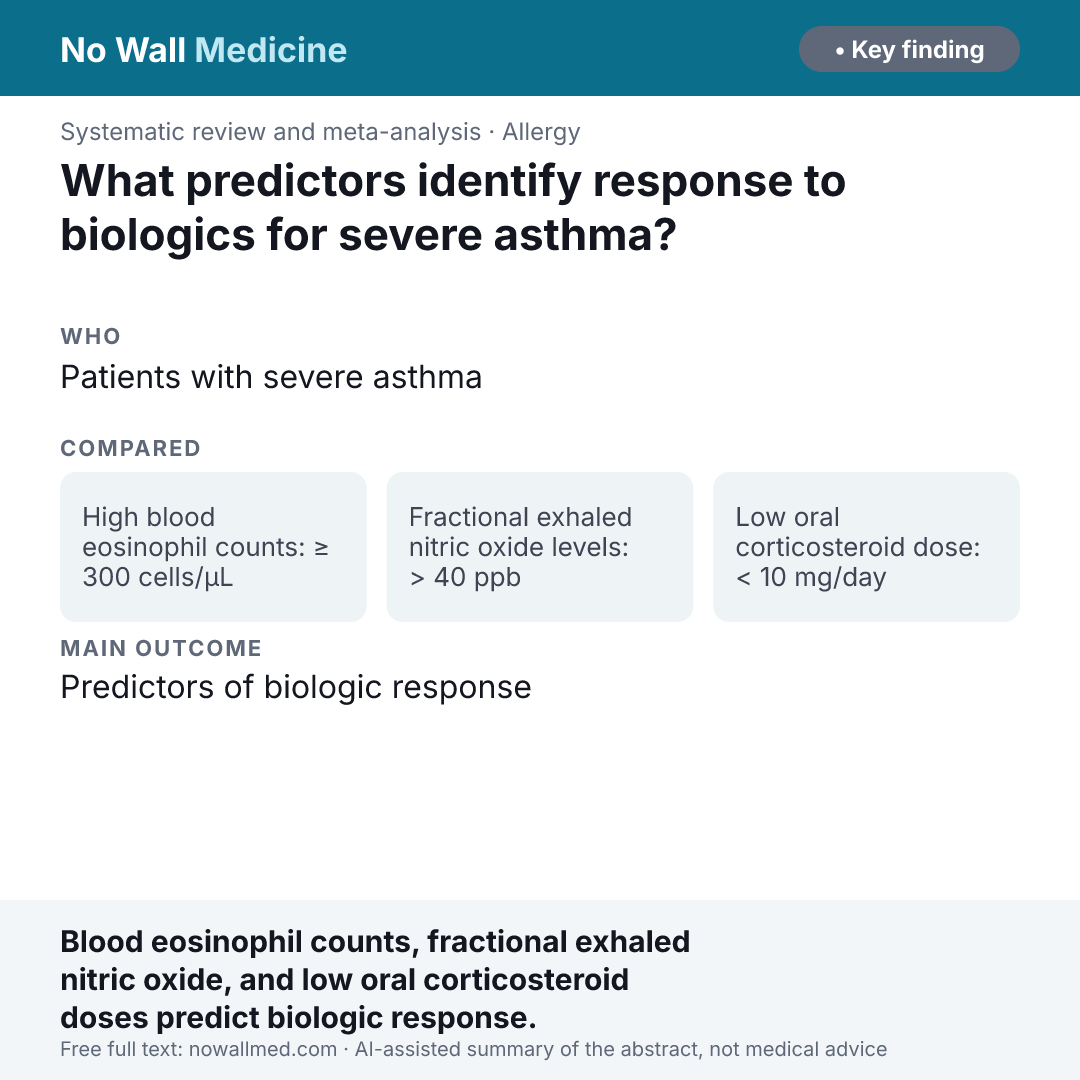
Clinical question: What predictors identify response to biologics for severe asthma?
Key points
- Researchers analyzed 21 studies from 5853 records to identify factors predicting how patients respond to biologics targeting interleukin-5, interleukin-4 receptor alpha, and thymic stromal lymphopoietin.
- Higher blood eosinophil counts of ≥ 300 cells/μL, exhaled nitric oxide levels over 40 parts per billion, low oral corticosteroid doses under 10 mg/day, and better asthma control were linked to biologic response.
- Evidence for the predictive value of other characteristics was limited and mostly of low quality.
Limitation the authors note: The authors noted that evidence was downgraded due to heterogeneous response definitions and imprecision, and no data were identified for pediatric populations.
Headline and key points written with AI from the paper’s abstract, with every number checked against it. Read the paper before relying on them.
Was this summary helpful?
Subject terms
Headline, design, result, key points, caveat and citation as plain text.
Cite this article
Rattu A, Dixey P, Charles D, et al. Predictors of Response to Biologics for Severe Asthma: A Systematic Review and Meta-Analysis. Allergy. 2026;81(1):24-55. doi:10.1111/all.70031
Spotted a mistake? Suggest a correction