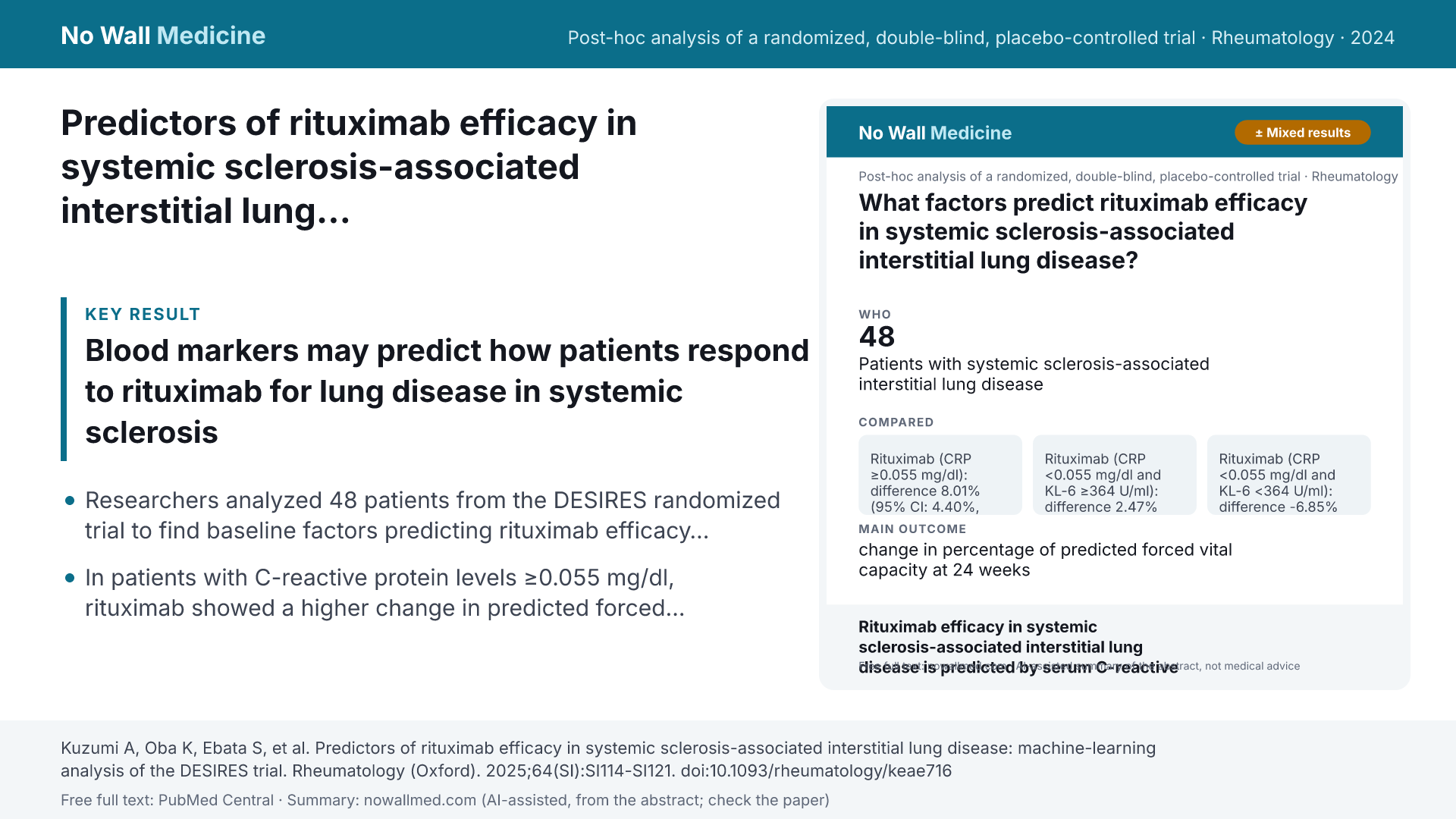
Blood markers may predict how patients respond to rituximab for lung disease in systemic sclerosis
Predictors of rituximab efficacy in systemic sclerosis-associated interstitial lung disease: machine-learning analysis of the DESIRES trial
Post-hoc analysis of a randomized, double-blind, placebo-controlled trialMixed results
What factors predict rituximab efficacy in systemic sclerosis-associated interstitial lung disease?
Who
48
Patients with systemic sclerosis-associated interstitial lung disease
Compared
Rituximab (CRP ≥0.055 mg/dl): difference 8.01% (95% CI: 4.40%, 11.62%)
Rituximab (CRP <0.055 mg/dl and KL-6 ≥364 U/ml): difference 2.47% (95% CI: -1.99%, 6.92%)
Rituximab (CRP <0.055 mg/dl and KL-6 <364 U/ml): difference -6.85% (95% CI: -10.80%, -2.91%)
Main outcome
change in percentage of predicted forced vital capacity at 24 weeks
Bottom line: Rituximab efficacy in systemic sclerosis-associated interstitial lung disease is predicted by serum C-reactive protein and Krebs von den Lungen-6 levels.
Limitation: This was a post-hoc analysis of prospective data from a single trial.
Rheumatology · 2024-12-24Download image
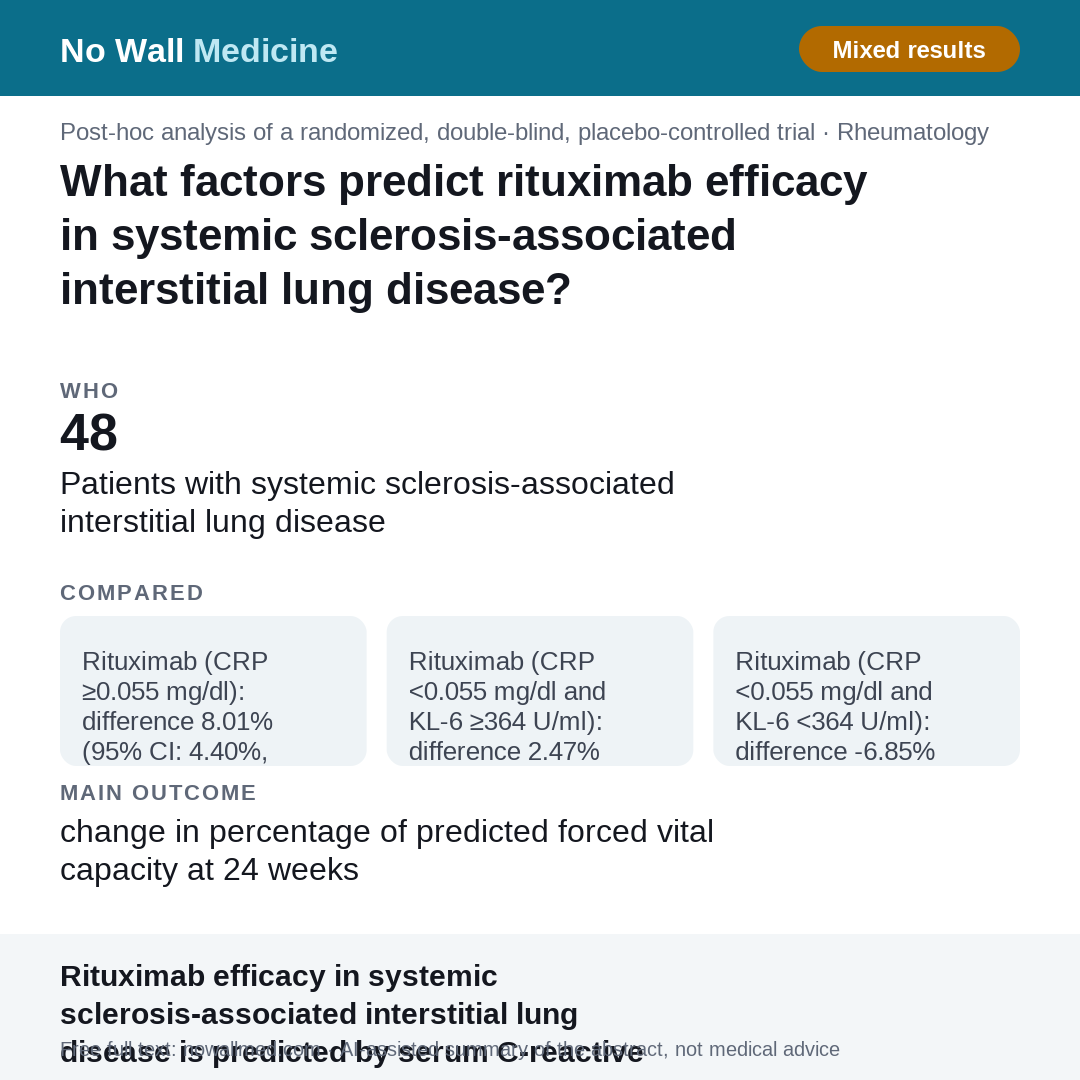
Clinical question: What factors predict rituximab efficacy in systemic sclerosis-associated interstitial lung disease?
Why it matters: It is unknown which specific patient factors predict whether rituximab will be effective for treating lung disease associated with systemic sclerosis.
Key points
- Researchers analyzed 48 patients from the DESIRES randomized trial to find baseline factors predicting rituximab efficacy on lung function at 24 weeks.
- In patients with C-reactive protein levels ≥0.055 mg/dl, rituximab showed a higher change in predicted forced vital capacity than placebo by 8.01%.
- Rituximab showed a lower change in predicted forced vital capacity compared to placebo in patients with C-reactive protein <0.055 mg/dl and Krebs von den Lungen-6 <364 U/ml.
Headline and key points written with AI from the paper’s abstract, with every number checked against it. Read the paper before relying on them.
Was this summary helpful?
Subject terms
Cite this article
Kuzumi A, Oba K, Ebata S, et al. Predictors of rituximab efficacy in systemic sclerosis-associated interstitial lung disease: machine-learning analysis of the DESIRES trial. Rheumatology. 2024. doi:10.1093/rheumatology/keae716
Spotted a mistake? Suggest a correction