Prehabilitation for Patients Undergoing Orthopedic Surgery: A Systematic Review and Meta-analysis
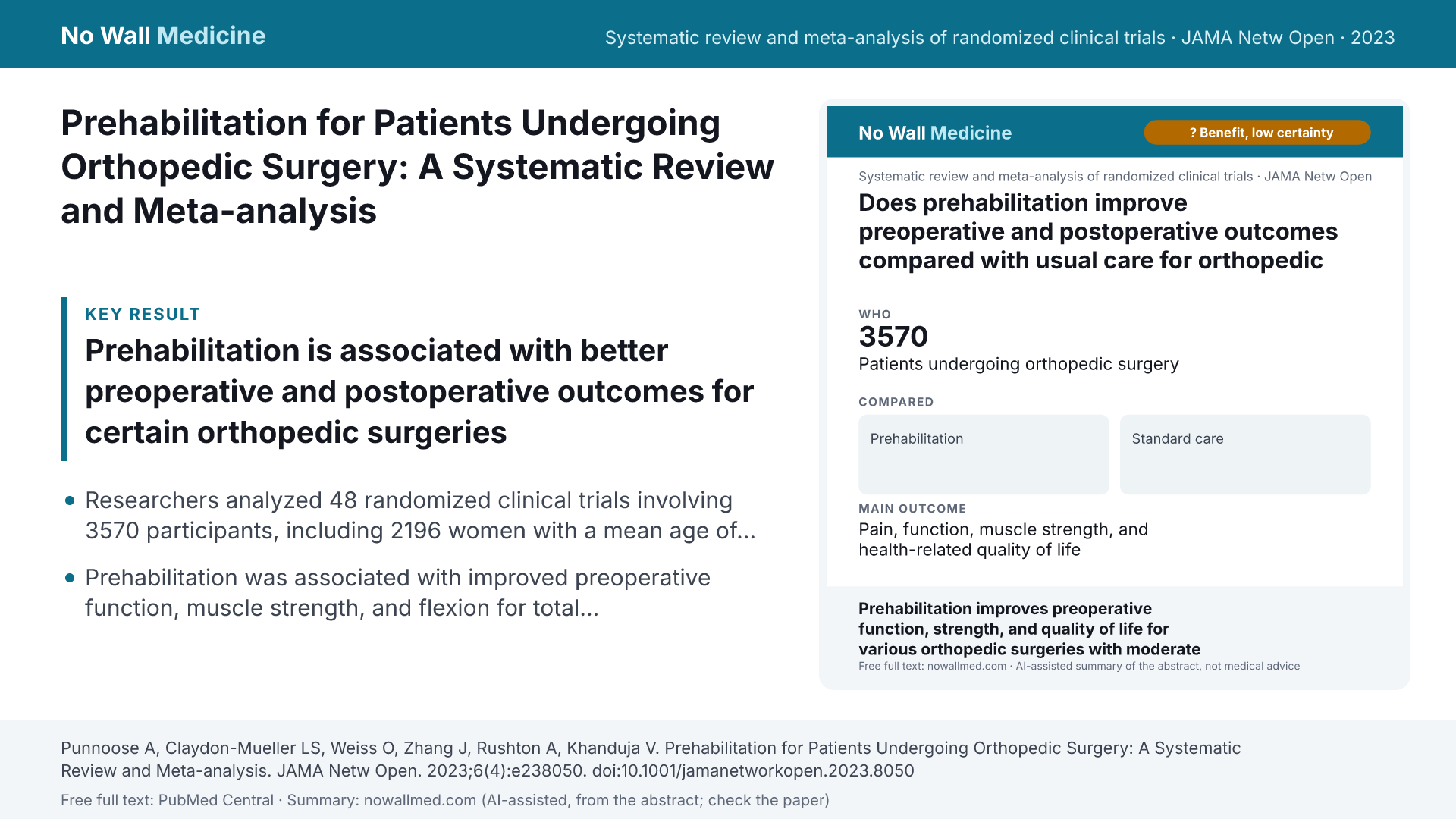
Key result: Prehabilitation is associated with better preoperative and postoperative outcomes for certain orthopedic surgeries
Key points
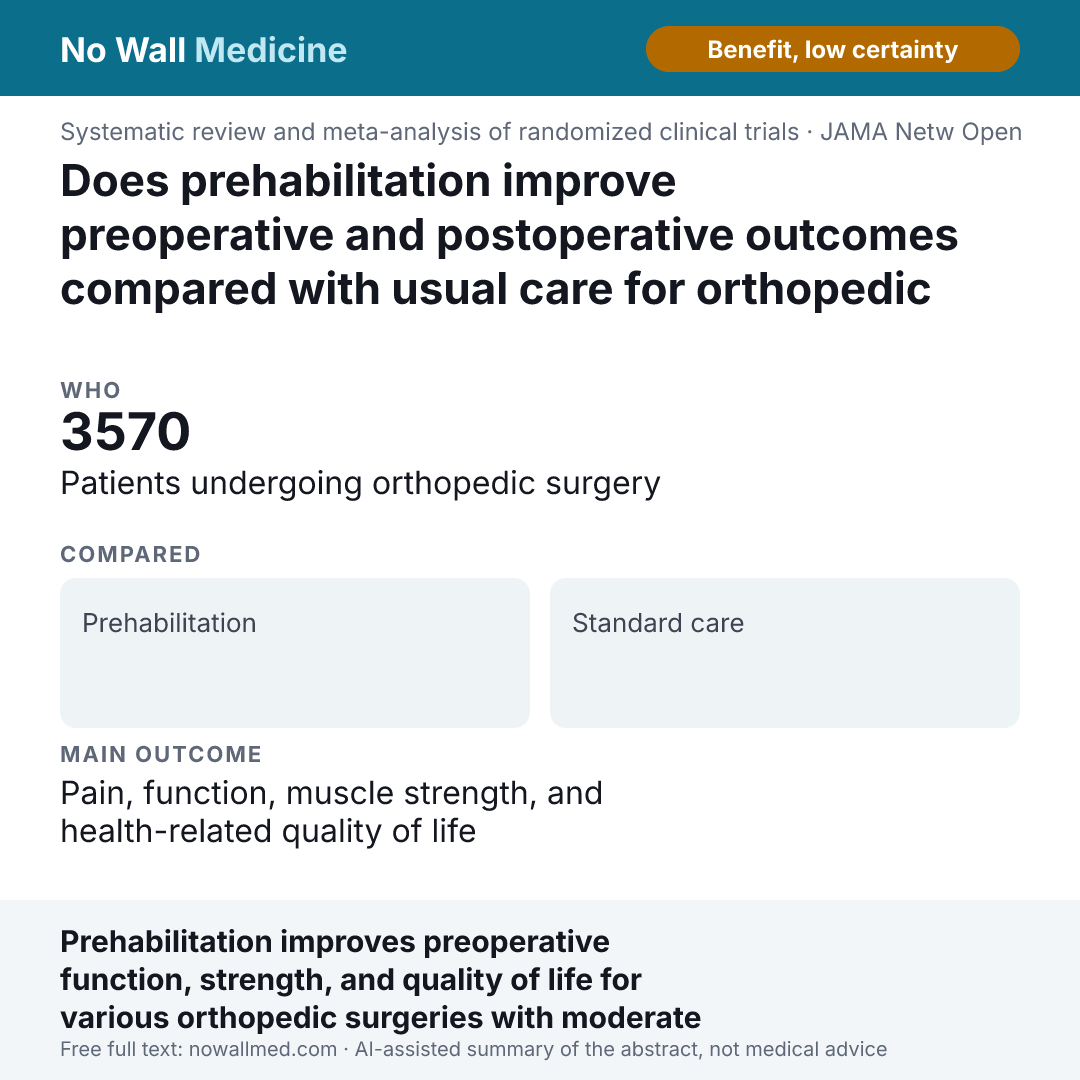
- Researchers analyzed 48 randomized clinical trials involving 3570 participants, including 2196 women with a mean age of 64.1 years.
- Prehabilitation was associated with improved preoperative function, muscle strength, and flexion for total knee replacement, and improved health-related quality of life and muscle strength for total hip replacement.
- For lumbar surgery, prehabilitation was associated with reduced back pain and improved health-related quality of life preoperatively, and improved function 6 months after surgery.
Why it matters: Current literature has produced varying results regarding whether prehabilitation programs improve preoperative and postoperative outcomes for patients undergoing orthopedic surgery.
Limitation the authors note: High risk of bias and heterogeneity affected the overall quality of evidence for other outcomes.
Discussion prompts
- Would these patients look like yours? Who was left out?
- Is the main outcome one that matters to patients?
- Is the difference large enough to change what you do?
Cite: Punnoose A, Claydon-Mueller LS, Weiss O, Zhang J, Rushton A, Khanduja V. Prehabilitation for Patients Undergoing Orthopedic Surgery: A Systematic Review and Meta-analysis. JAMA Netw Open. 2023;6(4):e238050. doi:10.1001/jamanetworkopen.2023.8050
Free full text: PubMed Central · Summary and visual abstract: nowallmed.com/a/prehabilitation-for-patients-undergoing-orthopedic-surgery-a-1x6vjke/ (AI-assisted from the abstract; check the paper before relying on it).