Prenatal Genome-Wide Sequencing analysis (Exome or Genome) in detecting pathogenic Single Nucleotide Variants in fetal Central Nervous System Anomalies: systematic review and meta-analysis
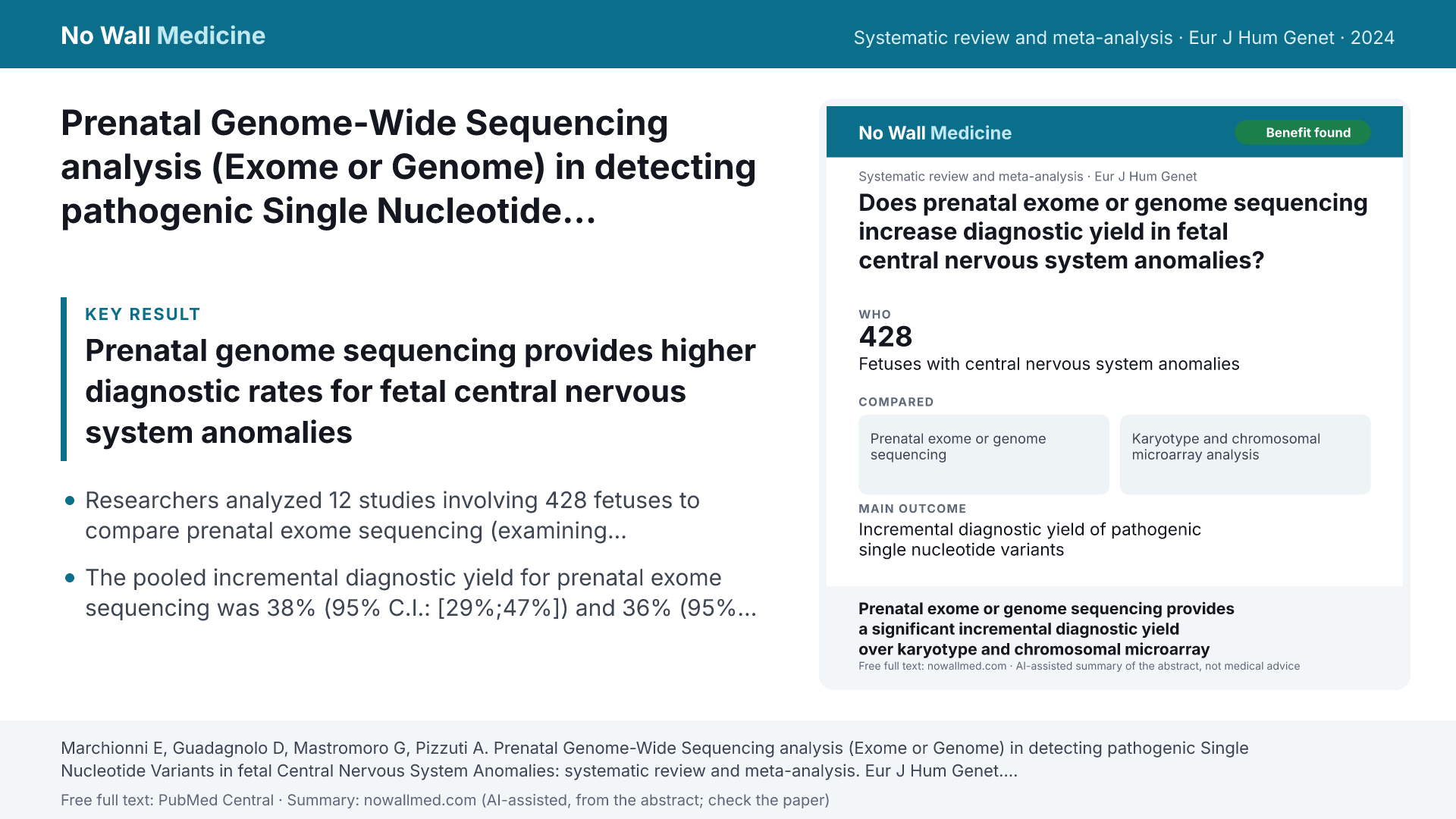
Key result: Prenatal genome sequencing provides higher diagnostic rates for fetal central nervous system anomalies
Key points
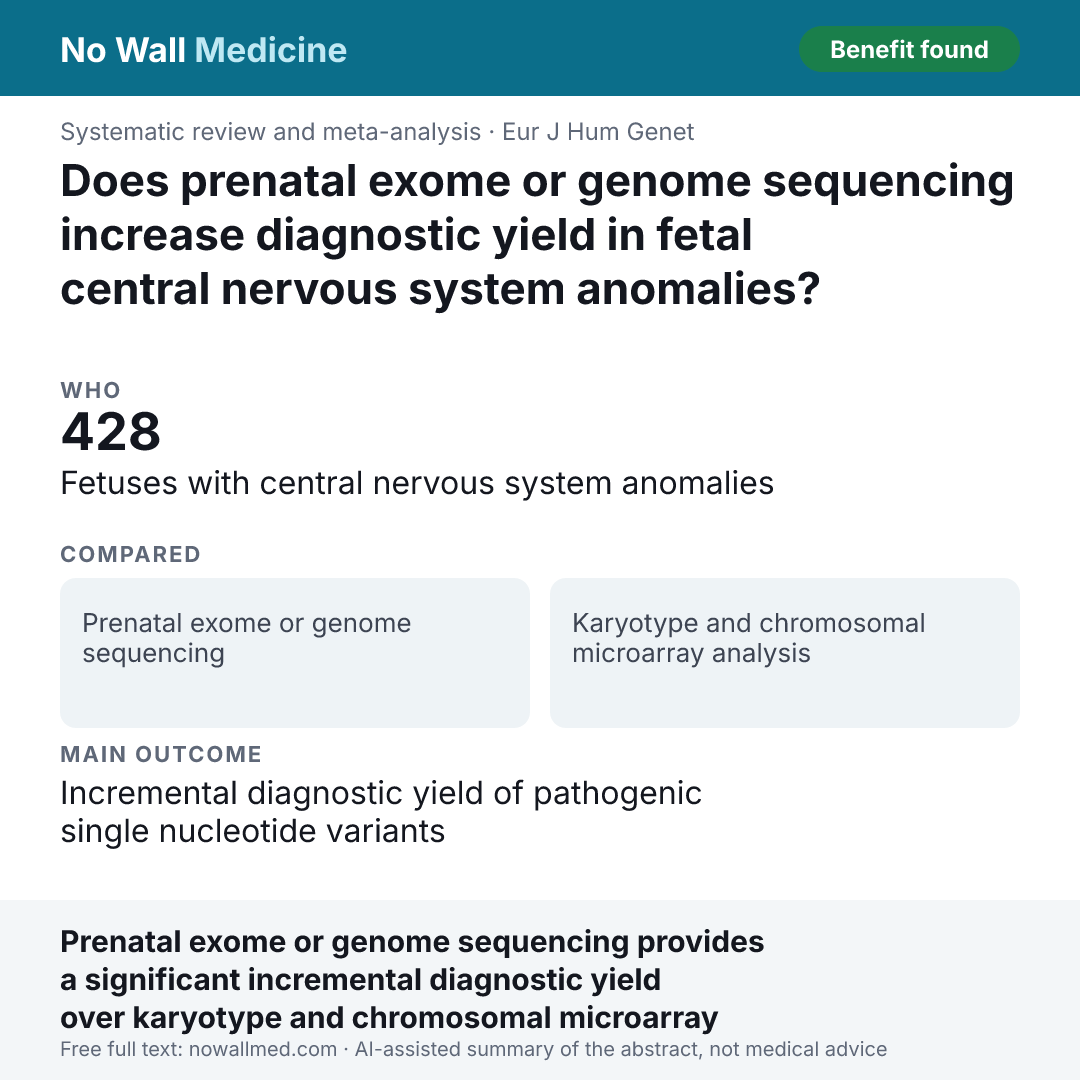
- Researchers analyzed 12 studies involving 428 fetuses to compare prenatal exome sequencing (examining protein-coding genes) or genome sequencing against standard karyotype and chromosomal microarray analysis.
- The pooled incremental diagnostic yield for prenatal exome sequencing was 38% (95% C.I.: [29%;47%]) and 36% (95% C.I.: [28%;45%]) when including genome sequencing data.
- The diagnostic yield was 22% (95% C.I.: [15%;31%]) for isolated anomalies, 33% (95% C.I.: [22%;46%]) for central nervous system-only anomalies, and 46% (95% C.I.: [38%;55%]) for non-isolated anomalies.
Why it matters: The specific detection rates for prenatal exome or genome sequencing in cases of fetal central nervous system anomalies are still under investigation.
Discussion prompts
- Would these patients look like yours? Who was left out?
- Is the main outcome one that matters to patients?
- Is the difference large enough to change what you do?
Cite: Marchionni E, Guadagnolo D, Mastromoro G, Pizzuti A. Prenatal Genome-Wide Sequencing analysis (Exome or Genome) in detecting pathogenic Single Nucleotide Variants in fetal Central Nervous System Anomalies: systematic review and meta-analysis. Eur J Hum Genet. 2024;32(7):759-769. doi:10.1038/s41431-024-01590-2
Free full text: PubMed Central · Summary and visual abstract: nowallmed.com/a/prenatal-genome-wide-sequencing-analysis-exome-or-genome-in-detecting-3yu6dx/ (AI-assisted from the abstract; check the paper before relying on it).