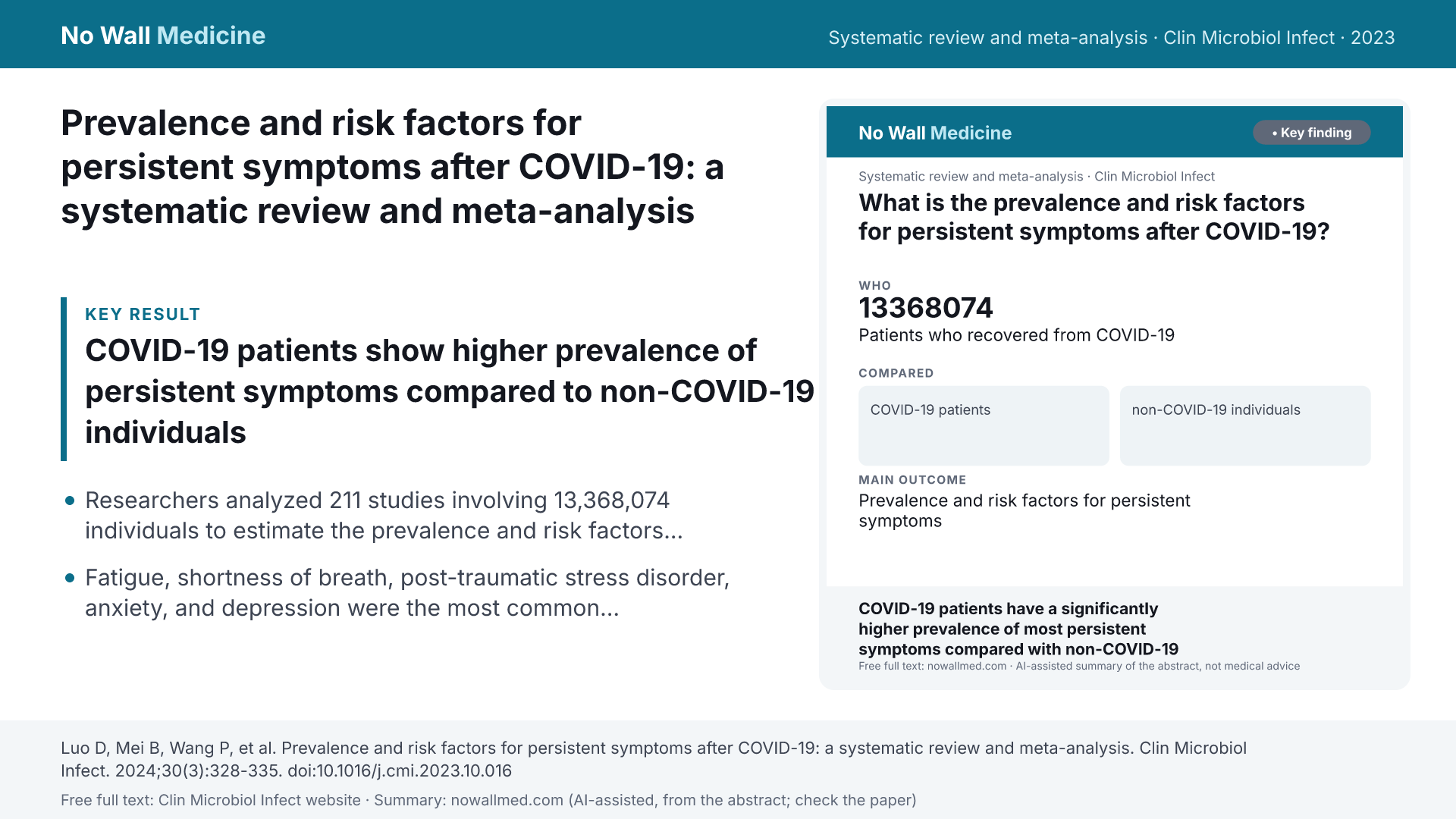
COVID-19 patients show higher prevalence of persistent symptoms compared to non-COVID-19 individuals
Prevalence and risk factors for persistent symptoms after COVID-19: a systematic review and meta-analysis
Systematic review and meta-analysisHarm found
What is the prevalence and risk factors for persistent symptoms after COVID-19?
Who
13368074
Patients who recovered from COVID-19
Compared
COVID-19 patients
non-COVID-19 individuals
Main outcome
Prevalence and risk factors for persistent symptoms
Bottom line: COVID-19 patients have a significantly higher prevalence of most persistent symptoms compared with non-COVID-19 individuals.
Clin Microbiol Infect · 2023-10-20Download image
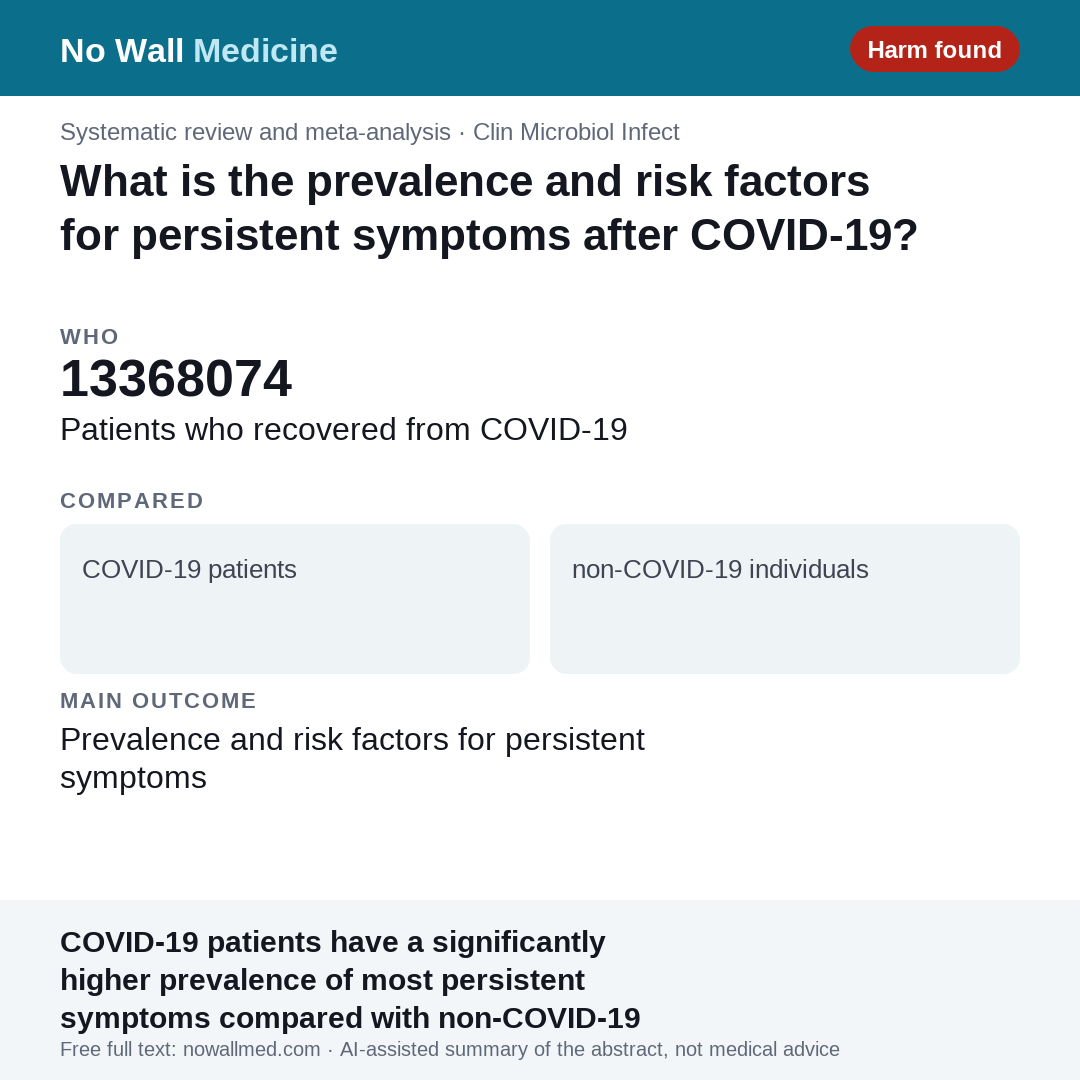
Clinical question: What is the prevalence and risk factors for persistent symptoms after COVID-19?
Why it matters: The exact prevalence and specific risk factors for long-term physical and mental symptoms following COVID-19 infection were not clearly established.
Key points
- Researchers analyzed 211 studies involving 13,368,074 individuals to estimate the prevalence and risk factors for long-term symptoms after COVID-19.
- Fatigue, shortness of breath, post-traumatic stress disorder, anxiety, and depression were the most common persistent symptoms reported.
- Higher prevalence of symptoms was associated with female gender, advanced age, severe acute illness, multiple comorbidities, longer hospital stays, and high body mass index.
Headline and key points written with AI from the paper’s abstract, with every number checked against it. Read the paper before relying on them.
Was this summary helpful?
Subject terms
Cite this article
Luo D, Mei B, Wang P, et al. Prevalence and risk factors for persistent symptoms after COVID-19: a systematic review and meta-analysis. Clin Microbiol Infect. 2023. doi:10.1016/j.cmi.2023.10.016
Spotted a mistake? Suggest a correction