Prevalence and risk factors for persistent symptoms after COVID-19: a systematic review and meta-analysis
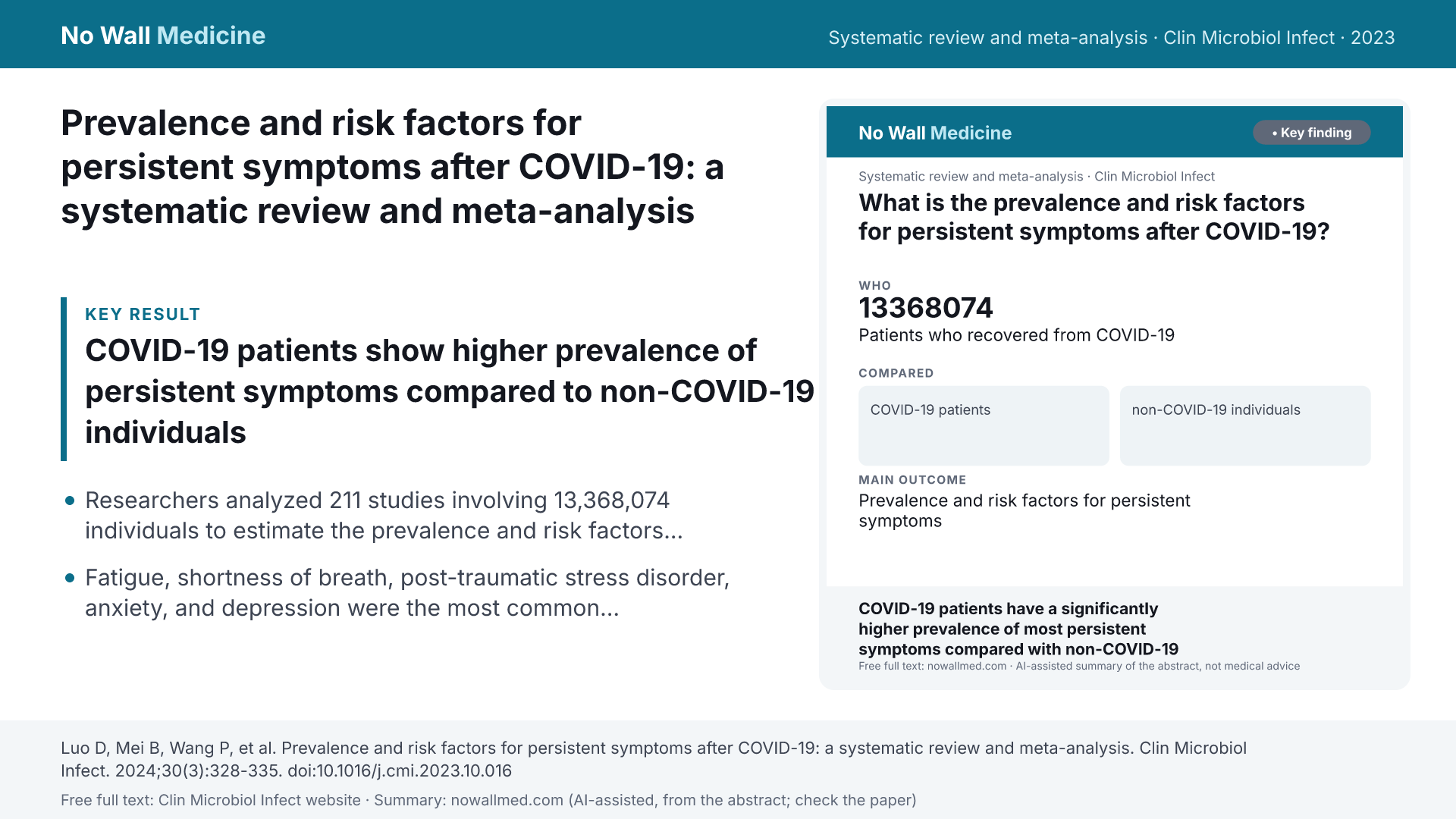
Key result: COVID-19 patients show higher prevalence of persistent symptoms compared to non-COVID-19 individuals
Systematic review and meta-analysisKey finding
What is the prevalence and risk factors for persistent symptoms after COVID-19?
Who
13368074
Patients who recovered from COVID-19
Compared
COVID-19 patients
non-COVID-19 individuals
Main outcome
Prevalence and risk factors for persistent symptoms
Bottom line: COVID-19 patients have a significantly higher prevalence of most persistent symptoms compared with non-COVID-19 individuals.
Clin Microbiol Infect · 2023-10-20
Key points
- Researchers analyzed 211 studies involving 13,368,074 individuals to estimate the prevalence and risk factors for long-term symptoms after COVID-19.
- Fatigue, shortness of breath, post-traumatic stress disorder, anxiety, and depression were the most common persistent symptoms reported.
- Higher prevalence of symptoms was associated with female gender, advanced age, severe acute illness, multiple comorbidities, longer hospital stays, and high body mass index.
Why it matters: The exact prevalence and specific risk factors for long-term physical and mental symptoms following COVID-19 infection were not clearly established.
Discussion prompts
- Would these patients look like yours? Who was left out?
- Is the main outcome one that matters to patients?
- Is the difference large enough to change what you do?
Cite: Luo D, Mei B, Wang P, et al. Prevalence and risk factors for persistent symptoms after COVID-19: a systematic review and meta-analysis. Clin Microbiol Infect. 2024;30(3):328-335. doi:10.1016/j.cmi.2023.10.016
Free full text: Clin Microbiol Infect website · Summary and visual abstract: nowallmed.com/a/prevalence-and-risk-factors-for-persistent-symptoms-after-covid-19-a-6vlvev/ (AI-assisted from the abstract; check the paper before relying on it).