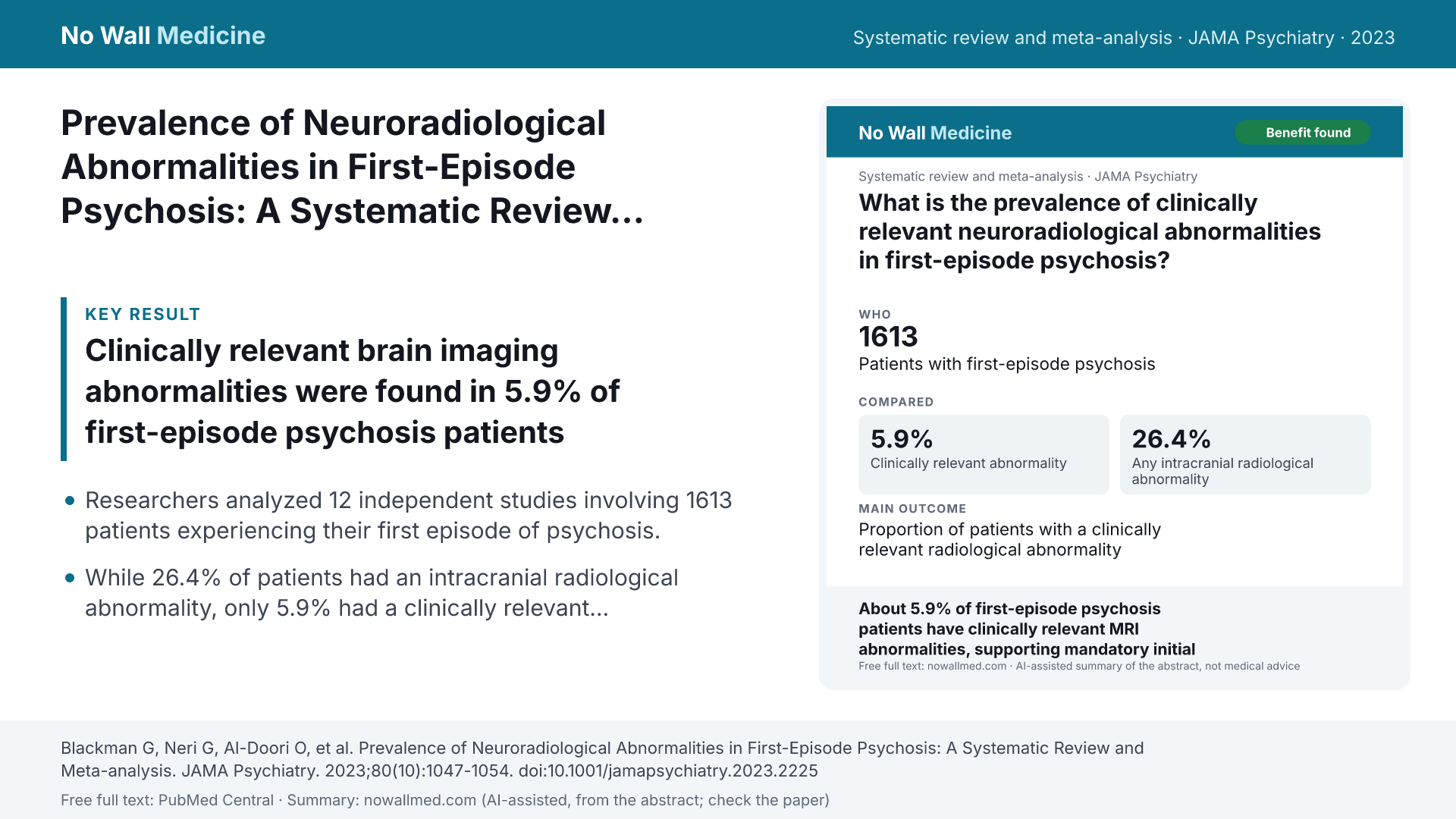
Clinically relevant brain imaging abnormalities were found in 5.9% of first-episode psychosis patients
Prevalence of Neuroradiological Abnormalities in First-Episode Psychosis: A Systematic Review and Meta-analysis
Systematic review and meta-analysisBenefit found
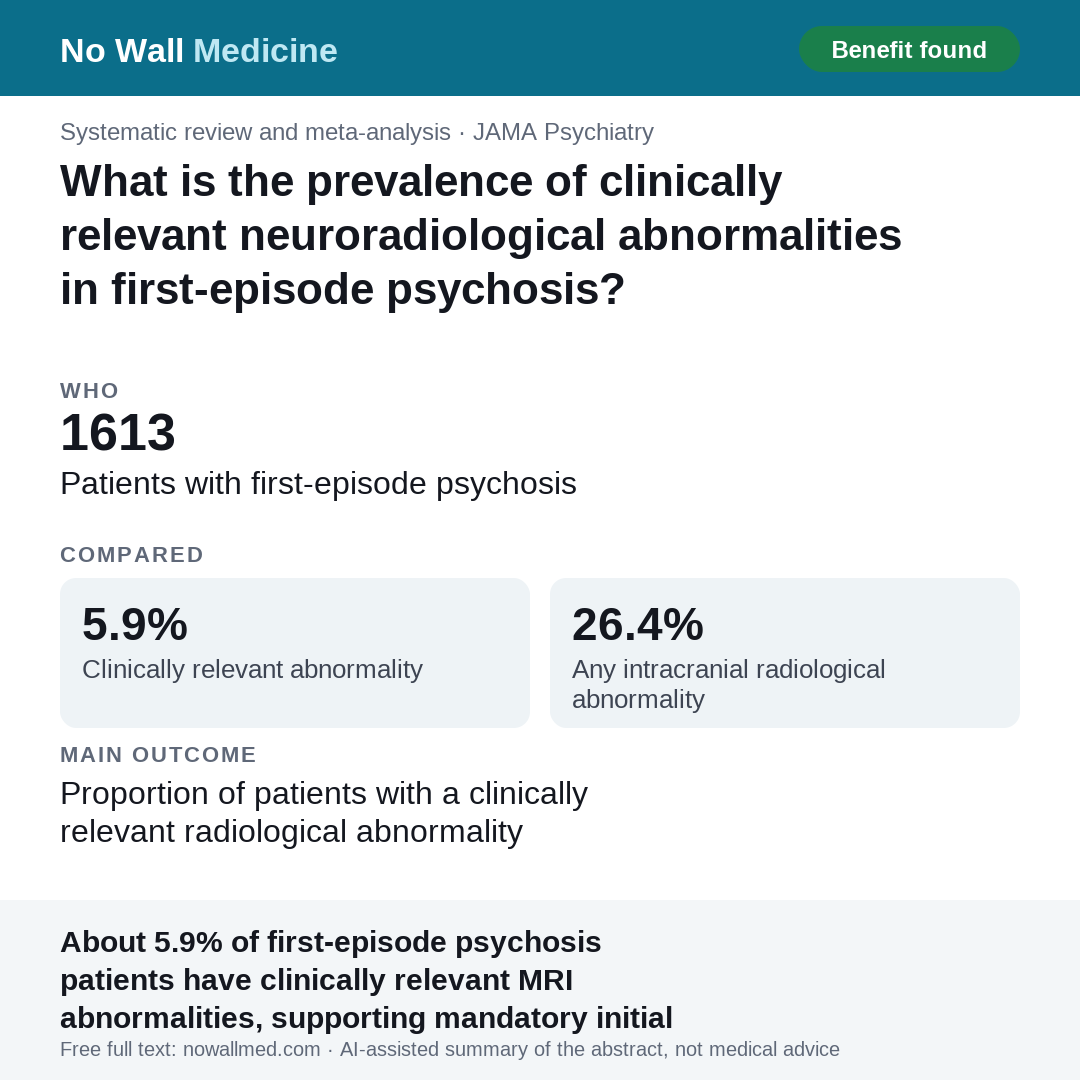
What is the prevalence of clinically relevant neuroradiological abnormalities in first-episode psychosis?
Who
1613
Patients with first-episode psychosis
Compared
5.9%Clinically relevant abnormality (95% CI, 3.2%-9.0%)
26.4%Any intracranial radiological abnormality (95% CI, 16.3%-37.9%)
Main outcome
Proportion of patients with a clinically relevant radiological abnormality
Bottom line: About 5.9% of first-episode psychosis patients have clinically relevant MRI abnormalities, supporting mandatory initial brain imaging.
Limitation: There were high degrees of heterogeneity among the studies for these outcomes.
JAMA Psychiatry · 2023-07-12Download image
Clinical question: What is the prevalence of clinically relevant neuroradiological abnormalities in first-episode psychosis?
Why it matters: The prevalence of clinically relevant brain magnetic resonance imaging abnormalities in individuals experiencing their first episode of psychosis is unclear.
Key points
- Researchers analyzed 12 independent studies involving 1613 patients experiencing their first episode of psychosis.
- While 26.4% of patients had an intracranial radiological abnormality, only 5.9% had a clinically relevant abnormality that could change diagnosis or management.
- The most common clinically relevant findings were white matter abnormalities at 0.9% and cysts at 0.5%.
Limitation the authors note: There were high degrees of heterogeneity among the studies, ranging from 73% to 95%.
Headline and key points written with AI from the paper’s abstract, with every number checked against it. Read the paper before relying on them.
Was this summary helpful?
Subject terms
Cite this article
Blackman G, Neri G, Al-Doori O, et al. Prevalence of Neuroradiological Abnormalities in First-Episode Psychosis: A Systematic Review and Meta-analysis. JAMA Psychiatry. 2023. doi:10.1001/jamapsychiatry.2023.2225
Spotted a mistake? Suggest a correction