Prevalence of Neuroradiological Abnormalities in First-Episode Psychosis: A Systematic Review and Meta-analysis
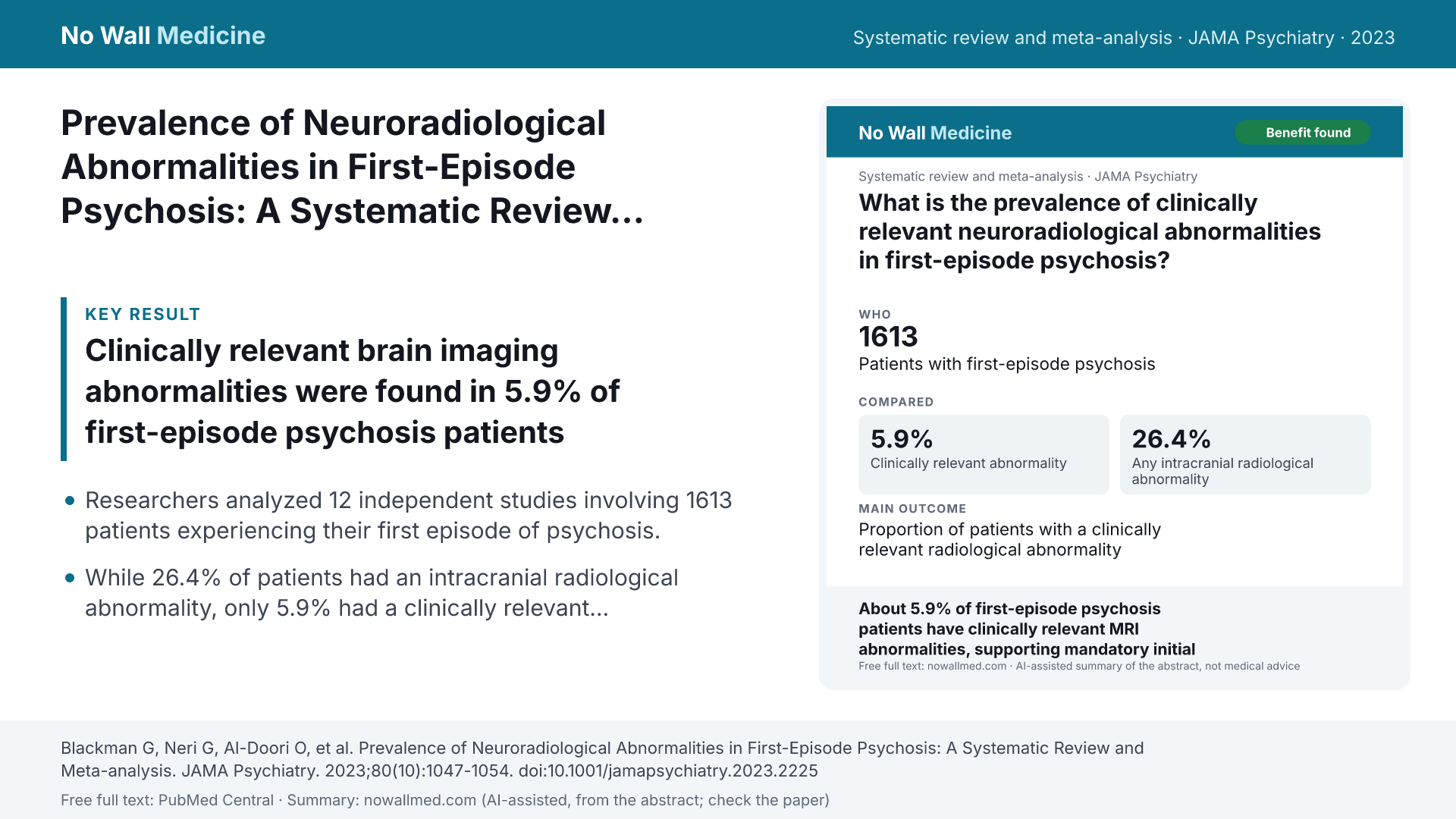
Key result: Clinically relevant brain imaging abnormalities were found in 5.9% of first-episode psychosis patients
Systematic review and meta-analysisBenefit found
What is the prevalence of clinically relevant neuroradiological abnormalities in first-episode psychosis?
Who
1613
Patients with first-episode psychosis
Compared
5.9%Clinically relevant abnormality (95% CI, 3.2%-9.0%)
26.4%Any intracranial radiological abnormality (95% CI, 16.3%-37.9%)
Main outcome
Proportion of patients with a clinically relevant radiological abnormality
Bottom line: About 5.9% of first-episode psychosis patients have clinically relevant MRI abnormalities, supporting mandatory initial brain imaging.
Limitation: There were high degrees of heterogeneity among the studies for these outcomes.
JAMA Psychiatry · 2023-07-12
Key points
- Researchers analyzed 12 independent studies involving 1613 patients experiencing their first episode of psychosis.
- While 26.4% of patients had an intracranial radiological abnormality, only 5.9% had a clinically relevant abnormality that could change diagnosis or management.
- The most common clinically relevant findings were white matter abnormalities at 0.9% and cysts at 0.5%.
Limitation the authors note: There were high degrees of heterogeneity among the studies, ranging from 73% to 95%.
Discussion prompts
- Would these patients look like yours? Who was left out?
- Is the main outcome one that matters to patients?
- Is the difference large enough to change what you do?
Cite: Blackman G, Neri G, Al-Doori O, et al. Prevalence of Neuroradiological Abnormalities in First-Episode Psychosis: A Systematic Review and Meta-analysis. JAMA Psychiatry. 2023;80(10):1047-1054. doi:10.1001/jamapsychiatry.2023.2225
Free full text: PubMed Central · Summary and visual abstract: nowallmed.com/a/prevalence-of-neuroradiological-abnormalities-in-first-episode-wr2fba/ (AI-assisted from the abstract; check the paper before relying on it).