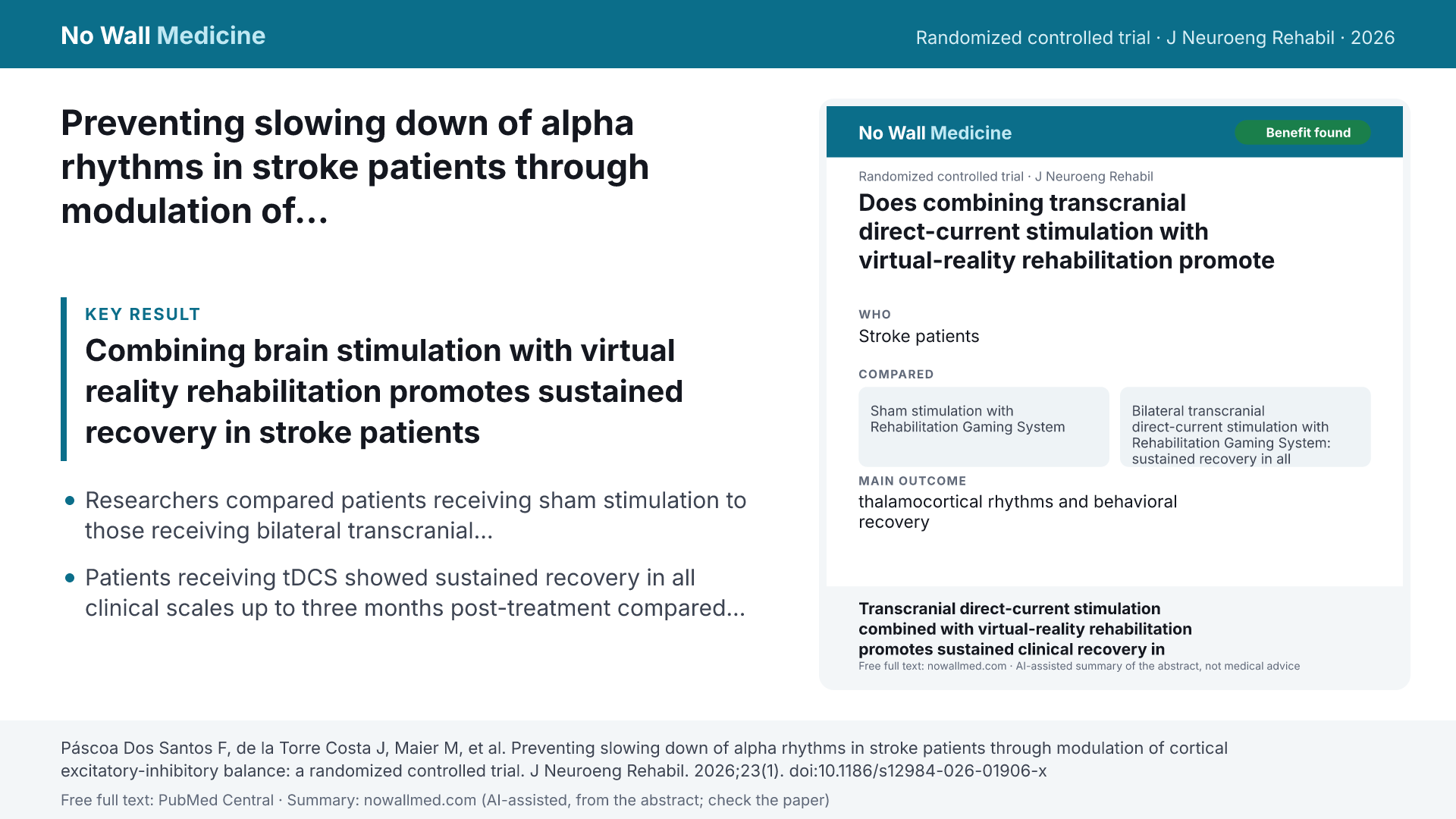
Combining brain stimulation with virtual reality rehabilitation promotes sustained recovery in stroke patients
Preventing slowing down of alpha rhythms in stroke patients through modulation of cortical excitatory-inhibitory balance: a randomized controlled trial
Randomized controlled trialBenefit found
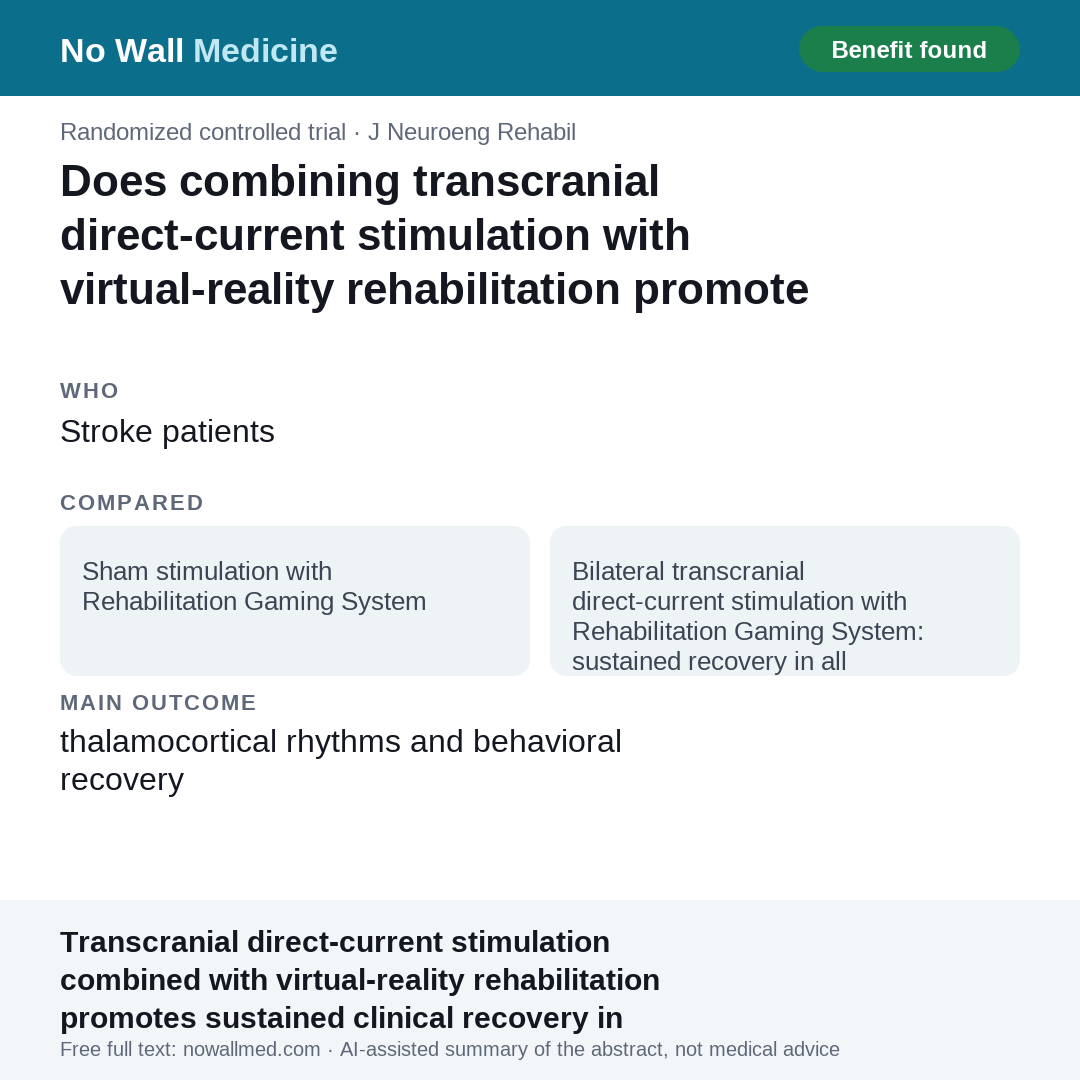
Does combining transcranial direct-current stimulation with virtual-reality rehabilitation promote sustained stroke recovery?
Who
Stroke patients
Compared
Sham stimulation with Rehabilitation Gaming System
Bilateral transcranial direct-current stimulation with Rehabilitation Gaming System: sustained recovery in all clinical scales up to three months post-treatment
Main outcome
thalamocortical rhythms and behavioral recovery
Bottom line: Transcranial direct-current stimulation combined with virtual-reality rehabilitation promotes sustained clinical recovery in stroke patients.
Limitation: no correlation between changes in alpha rhythms and motor recovery
J Neuroeng Rehabil · 2026-02-17Download image
Clinical question: Does combining transcranial direct-current stimulation with virtual-reality rehabilitation promote sustained stroke recovery?
Why it matters: Most rehabilitation techniques struggle to promote sustained recovery in the months following treatment, and the functional relevance of thalamocortical dysrhythmia in stroke patients is unclear.
Key points
- Researchers compared patients receiving sham stimulation to those receiving bilateral transcranial direct-current stimulation (tDCS) during virtual-reality based rehabilitation.
- Patients receiving tDCS showed sustained recovery in all clinical scales up to three months post-treatment compared to the sham group.
- While tDCS counteracted the slowing of alpha rhythms, no correlation was found between changes in these rhythms and motor recovery.
Headline and key points written with AI from the paper’s abstract, with every number checked against it. Read the paper before relying on them.
Was this summary helpful?
Subject terms
Cite this article
Páscoa Dos Santos F, de la Torre Costa J, Maier M, et al. Preventing slowing down of alpha rhythms in stroke patients through modulation of cortical excitatory-inhibitory balance: a randomized controlled trial. J Neuroeng Rehabil. 2026. doi:10.1186/s12984-026-01906-x
Spotted a mistake? Suggest a correction