Prevention strategies and modifiable risk factors for upper extremity injury: a systematic review and meta-analysis for the Female, woman and/or girl Athlete Injury pRevention (FAIR) consensus
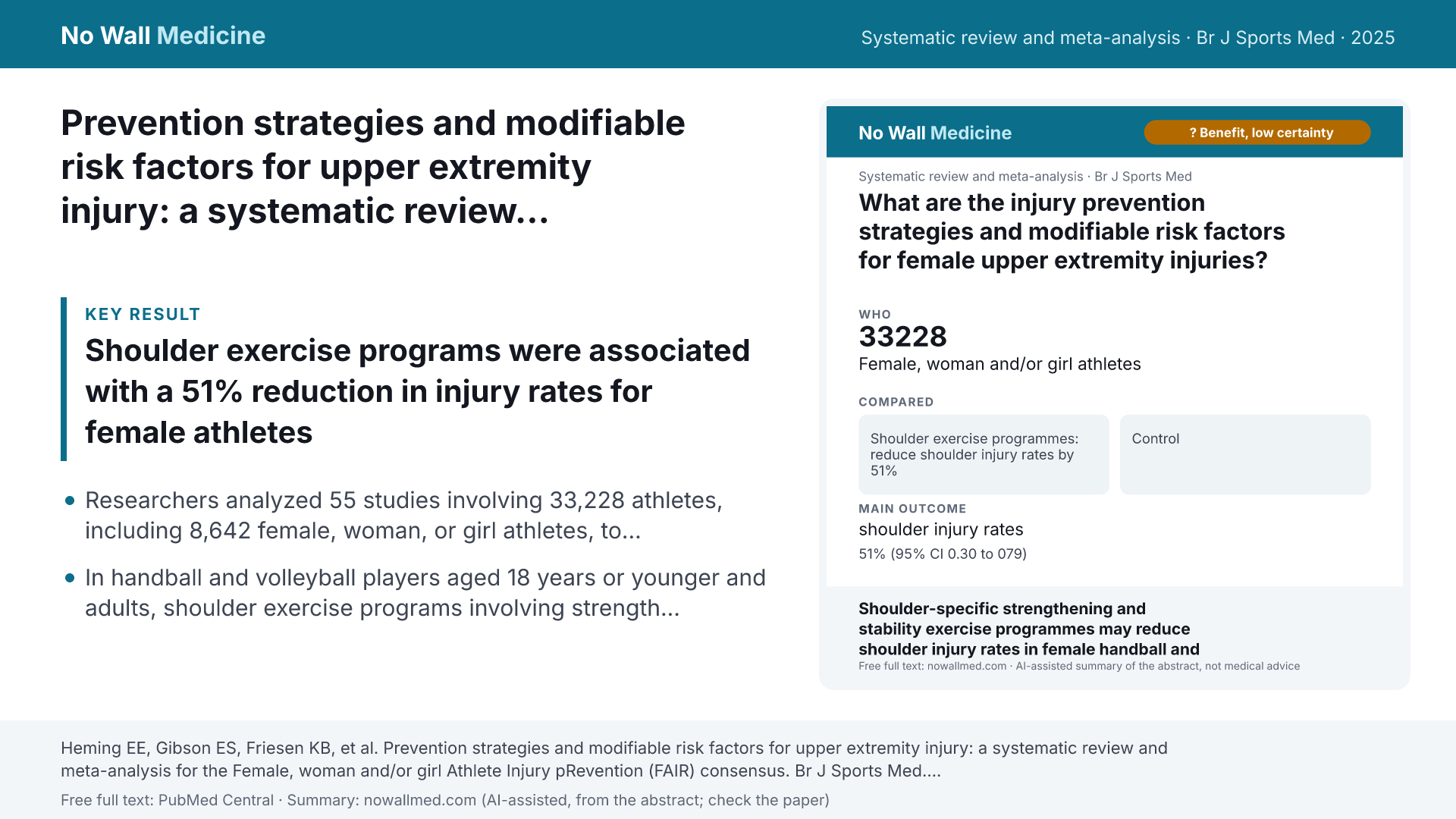
Key result: Shoulder exercise programs were associated with a 51% reduction in injury rates for female athletes
Key points
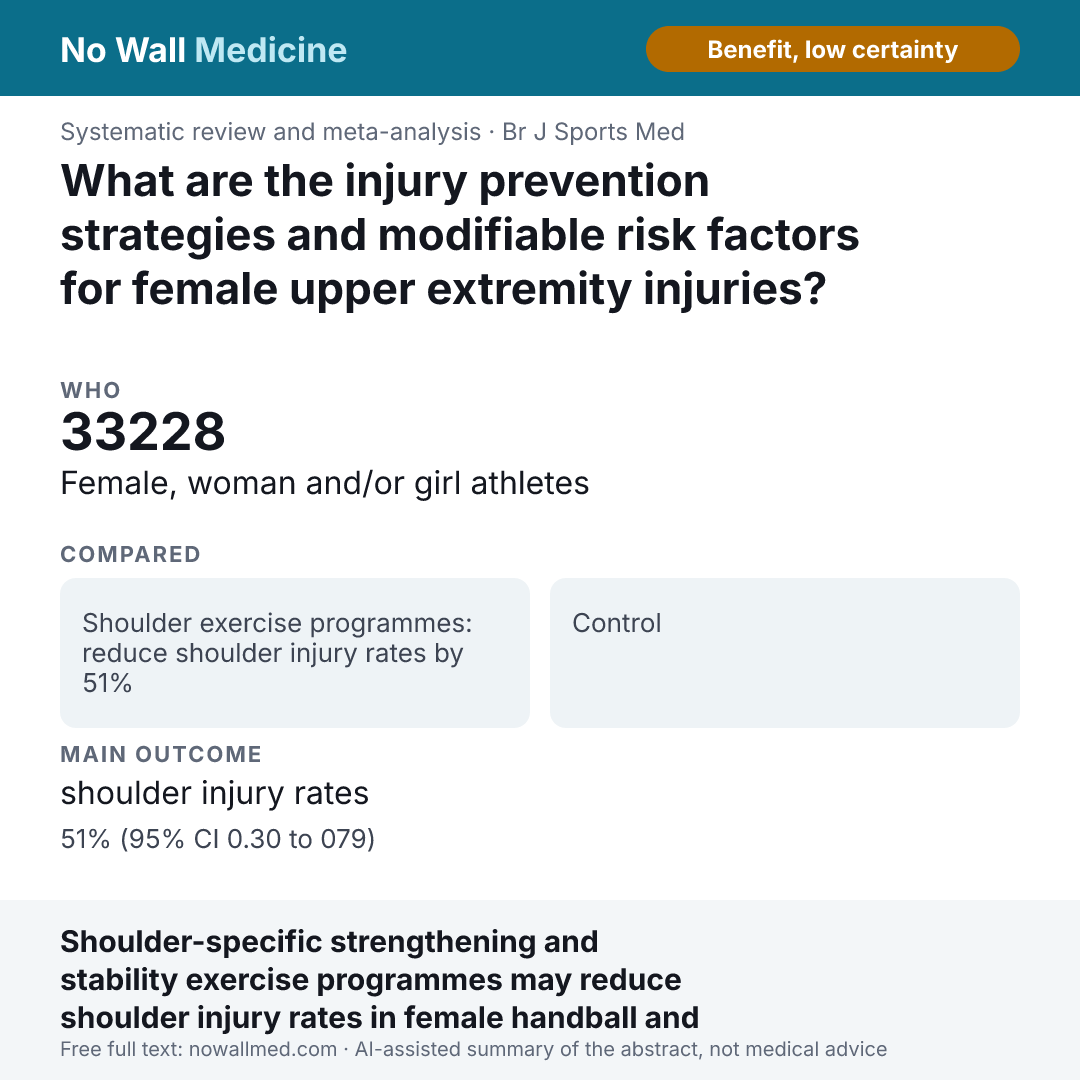
- Researchers analyzed 55 studies involving 33,228 athletes, including 8,642 female, woman, or girl athletes, to identify injury risk factors and prevention methods.
- In handball and volleyball players aged 18 years or younger and adults, shoulder exercise programs involving strength and stability were associated with a 51% reduction in shoulder injury rates.
- Identified risk factors included less range of motion, less shoulder muscle strength, high training load, scapular dyskinesis, high sport specialization, equipment differences, and less sport-specific conditioning.
Limitation the authors note: The understanding of injury prevention is limited by heterogeneity across injury outcomes, interventions, risk factors, and a lack of female-specific data.
Discussion prompts
- Would these patients look like yours? Who was left out?
- Is the main outcome one that matters to patients?
- Is the difference large enough to change what you do?
Cite: Heming EE, Gibson ES, Friesen KB, et al. Prevention strategies and modifiable risk factors for upper extremity injury: a systematic review and meta-analysis for the Female, woman and/or girl Athlete Injury pRevention (FAIR) consensus. Br J Sports Med. 2025;59(22):1587-1598. doi:10.1136/bjsports-2025-109907
Free full text: PubMed Central · Summary and visual abstract: nowallmed.com/a/prevention-strategies-and-modifiable-risk-factors-for-upper-extremity-ivaxpk/ (AI-assisted from the abstract; check the paper before relying on it).