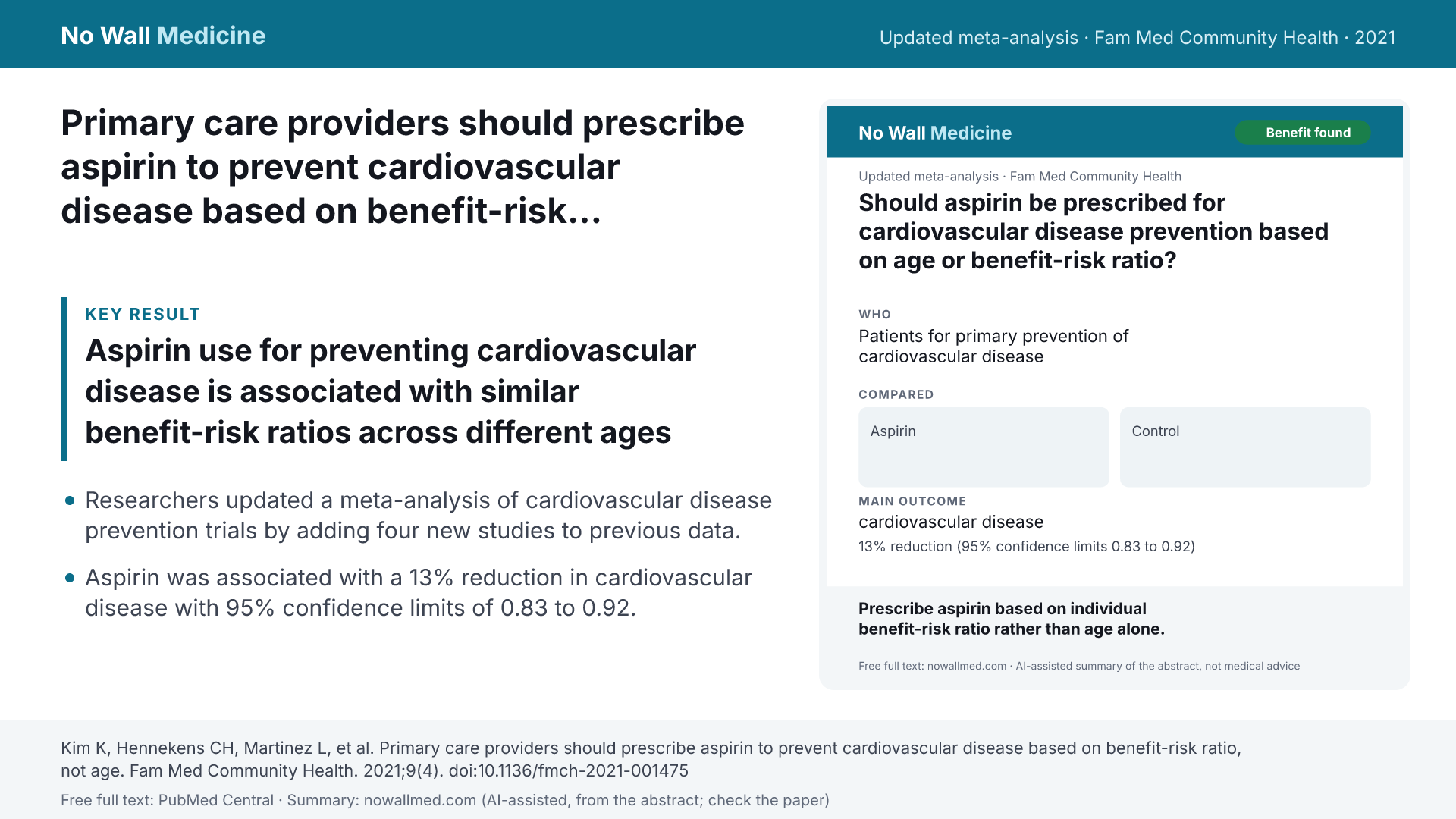
Aspirin use for preventing cardiovascular disease is associated with similar benefit-risk ratios across different ages
Primary care providers should prescribe aspirin to prevent cardiovascular disease based on benefit-risk ratio, not age
Updated meta-analysisBenefit found
Should aspirin be prescribed for cardiovascular disease prevention based on age or benefit-risk ratio?
Who
Patients for primary prevention of cardiovascular disease
Compared
Aspirin
Control
Main outcome
cardiovascular disease
Result: 13% reduction (95% confidence limits 0.83 to 0.92)
Bottom line: Prescribe aspirin based on individual benefit-risk ratio rather than age alone.
Fam Med Community Health · 2021-12-25Download image
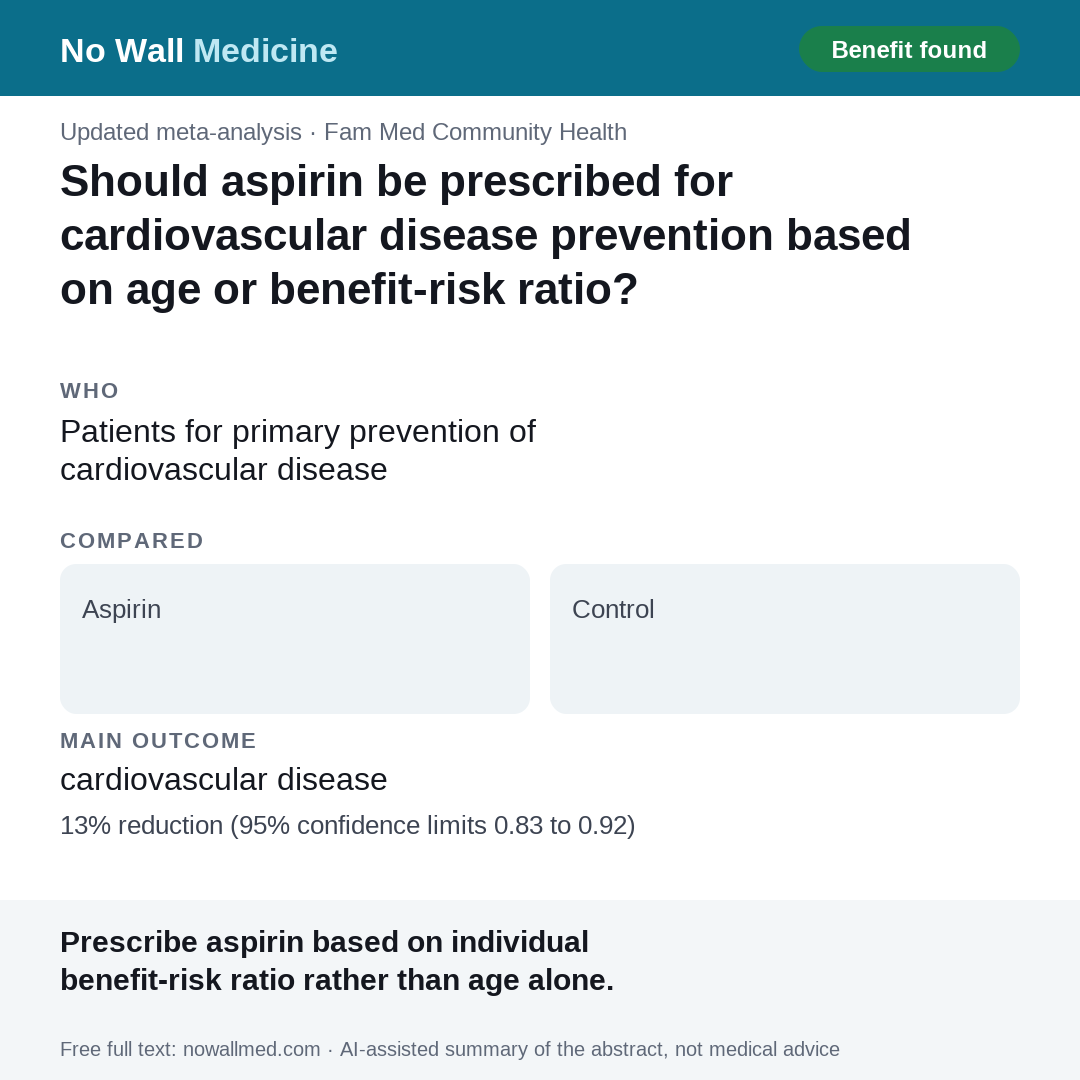
Clinical question: Should aspirin be prescribed for cardiovascular disease prevention based on age or benefit-risk ratio?
Why it matters: Current guidelines restrict aspirin use for preventing cardiovascular disease to patients under 70 or 60 years old.
Key points
- Researchers updated a meta-analysis of cardiovascular disease prevention trials by adding four new studies to previous data.
- Aspirin was associated with a 13% reduction in cardiovascular disease with 95% confidence limits of 0.83 to 0.92.
- The benefits of aspirin were found to be similar at older ages in each of the trials studied.
Headline and key points written with AI from the paper’s abstract, with every number checked against it. Read the paper before relying on them.
Was this summary helpful?
Abstract
Recent guidelines restricted aspirin (ASA) in primary prevention of cardiovascular disease (CVD) to patients <70 years old and more recent guidance to <60.In the most comprehensive prior meta-analysis, the Antithrombotic Trialists Collaboration reported a significant 12% reduction in CVD with similar benefit-risk ratios at older ages. Using Preferred Reporting Items for Systematic Reviews and Meta-Analyses guidelines, four trials were added to an updated meta-analysis.ASA produced a statistically significant 13% reduction in CVD with 95% confidence limits (0.83 to 0.92) with similar benefits at older ages in each of the trials.Primary care providers should make individual decisions whether to prescribe ASA based on benefit-risk ratio, not simply age. When the absolute risk of CVD is >10%, benefits of ASA will generally outweigh risks of significant bleeding. ASA should be considered only after implementation of therapeutic lifestyle changes and other drugs of proven benefit such as statins, which are, at the very least, additive to ASA. Our perspective is that individual clinical judgements by primary care providers about prescription of ASA in primary prevention of CVD should be based on our evidence-based solution of weighing all the absolute benefits and risks rather than age. This strategy would do far more good for far more patients as well as far more good than harm in both developed and developing countries. This new and novel strategy for primary care providers to consider in prescribing ASA in primary prevention of CVD is the same as the general approach suggested by Professor Geoffrey Rose decades ago.
Abstract reproduced under the article’s CC BY NC licence.
Subject terms
Cite this article
Kim K, Hennekens CH, Martinez L, Gaziano JM, Pfeffer MA, Biglione B. Primary care providers should prescribe aspirin to prevent cardiovascular disease based on benefit-risk ratio, not age. Fam Med Community Health. 2021. doi:10.1136/fmch-2021-001475
Spotted a mistake? Suggest a correction