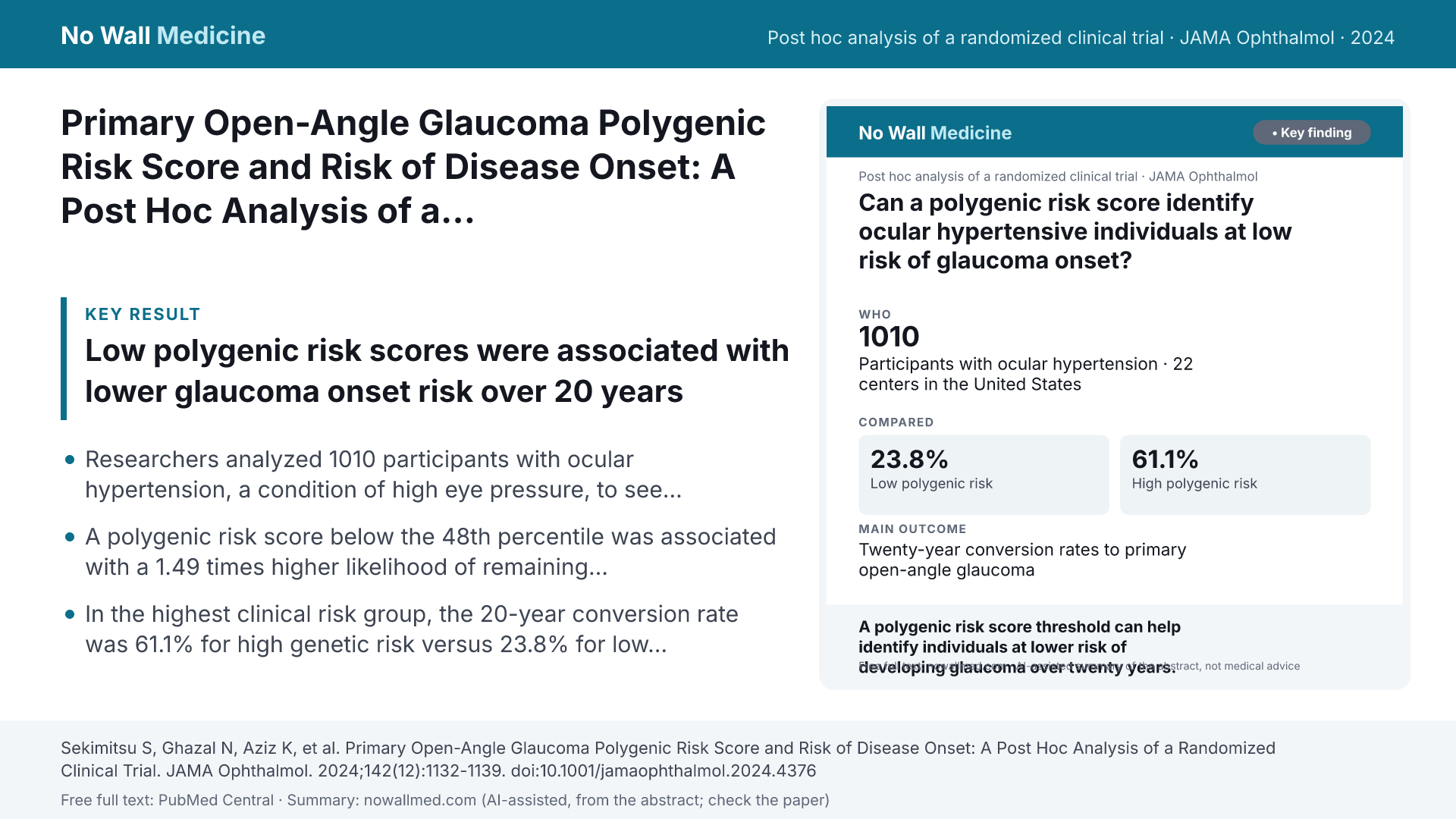
Low polygenic risk scores were associated with lower glaucoma onset risk over 20 years
Primary Open-Angle Glaucoma Polygenic Risk Score and Risk of Disease Onset: A Post Hoc Analysis of a Randomized Clinical Trial
Post hoc analysis of a randomized clinical trialBenefit found
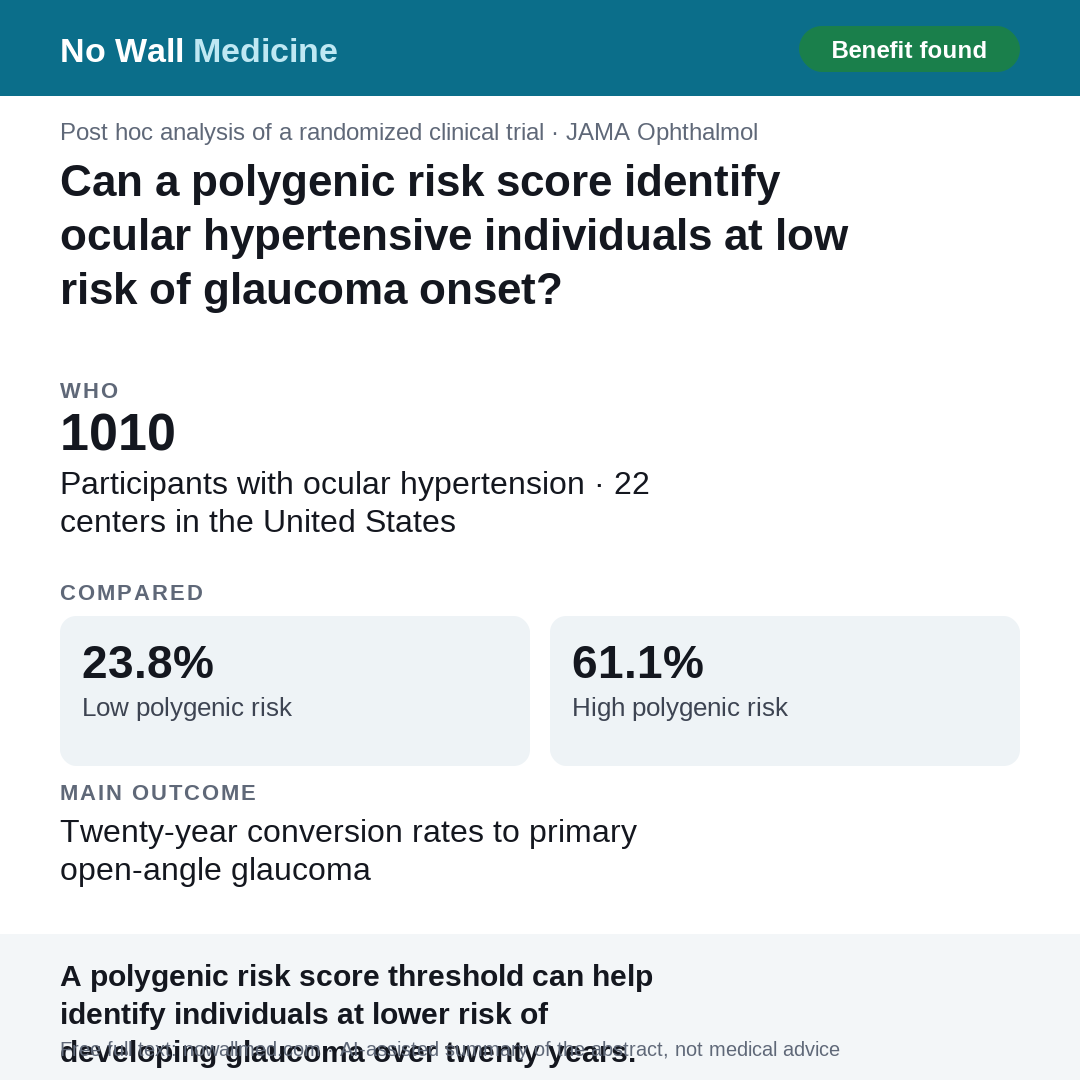
Can a polygenic risk score identify ocular hypertensive individuals at low risk of glaucoma onset?
Who
1010
Participants with ocular hypertension · 22 centers in the United States
Compared
23.8%Low polygenic risk
61.1%High polygenic risk
Main outcome
Twenty-year conversion rates to primary open-angle glaucoma
Result: hazard ratio 1.64 (95% CI, 1.13-2.38)
Bottom line: A polygenic risk score threshold can help identify individuals at lower risk of developing glaucoma over twenty years.
Limitation: This was a post hoc analysis of the Ocular Hypertension Treatment Study.
JAMA Ophthalmol · 2024-11-07Download image
Clinical question: Can a polygenic risk score identify ocular hypertensive individuals at low risk of glaucoma onset?
Why it matters: It is unknown if a polygenic risk score, which measures many genetic variations, can identify individuals with ocular hypertension who are at low risk for developing glaucoma.
Key points
- Researchers analyzed 1010 participants with ocular hypertension, a condition of high eye pressure, to see if genetic risk scores could predict glaucoma onset.
- A polygenic risk score below the 48th percentile was associated with a 1.49 times higher likelihood of remaining disease-free after 20 years of follow-up.
- In the highest clinical risk group, the 20-year conversion rate was 61.1% for high genetic risk versus 23.8% for low genetic risk.
Headline and key points written with AI from the paper’s abstract, with every number checked against it. Read the paper before relying on them.
Was this summary helpful?
Cite this article
Sekimitsu S, Ghazal N, Aziz K, Zhao Y, Singh RK, Fingert JH. Primary Open-Angle Glaucoma Polygenic Risk Score and Risk of Disease Onset: A Post Hoc Analysis of a Randomized Clinical Trial. JAMA Ophthalmol. 2024. doi:10.1001/jamaophthalmol.2024.4376
Spotted a mistake? Suggest a correction