Primary Open-Angle Glaucoma Polygenic Risk Score and Risk of Disease Onset: A Post Hoc Analysis of a Randomized Clinical Trial
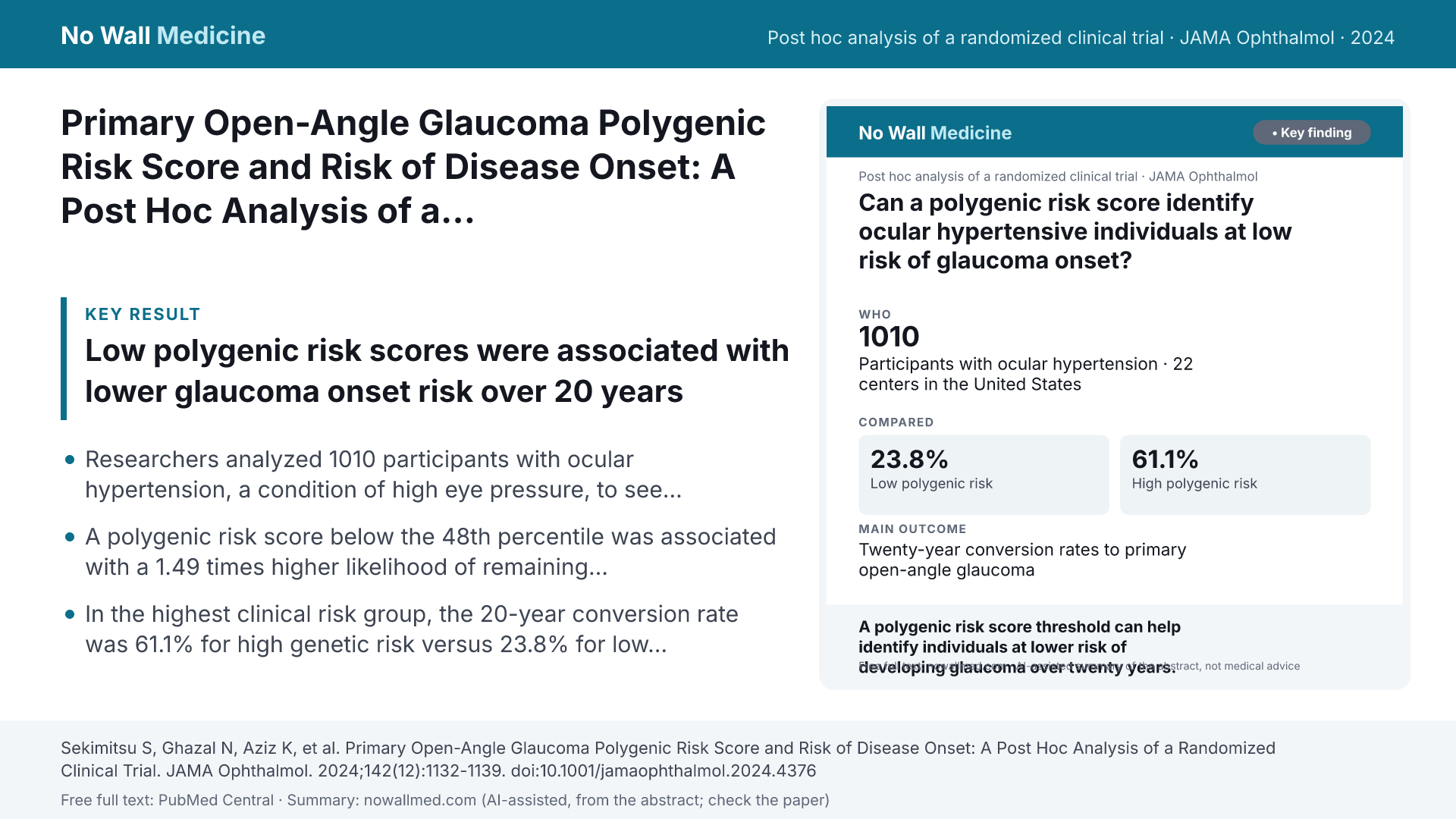
Key result: Low polygenic risk scores were associated with lower glaucoma onset risk over 20 years
Post hoc analysis of a randomized clinical trialKey finding
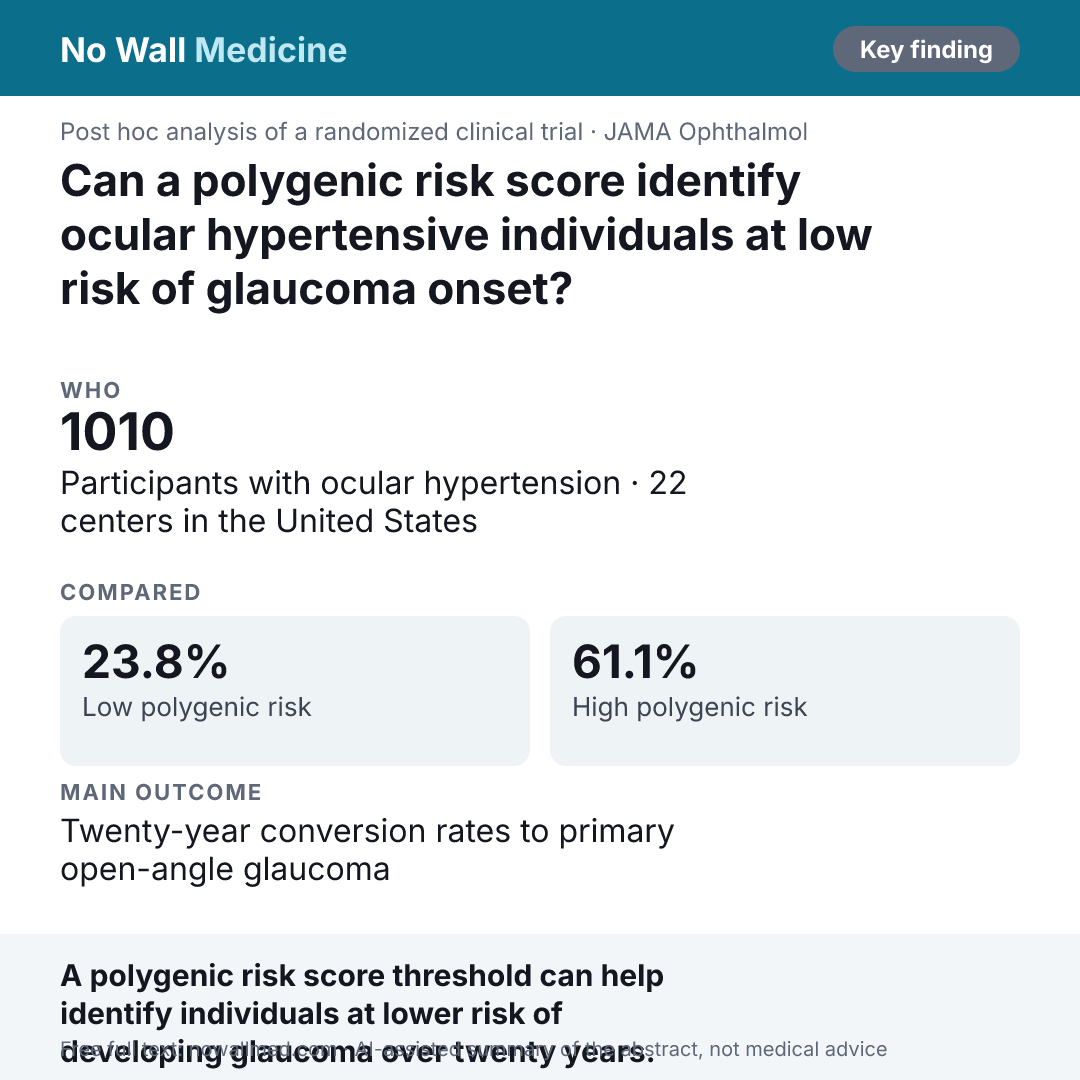
Can a polygenic risk score identify ocular hypertensive individuals at low risk of glaucoma onset?
Who
1010
Participants with ocular hypertension · 22 centers in the United States
Compared
23.8%Low polygenic risk
61.1%High polygenic risk
Main outcome
Twenty-year conversion rates to primary open-angle glaucoma
Result: hazard ratio 1.64 (95% CI, 1.13-2.38)
Bottom line: A polygenic risk score threshold can help identify individuals at lower risk of developing glaucoma over twenty years.
Limitation: This was a post hoc analysis of the Ocular Hypertension Treatment Study.
JAMA Ophthalmol · 2024-11-07 · Save PNG
Key points
- Researchers analyzed 1010 participants with ocular hypertension, a condition of high eye pressure, to see if genetic risk scores could predict glaucoma onset.
- A polygenic risk score below the 48th percentile was associated with a 1.49 times higher likelihood of remaining disease-free after 20 years of follow-up.
- In the highest clinical risk group, the 20-year conversion rate was 61.1% for high genetic risk versus 23.8% for low genetic risk.
Discussion prompts
- Would these patients look like yours? Who was left out?
- Is the main outcome one that matters to patients?
- Is the difference large enough to change what you do?
Cite: Sekimitsu S, Ghazal N, Aziz K, et al. Primary Open-Angle Glaucoma Polygenic Risk Score and Risk of Disease Onset: A Post Hoc Analysis of a Randomized Clinical Trial. JAMA Ophthalmol. 2024;142(12):1132-1139. doi:10.1001/jamaophthalmol.2024.4376
Free full text: PubMed Central · Summary and visual abstract: nowallmed.com/a/primary-open-angle-glaucoma-polygenic-risk-score-and-risk-of-disease-122t5m6/ (AI-assisted from the abstract; check the paper before relying on it).