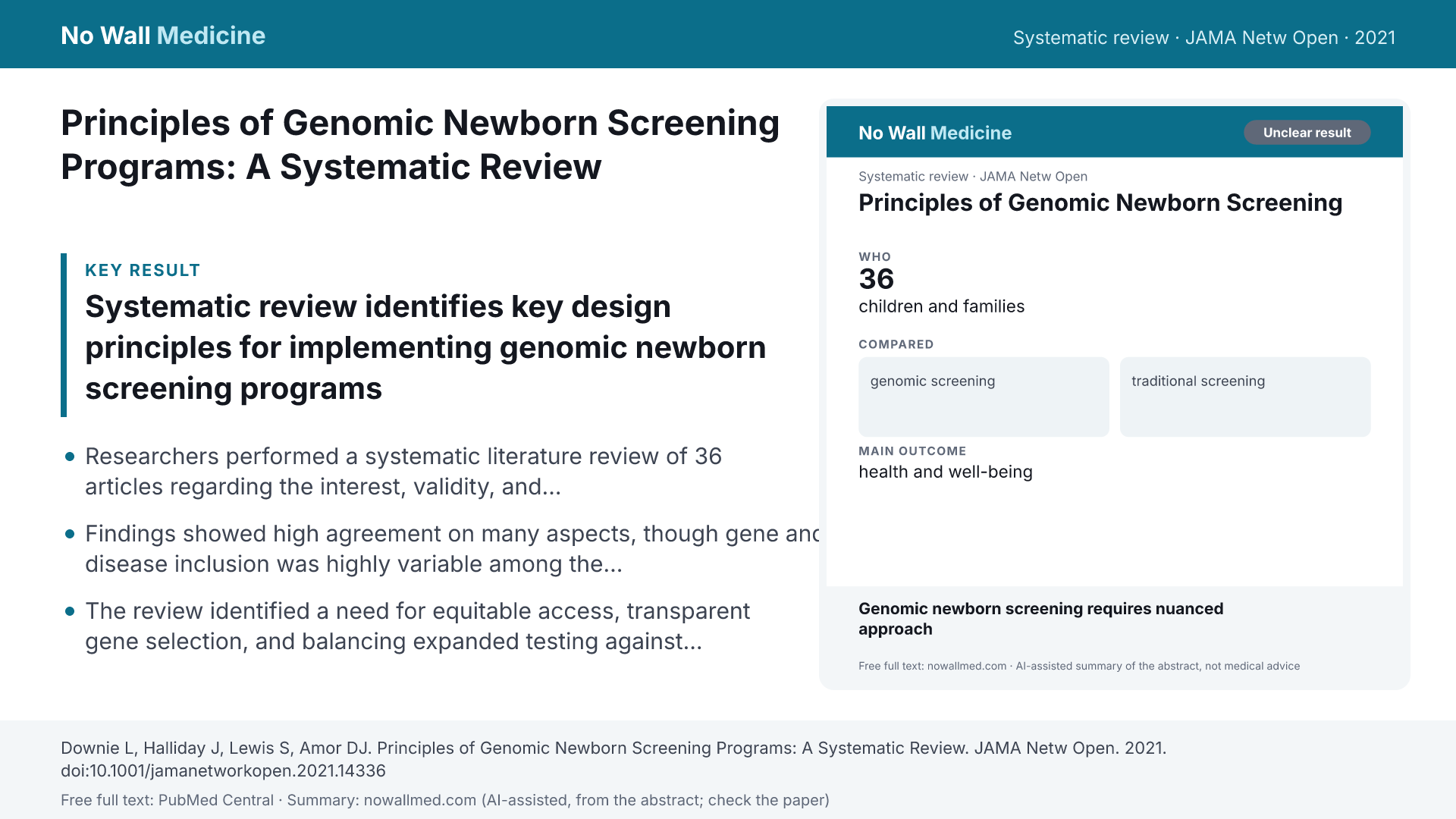
Systematic review identifies key design principles for implementing genomic newborn screening programs
Principles of Genomic Newborn Screening Programs: A Systematic Review
Systematic reviewUnclear result
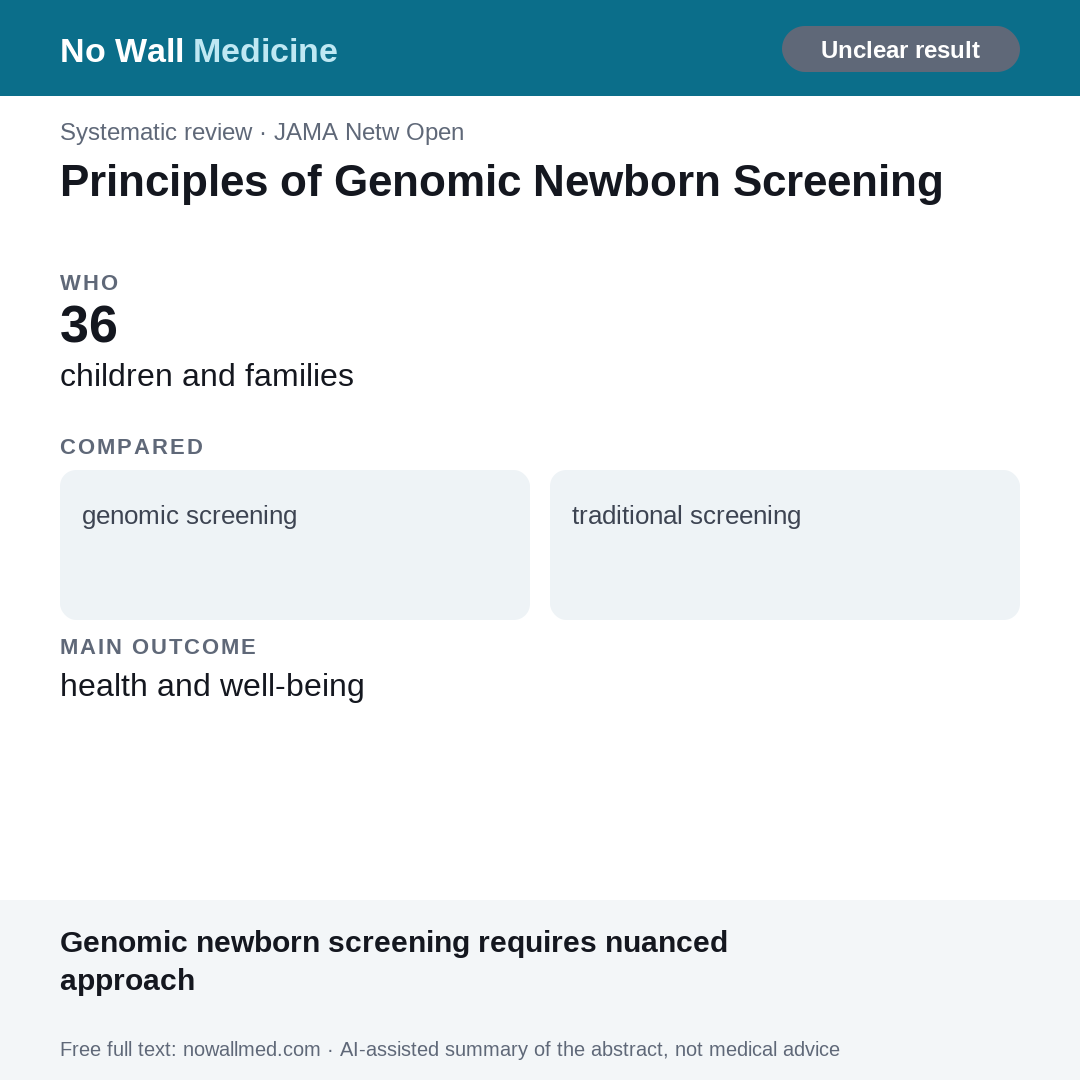
Principles of Genomic Newborn Screening
Who
36
children and families
Compared
genomic screening
traditional screening
Main outcome
health and well-being
Bottom line: Genomic newborn screening requires nuanced approach
JAMA Netw Open · 2021-07-01Download image
Why it matters: The specific requirements for designing evidence-based, acceptable, and beneficial genomic newborn screening programs were not fully summarized.
Key points
- Researchers performed a systematic literature review of 36 articles regarding the interest, validity, and ethical implications of genomic newborn screening.
- Findings showed high agreement on many aspects, though gene and disease inclusion was highly variable among the reviewed studies.
- The review identified a need for equitable access, transparent gene selection, and balancing expanded testing against the complexity of parental consent.
Headline and key points written with AI from the paper’s abstract, with every number checked against it. Read the paper before relying on them.
Was this summary helpful?
Subject terms
Cite this article
Downie L, Halliday J, Lewis S, Amor DJ. Principles of Genomic Newborn Screening Programs: A Systematic Review. JAMA Netw Open. 2021. doi:10.1001/jamanetworkopen.2021.14336
Spotted a mistake? Suggest a correction