Principles of Genomic Newborn Screening Programs: A Systematic Review
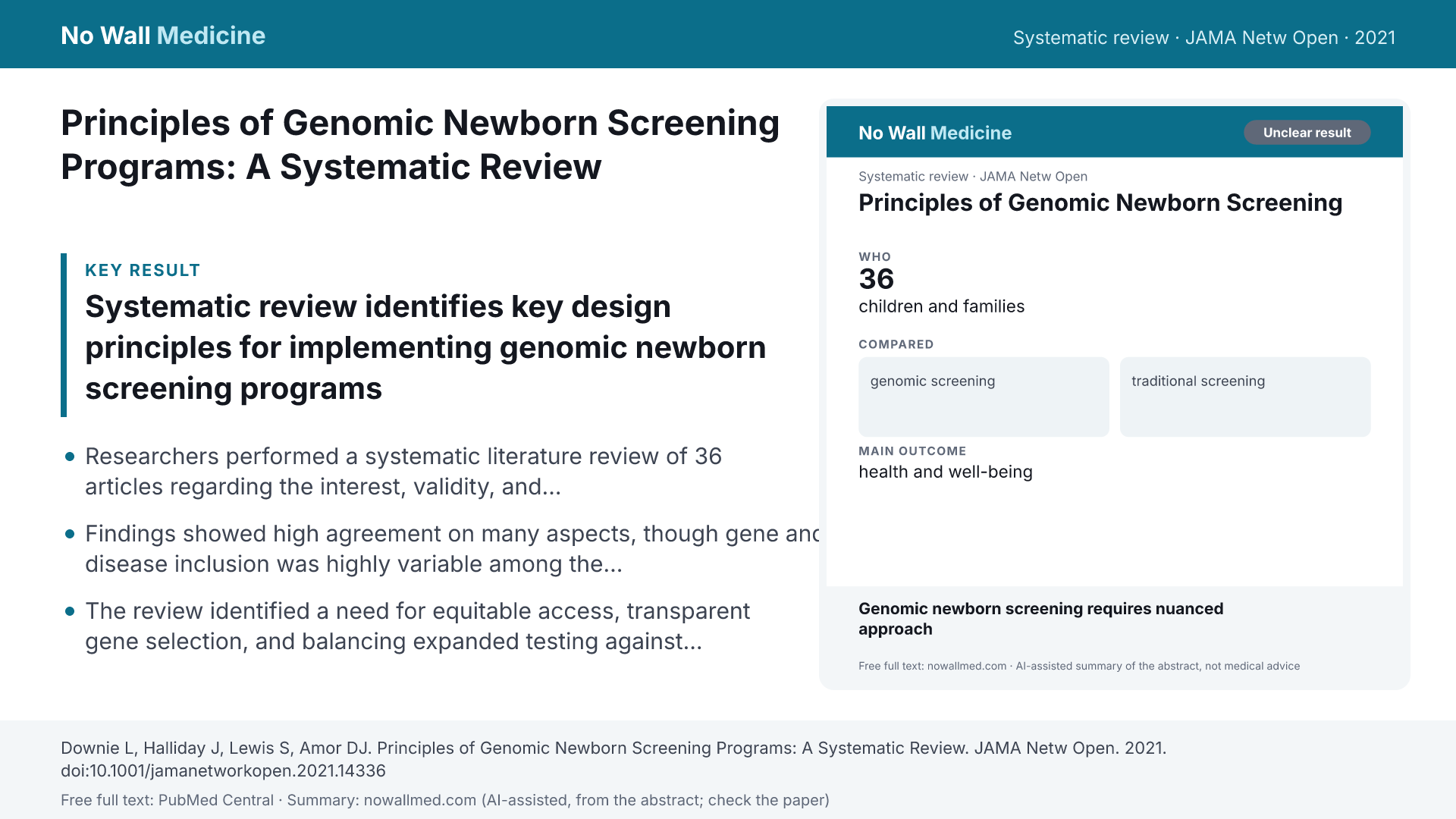
Key result: Systematic review identifies key design principles for implementing genomic newborn screening programs
Systematic reviewUnclear result
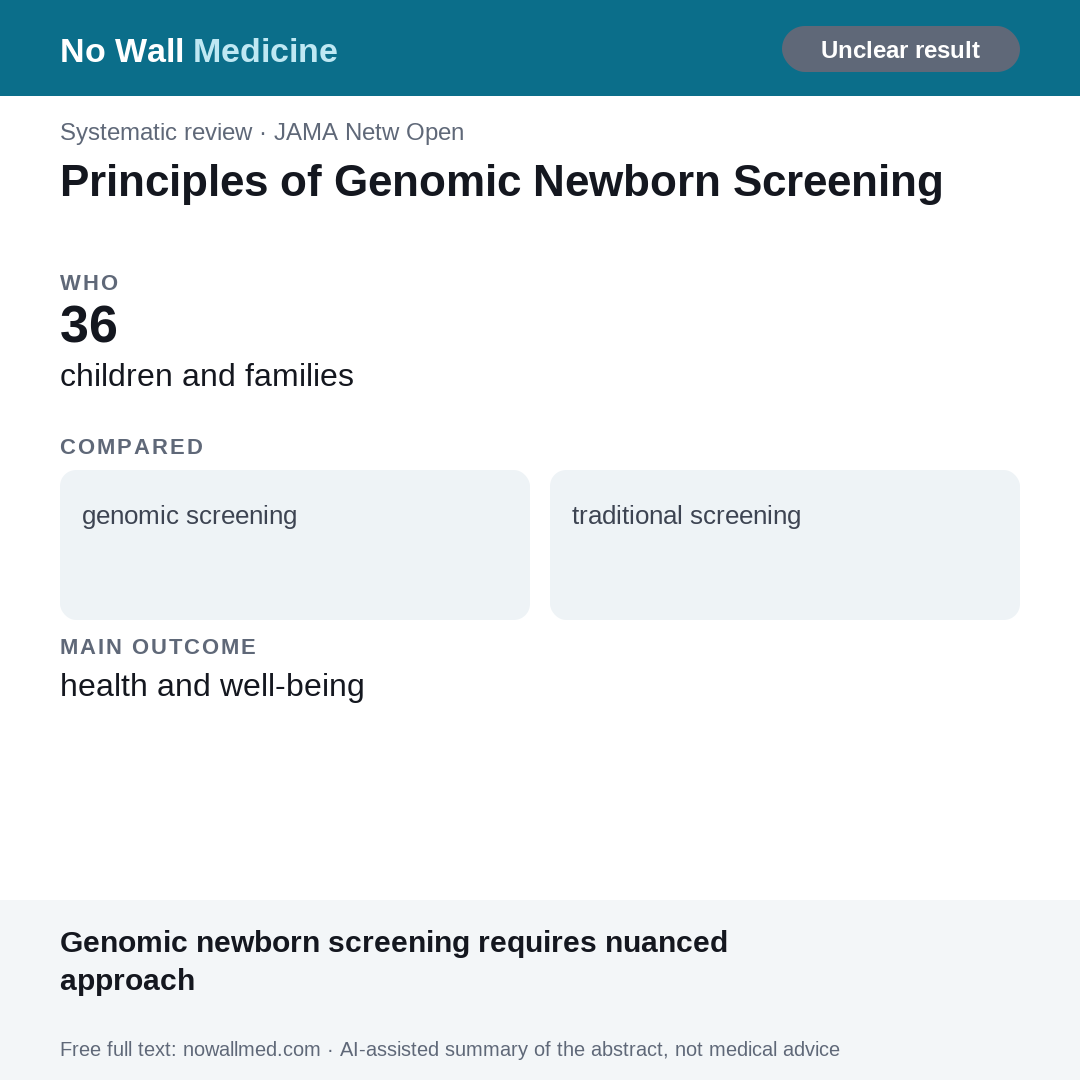
Principles of Genomic Newborn Screening
Who
36
children and families
Compared
genomic screening
traditional screening
Main outcome
health and well-being
Bottom line: Genomic newborn screening requires nuanced approach
JAMA Netw Open · 2021-07-01Download image
Key points
- Researchers performed a systematic literature review of 36 articles regarding the interest, validity, and ethical implications of genomic newborn screening.
- Findings showed high agreement on many aspects, though gene and disease inclusion was highly variable among the reviewed studies.
- The review identified a need for equitable access, transparent gene selection, and balancing expanded testing against the complexity of parental consent.
Why it matters: The specific requirements for designing evidence-based, acceptable, and beneficial genomic newborn screening programs were not fully summarized.
Discussion prompts
- Would these patients look like yours? Who was left out?
- Is the main outcome one that matters to patients?
- Is the difference large enough to change what you do?
Cite: Downie L, Halliday J, Lewis S, Amor DJ. Principles of Genomic Newborn Screening Programs: A Systematic Review. JAMA Netw Open. 2021. doi:10.1001/jamanetworkopen.2021.14336
Free full text: PubMed Central · Summary and visual abstract: nowallmed.com/a/principles-of-genomic-newborn-screening-programs-a-systematic-15mif70/ (AI-assisted from the abstract; check the paper before relying on it).