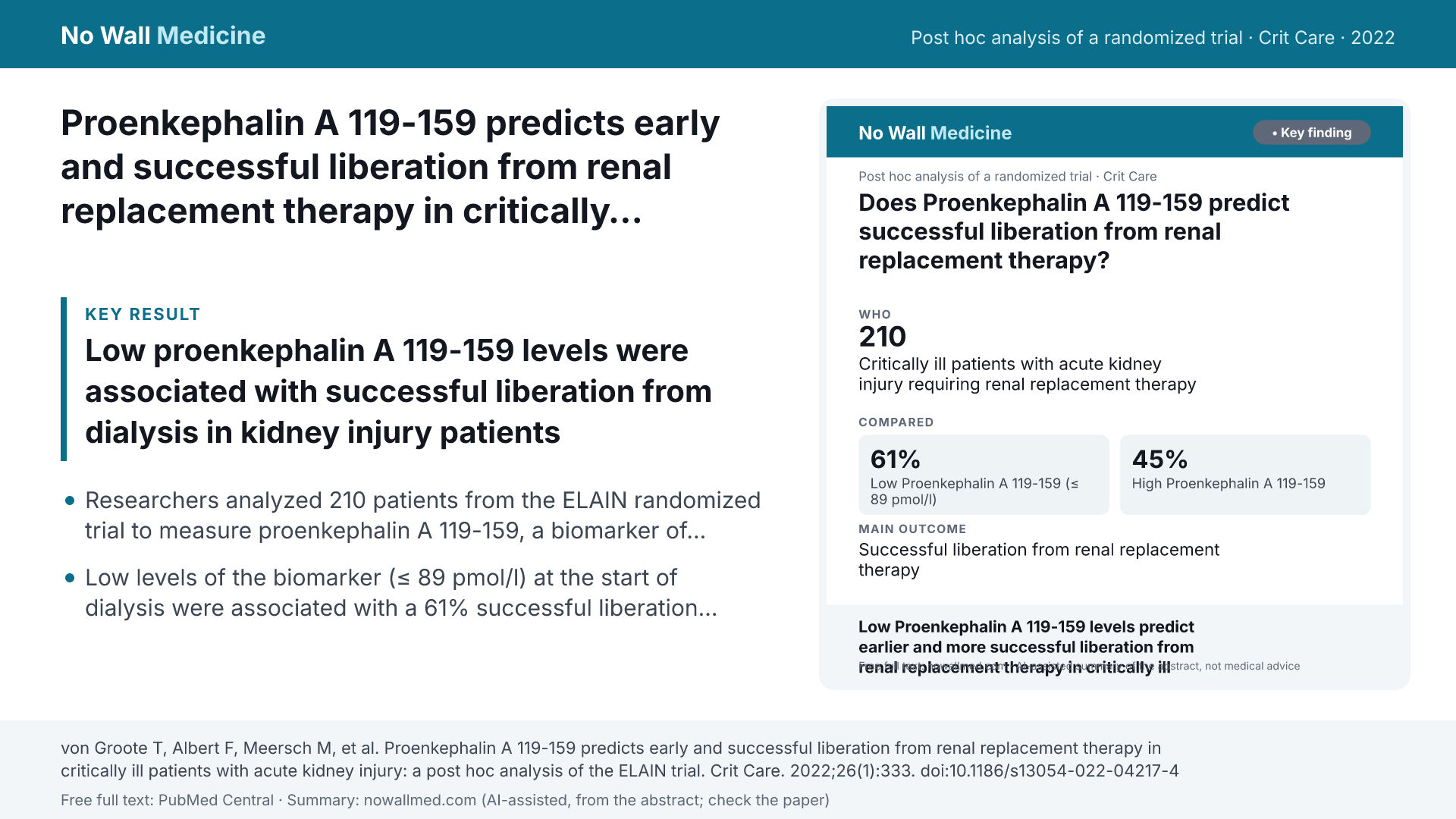
Proenkephalin A 119-159 predicts early and successful liberation from renal replacement therapy in critically ill patients with acute kidney injury: a post hoc analysis of the ELAIN trial
Key result: Low proenkephalin A 119-159 levels were associated with successful liberation from dialysis in kidney injury patients
Key points
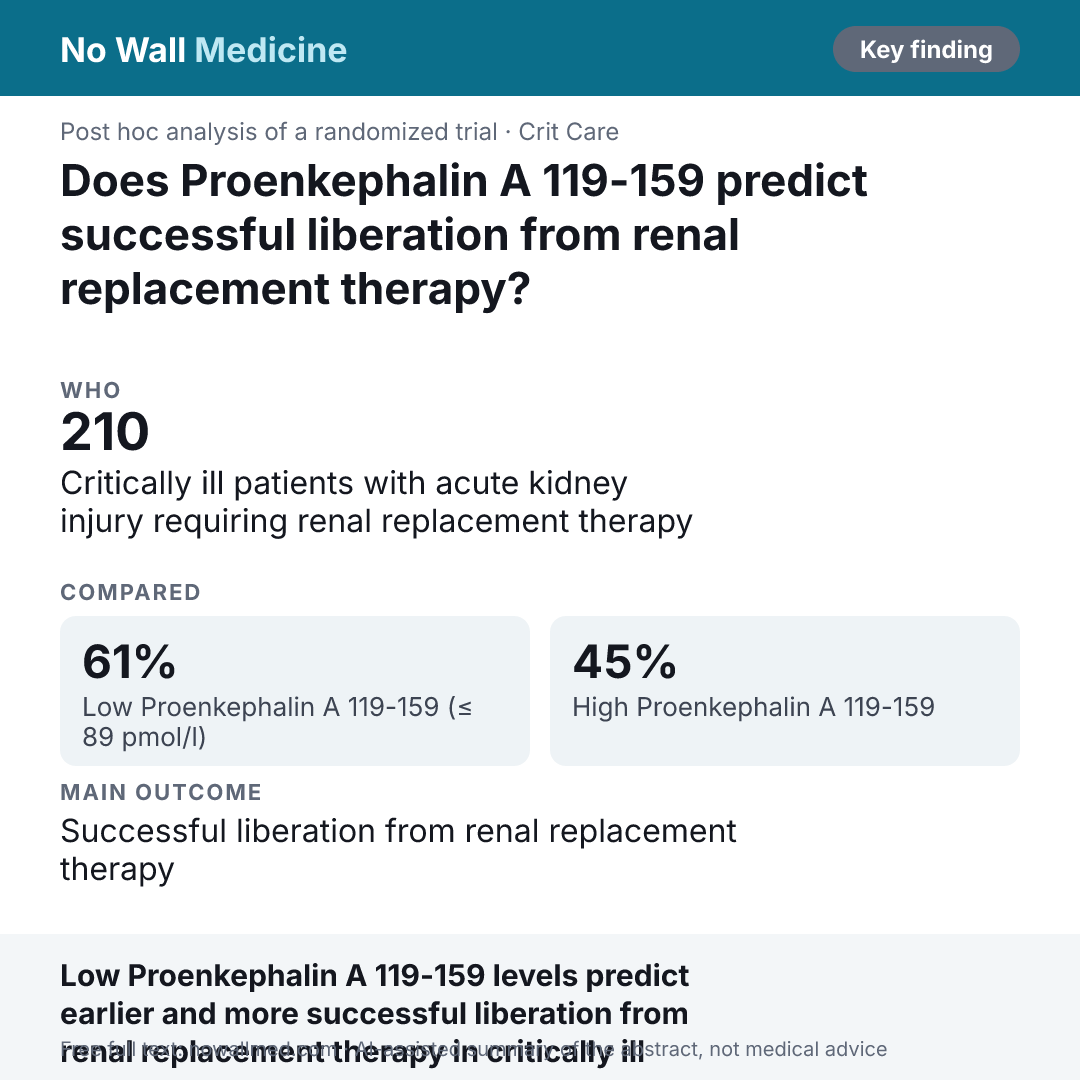
- Researchers analyzed 210 patients from the ELAIN randomized trial to measure proenkephalin A 119-159, a biomarker of kidney function, during renal replacement therapy (dialysis).
- Low levels of the biomarker (≤ 89 pmol/l) at the start of dialysis were associated with a 61% successful liberation rate compared to 45% for high levels.
- At the day 3 landmark analysis, low levels were associated with a 67% successful liberation rate compared to 47% for high levels.
Why it matters: There are currently no tools available to predict whether critically ill patients with acute kidney injury will successfully stop using renal replacement therapy.
Discussion prompts
- Would these patients look like yours? Who was left out?
- Is the main outcome one that matters to patients?
- Is the difference large enough to change what you do?
Cite: von Groote T, Albert F, Meersch M, et al. Proenkephalin A 119-159 predicts early and successful liberation from renal replacement therapy in critically ill patients with acute kidney injury: a post hoc analysis of the ELAIN trial. Crit Care. 2022;26(1):333. doi:10.1186/s13054-022-04217-4
Free full text: PubMed Central · Summary and visual abstract: nowallmed.com/a/proenkephalin-a-119-159-predicts-early-and-successful-liberation-from-eg5jfe/ (AI-assisted from the abstract; check the paper before relying on it).