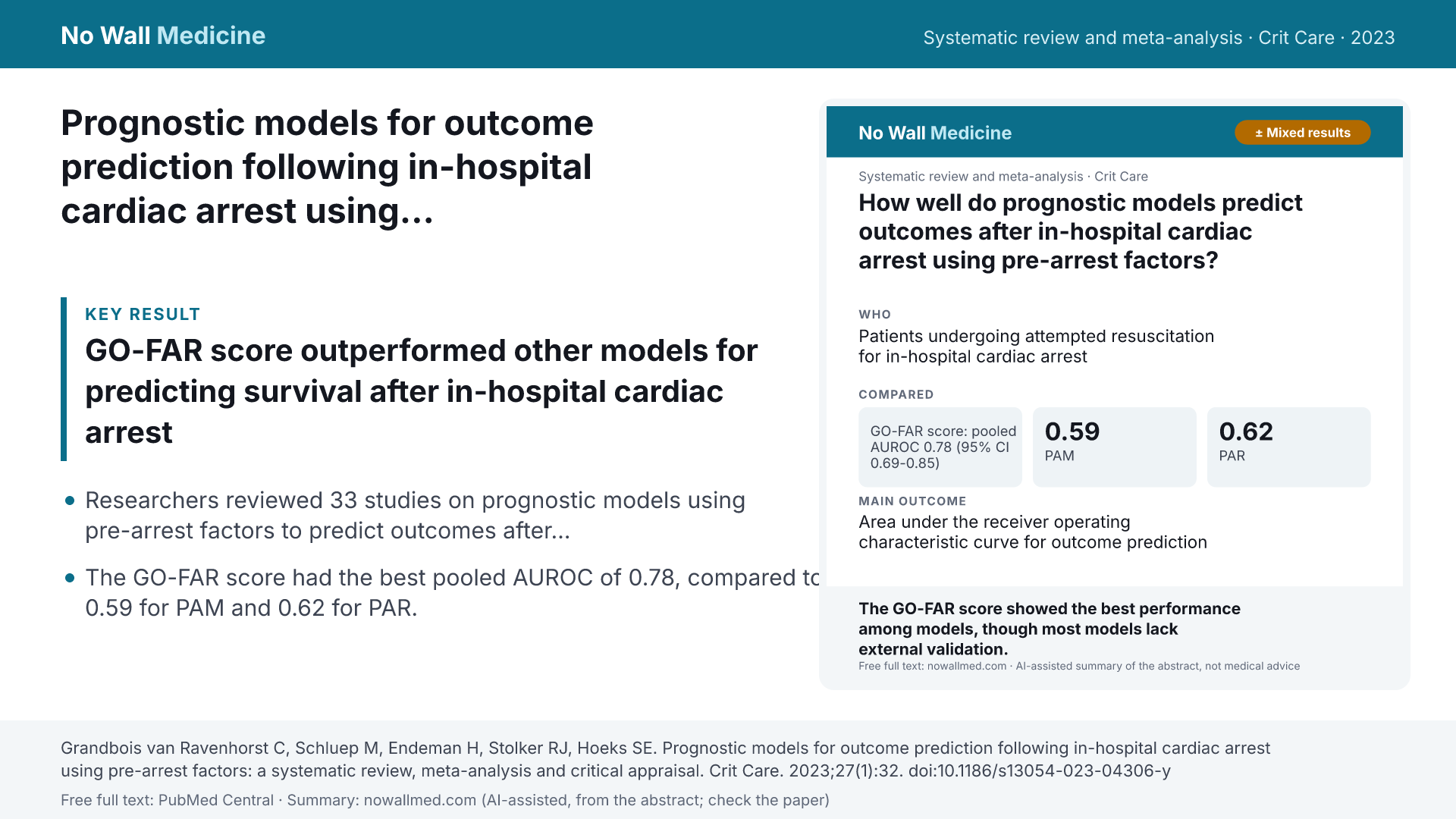
GO-FAR score outperformed other models for predicting survival after in-hospital cardiac arrest
Prognostic models for outcome prediction following in-hospital cardiac arrest using pre-arrest factors: a systematic review, meta-analysis and critical appraisal
Systematic review and meta-analysisMixed results
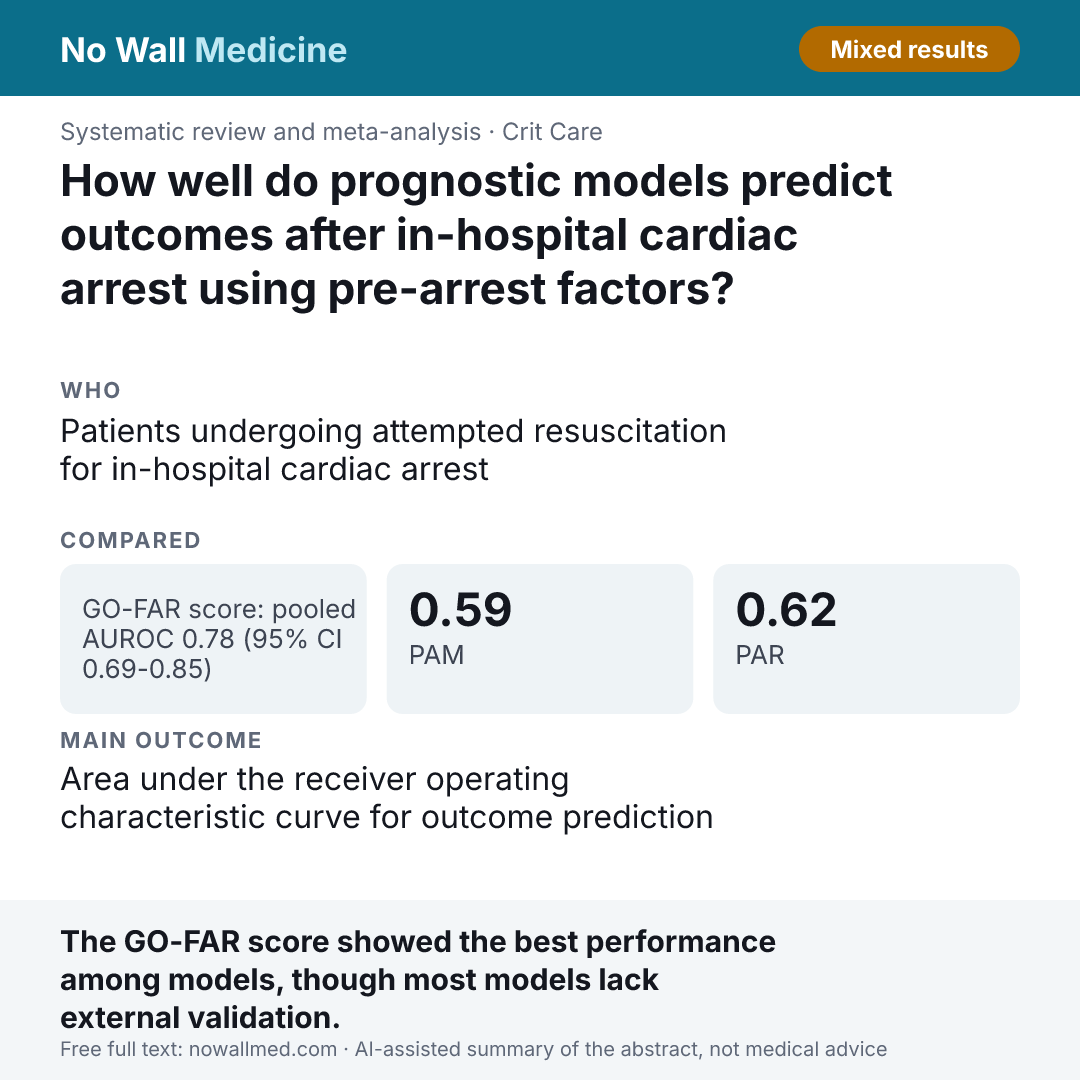
How well do prognostic models predict outcomes after in-hospital cardiac arrest using pre-arrest factors?
Who
Patients undergoing attempted resuscitation for in-hospital cardiac arrest
Compared
GO-FAR score: pooled AUROC 0.78 (95% CI 0.69-0.85)
0.59PAM (95%CI 0.50-0.68)
0.62PAR (95% CI 0.49-0.74)
Main outcome
Area under the receiver operating characteristic curve for outcome prediction
Result: pooled AUROC 0.78 (95% CI 0.69-0.85)
Bottom line: The GO-FAR score showed the best performance among models, though most models lack external validation.
Limitation: Most models have a moderate risk of bias and have not been validated externally.
Crit Care · 2023-01-20 · Save PNG
Clinical question: How well do prognostic models predict outcomes after in-hospital cardiac arrest using pre-arrest factors?
Why it matters: No overview existed for the performance and external validation of prognostic models predicting survival after in-hospital cardiac arrest.
Key points
- Researchers reviewed 33 studies on prognostic models using pre-arrest factors to predict outcomes after in-hospital cardiac arrest.
- The GO-FAR score had the best pooled AUROC of 0.78, compared to 0.59 for PAM and 0.62 for PAR.
- Most included models had a moderate risk of bias and lacked external validation in independent populations.
Limitation the authors note: Most included models had a moderate risk of bias and have not been validated externally.
Headline and key points written with AI from the paper’s abstract, with every number checked against it. Read the paper before relying on them.
Was this summary helpful?
Subject terms
Headline, design, result, key points, caveat and citation as plain text.
Cite this article
Grandbois van Ravenhorst C, Schluep M, Endeman H, Stolker RJ, Hoeks SE. Prognostic models for outcome prediction following in-hospital cardiac arrest using pre-arrest factors: a systematic review, meta-analysis and critical appraisal. Crit Care. 2023;27(1):32. doi:10.1186/s13054-023-04306-y
Spotted a mistake? Suggest a correction