High microcirculatory resistance change predicts heart events only in specific patient subgroups
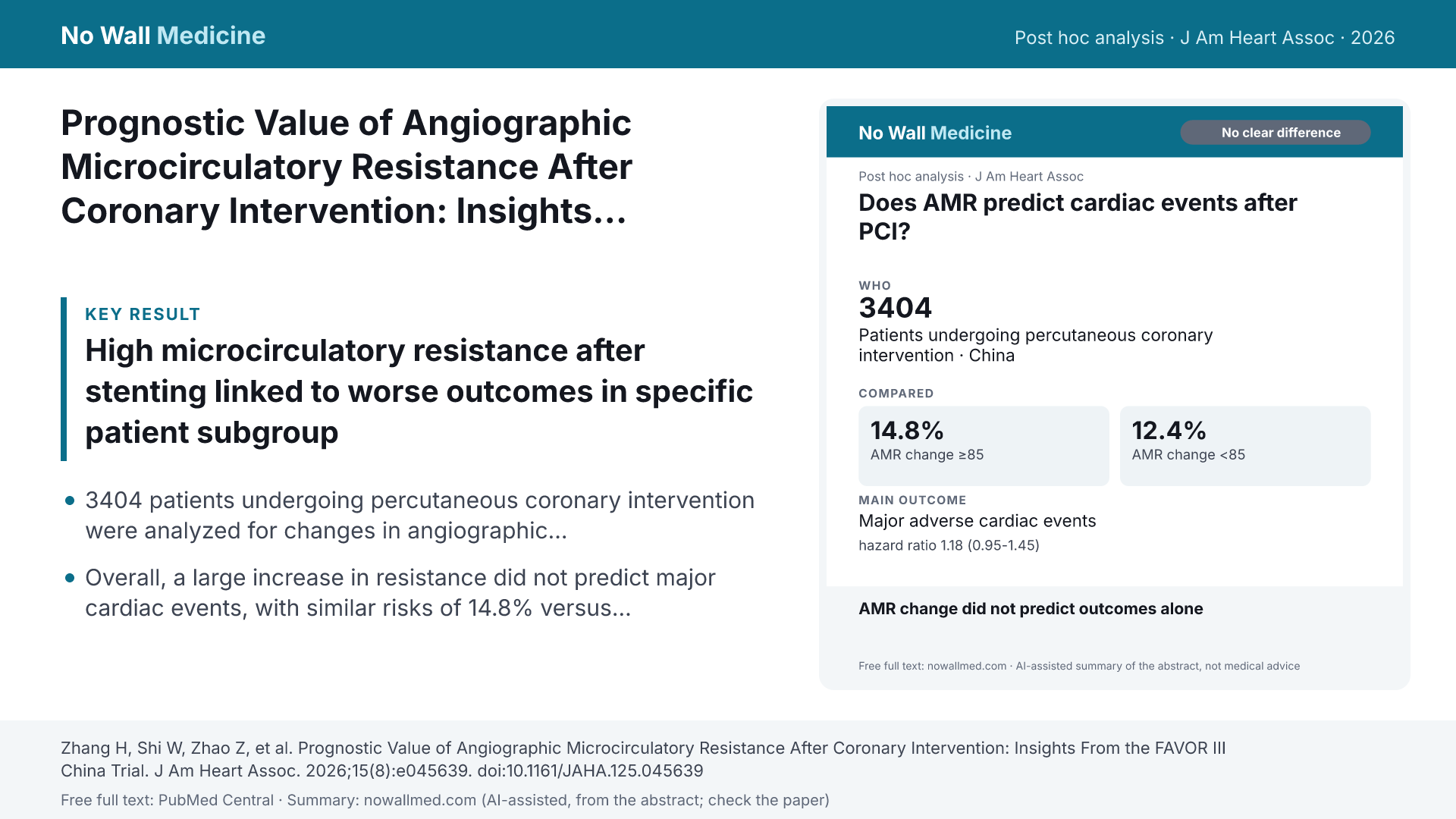
Prognostic Value of Angiographic Microcirculatory Resistance After Coronary Intervention: Insights From the FAVOR III China Trial
Post hoc analysisNo clear difference
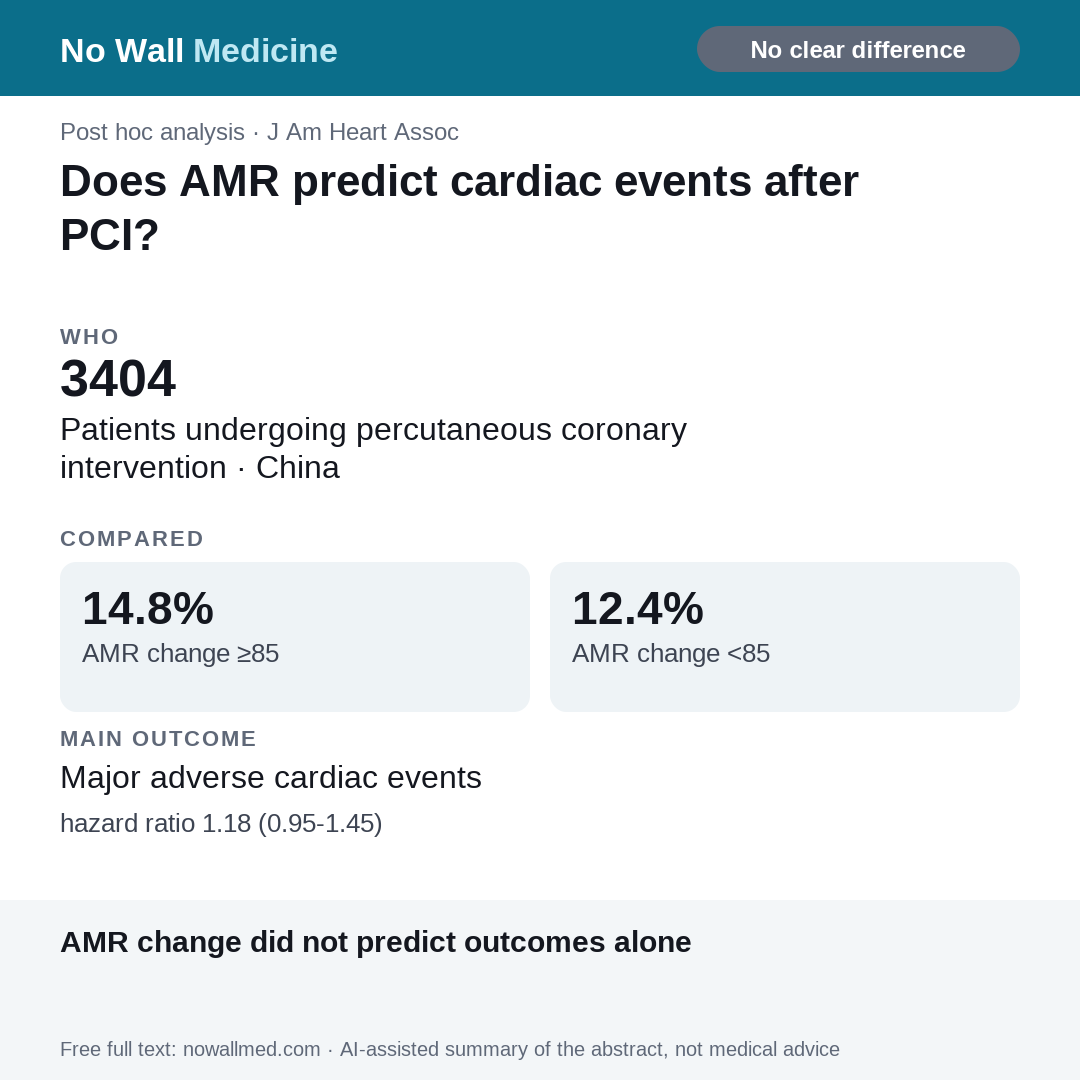
Does AMR predict cardiac events after PCI?
Who
3404
Patients undergoing percutaneous coronary intervention · China
Compared
14.8%AMR change ≥85
12.4%AMR change <85
Main outcome
Major adverse cardiac events
Result: hazard ratio 1.18 (0.95-1.45)
Bottom line: AMR change did not predict outcomes alone
J Am Heart Assoc · 2026-04-07Download image
Clinical question: Does AMR predict cardiac events after PCI?
Why it matters: The prognostic significance of using a computational method to measure microcirculatory resistance after heart artery procedures remains insufficiently established.
Key points
- Researchers analyzed 3404 patients undergoing percutaneous coronary intervention, which is a procedure to open blocked heart arteries.
- A large increase in microcirculatory resistance did not predict major adverse cardiac events for the whole group (14.8% versus 12.4%).
- In patients with post-procedure resistance levels at or above 250, a large resistance change increased the 3-year risk of major cardiac events to 16.3% versus 10.8%.
Headline and key points written with AI from the paper’s abstract, with every number checked against it. Read the paper before relying on them.
Was this summary helpful?
Subject terms
Cite this article
Zhang H, Shi W, Zhao Z, et al. Prognostic Value of Angiographic Microcirculatory Resistance After Coronary Intervention: Insights From the FAVOR III China Trial. J Am Heart Assoc. 2026. doi:10.1161/JAHA.125.045639
Spotted a mistake? Suggest a correction