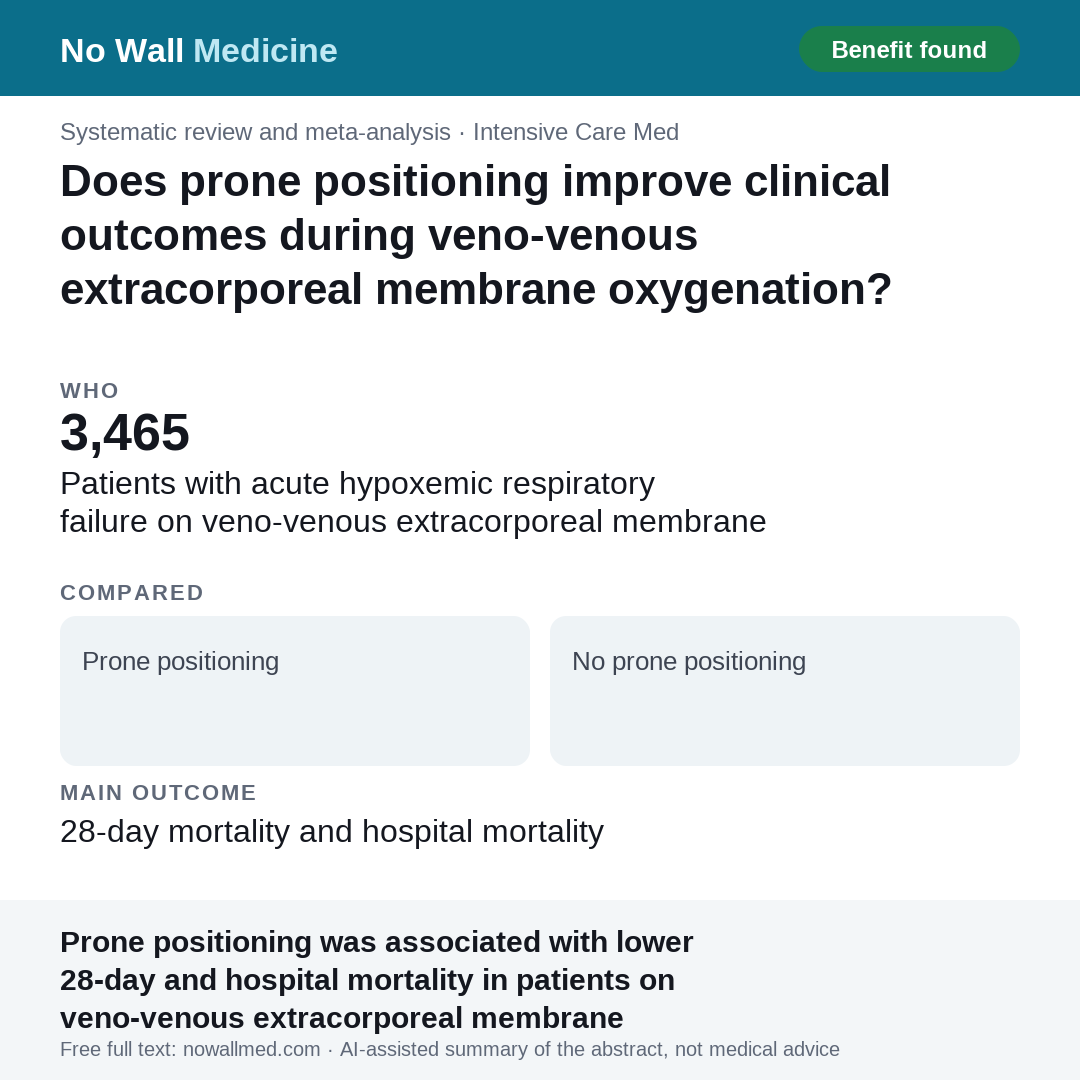
Prone positioning was associated with lower 28-day and hospital mortality in patients on veno-venous extracorporeal membrane oxygenation
Prone positioning during veno-venous extracorporeal membrane oxygenation: a systematic review and meta-analysis
Systematic review and meta-analysisBenefit found
Does prone positioning improve clinical outcomes during veno-venous extracorporeal membrane oxygenation?
Who
3,465
Patients with acute hypoxemic respiratory failure on veno-venous extracorporeal membrane oxygenation
Compared
Prone positioning
No prone positioning
Main outcome
28-day mortality and hospital mortality
Result: odds ratio 0.64 (95% CI 0.42-0.98) for 28-day mortality
Bottom line: Prone positioning was associated with lower 28-day and hospital mortality in patients on veno-venous extracorporeal membrane oxygenation.
Limitation: Findings do not imply causation and evidence certainty is low.
Intensive Care Med · 2025-04-29Download image
Clinical question: Does prone positioning improve clinical outcomes during veno-venous extracorporeal membrane oxygenation?
Why it matters: Evidence remains inconclusive regarding whether prone positioning improves clinical outcomes for patients receiving veno-venous extracorporeal membrane oxygenation for acute hypoxemic respiratory failure.
Key points
- Researchers analyzed 2 randomized controlled trials and 20 non-randomized controlled trials involving 3,465 patients with acute hypoxemic respiratory failure.
- Prone positioning, or placing patients face down, was associated with lower 28-day mortality (OR 0.64, 95% CI 0.42-0.98, p = 0.040) and hospital mortality (OR 0.67, 95% CI 0.54-0.83, p < 0.001).
- The use of prone positioning was also associated with fewer 28-day ventilator-free days and longer duration of veno-venous extracorporeal membrane oxygenation.
Limitation the authors note: The findings are based on a low certainty of evidence.
Headline and key points written with AI from the paper’s abstract, with every number checked against it. Read the paper before relying on them.
Topics
Cite this article
Pettenuzzo T, Balzani E, Sella N, Giani M, Bassi M, Fincati V. Prone positioning during veno-venous extracorporeal membrane oxygenation: a systematic review and meta-analysis. Intensive Care Med. 2025. doi:10.1007/s00134-025-07877-2
Spotted a mistake? Suggest a correction
Top studies every Monday
The week’s key trials and guidelines in your specialties, plus any topics you follow. By email, free.
Get the weekly digest