Sodium oxybate reduced delirium in older patients undergoing morning orthopedic surgery during a clinical trial
Prophylactic effect of intraoperative sodium oxybate on postoperative delirium in older patients undergoing major orthopedic surgery: a randomized clinical trial
Randomized, double-blind, placebo-controlled trialMixed results
Does intraoperative sodium oxybate reduce postoperative delirium in older orthopedic surgery patients?
Who
332
Older patients aged 65 years or older undergoing elective spine and joint replacement surgery
Compared
10.3%Sodium oxybate
13.5%Saline
Main outcome
Postoperative delirium incidence within seven postoperative days
Result: relative risk 0.395 (95% CI 0.161-0.968) in morning surgery subgroup
Bottom line: Sodium oxybate may reduce postoperative delirium incidence specifically in older patients undergoing morning orthopedic surgery.
BMC Med · 2025-12-31Download image
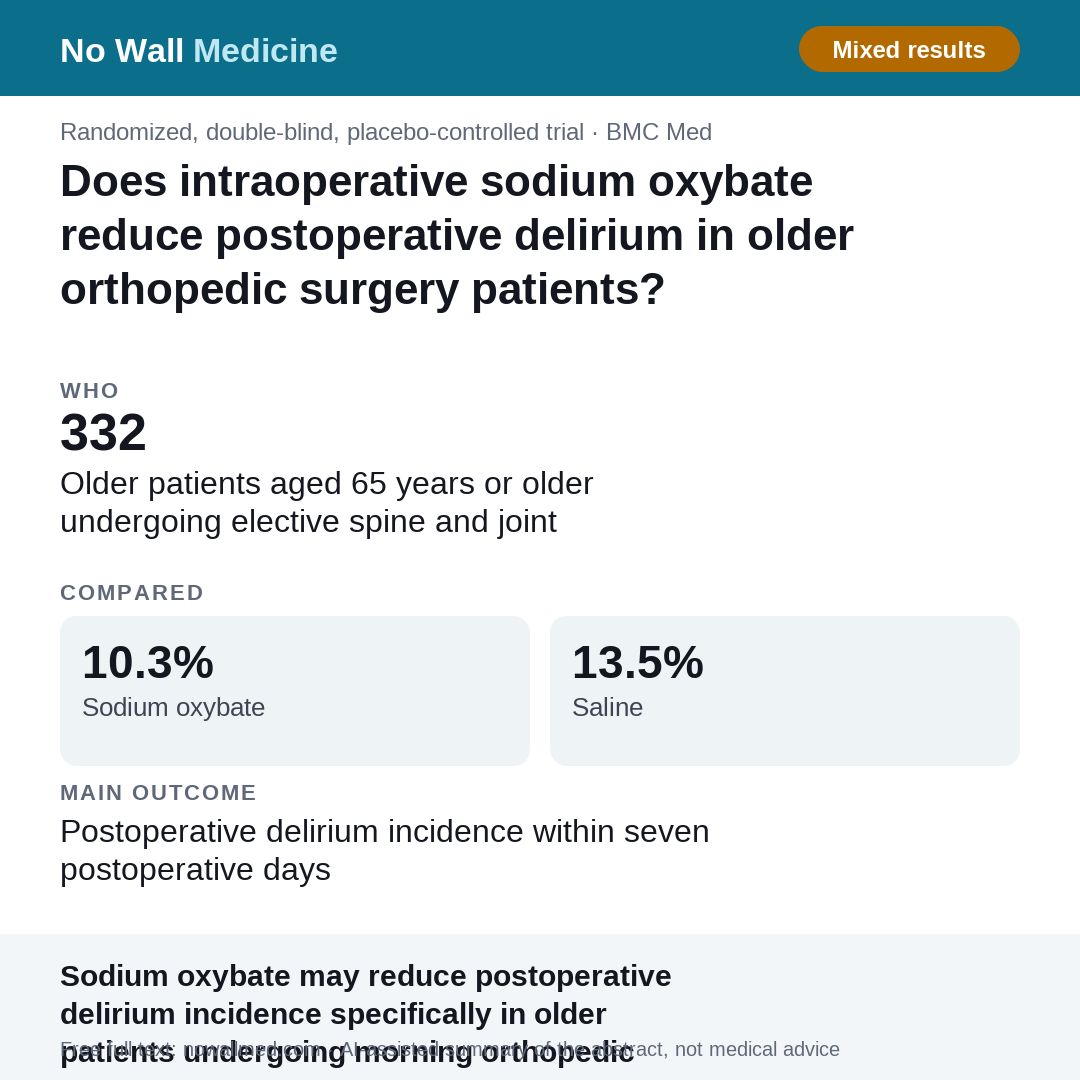
Clinical question: Does intraoperative sodium oxybate reduce postoperative delirium in older orthopedic surgery patients?
Why it matters: Sleep disturbance is a modifiable risk factor for postoperative delirium, an acute neuropsychiatric syndrome that can lead to longer hospital stays and increased mortality.
Key points
- Researchers studied 332 older patients undergoing elective spine and joint replacement surgery, comparing sodium oxybate to a saline placebo.
- In the total group, delirium incidence was 10.3% for sodium oxybate versus 13.5% for placebo, which was not a significant difference.
- For patients undergoing morning surgery, delirium incidence was 7.3% with sodium oxybate compared to 18.5% with placebo.
Headline and key points written with AI from the paper’s abstract, with every number checked against it. Read the paper before relying on them.
Topics
Cite this article
Cui M, Xue H, Wang F, Zhou J, Yang X, Wang S. Prophylactic effect of intraoperative sodium oxybate on postoperative delirium in older patients undergoing major orthopedic surgery: a randomized clinical trial. BMC Med. 2025. doi:10.1186/s12916-025-04590-1
Spotted a mistake? Suggest a correction