Prospective, double-blind diagnostic multicentre study of confocal laser endomicroscopy for wheat sensitivity in patients with irritable bowel syndrome
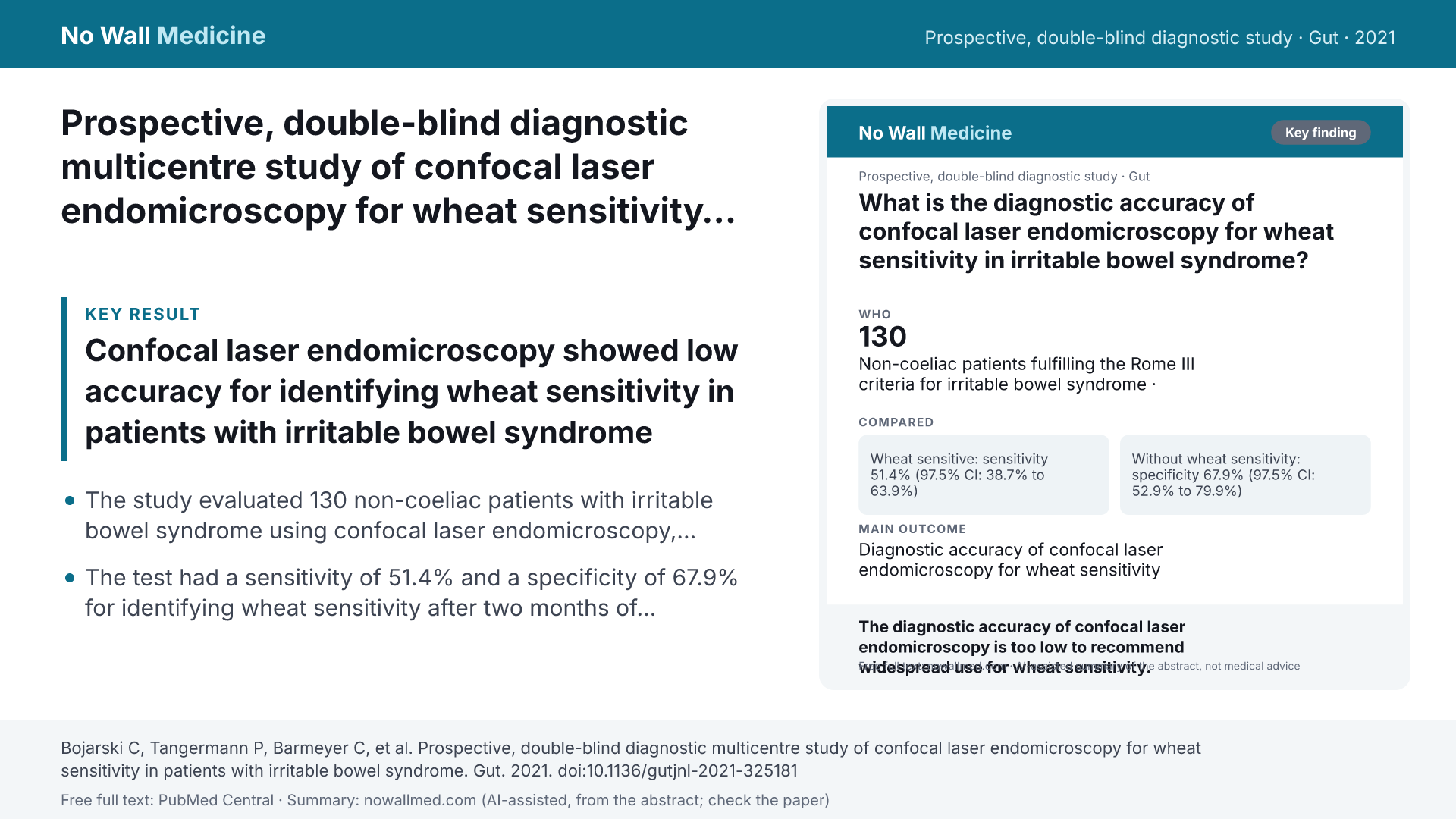
Key result: Confocal laser endomicroscopy showed low accuracy for identifying wheat sensitivity in patients with irritable bowel syndrome
Key points
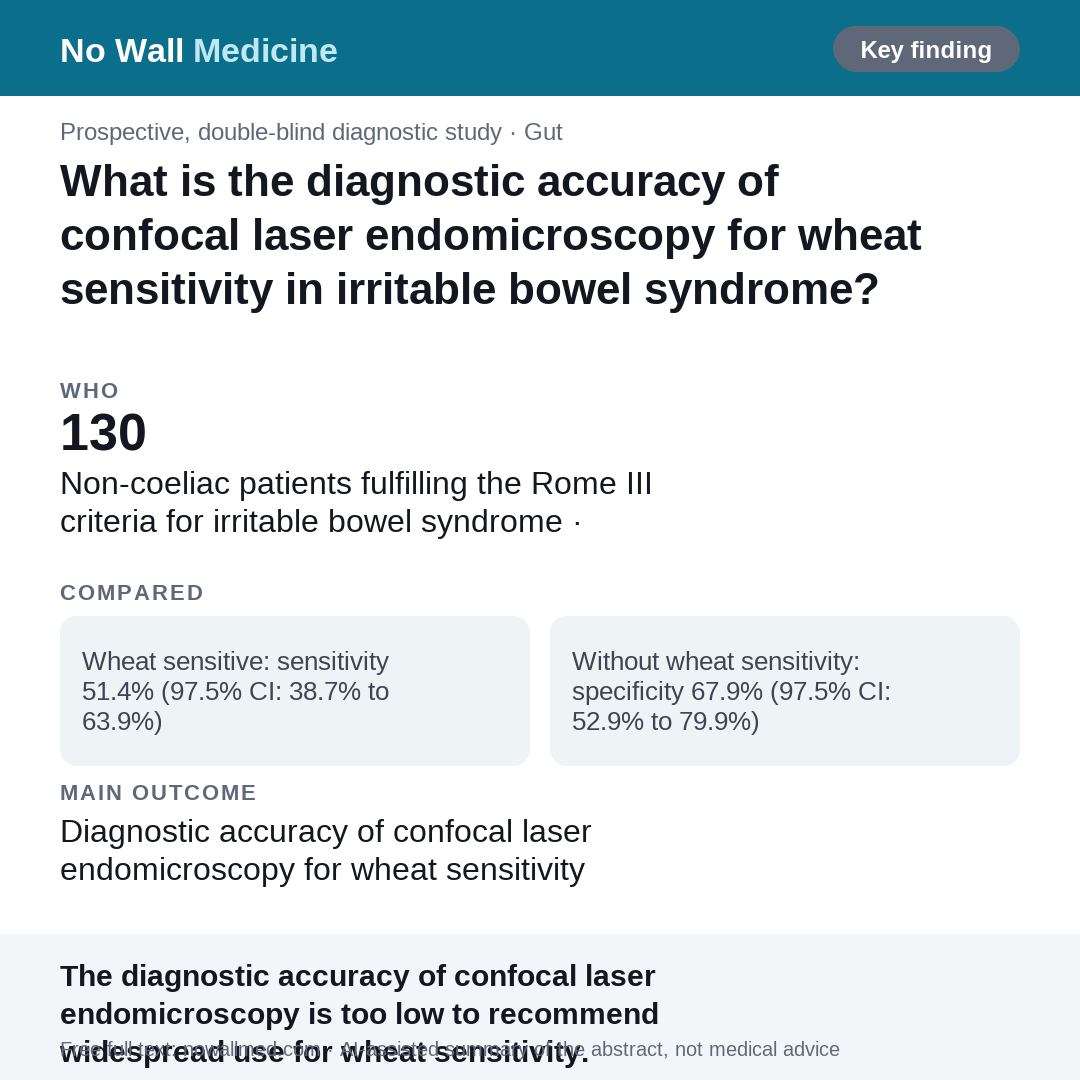
- The study evaluated 130 non-coeliac patients with irritable bowel syndrome using confocal laser endomicroscopy, a specialized imaging tool, to detect wheat sensitivity.
- The test had a sensitivity of 51.4% and a specificity of 67.9% for identifying wheat sensitivity after two months of dietary changes.
- At the 6 month follow-up, the sensitivity was 83.1% but the specificity was only 32%.
Why it matters: A diagnostic test for wheat sensitivity is missing for patients with irritable bowel syndrome who respond to a gluten-free diet but do not have coeliac disease.
Discussion prompts
- Would these patients look like yours? Who was left out?
- Is the main outcome one that matters to patients?
- Is the difference large enough to change what you do?
Cite: Bojarski C, Tangermann P, Barmeyer C, et al. Prospective, double-blind diagnostic multicentre study of confocal laser endomicroscopy for wheat sensitivity in patients with irritable bowel syndrome. Gut. 2021. doi:10.1136/gutjnl-2021-325181
Free full text: PubMed Central · Summary and visual abstract: nowallmed.com/a/prospective-double-blind-diagnostic-multicentre-study-of-confocal-guv815/ (AI-assisted from the abstract; check the paper before relying on it).