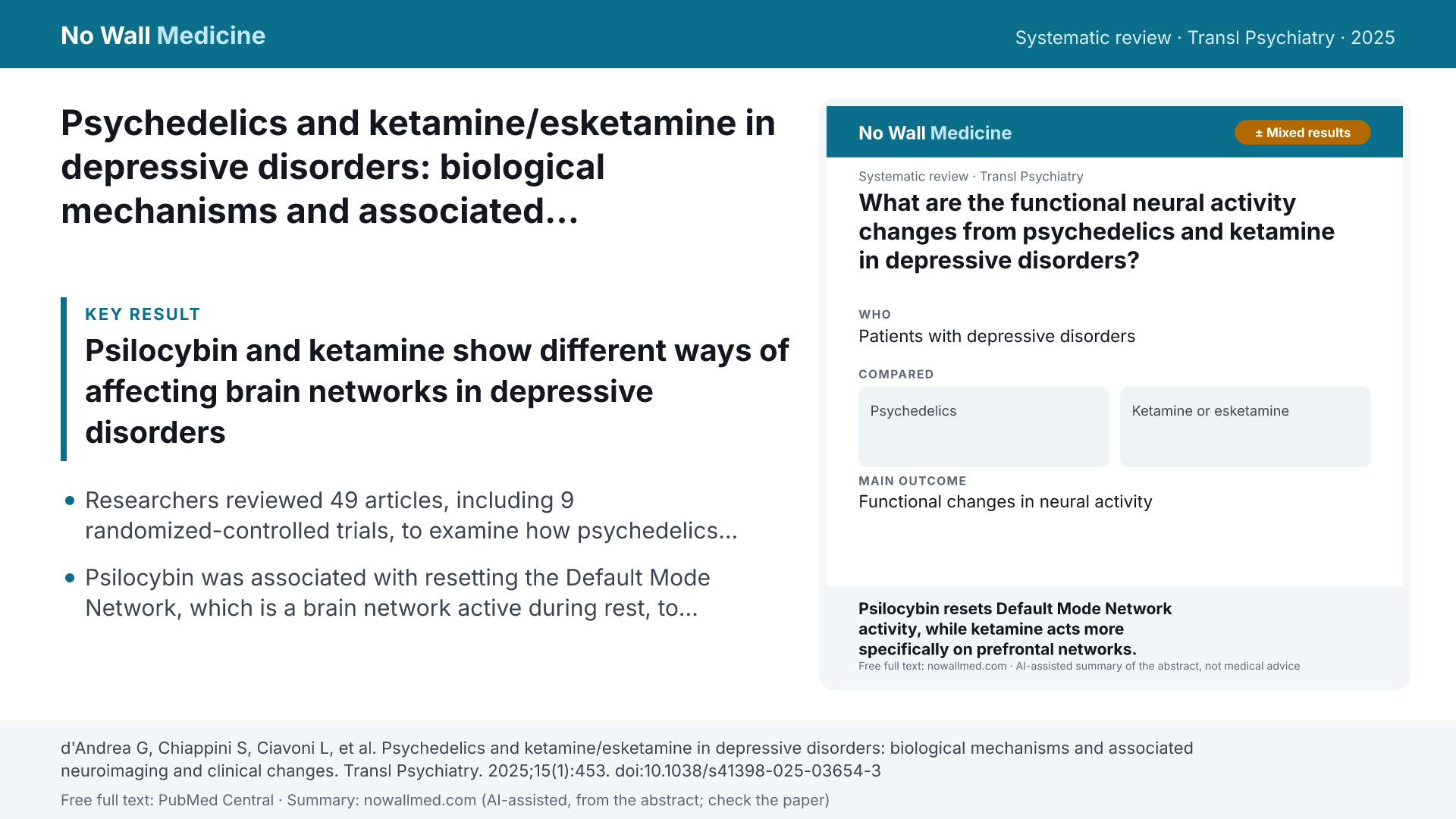
Psychedelics and ketamine/esketamine in depressive disorders: biological mechanisms and associated neuroimaging and clinical changes
Key result: Psilocybin and ketamine show different ways of affecting brain networks in depressive disorders
Key points
- Researchers reviewed 49 articles, including 9 randomized-controlled trials, to examine how psychedelics and ketamine affect brain activity in depression.
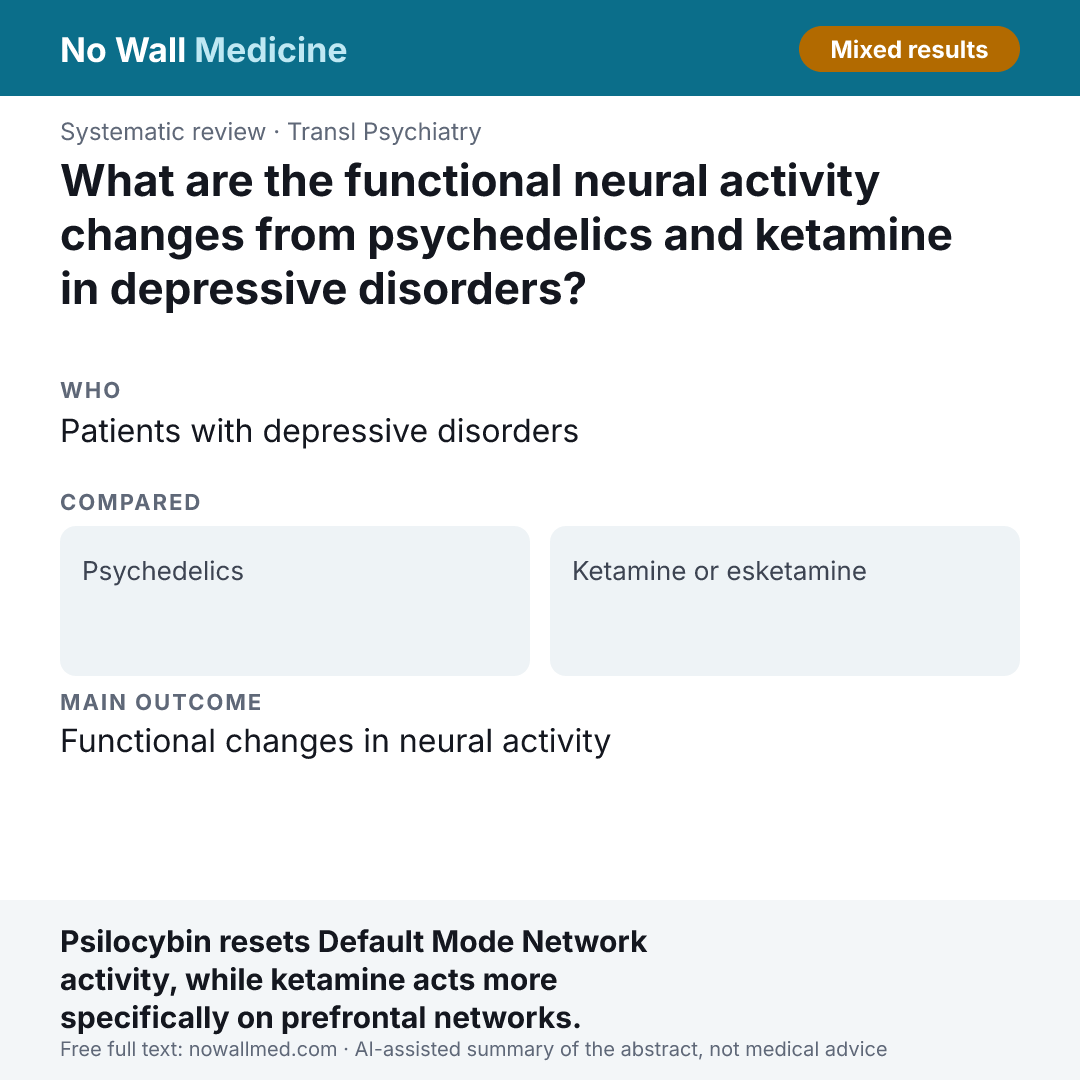
- Psilocybin was associated with resetting the Default Mode Network, which is a brain network active during rest, to help reduce depressive symptoms.
- Ketamine was associated with more specific actions on brain networks involving prefrontal areas that act indirectly on the Default Mode Network.
Why it matters: The biological mechanisms and specific changes in neural activity caused by psychedelic compounds and ketamine in depressive disorders remain largely unexplored.
Discussion prompts
- Would these patients look like yours? Who was left out?
- Is the main outcome one that matters to patients?
- Is the difference large enough to change what you do?
Cite: d'Andrea G, Chiappini S, Ciavoni L, et al. Psychedelics and ketamine/esketamine in depressive disorders: biological mechanisms and associated neuroimaging and clinical changes. Transl Psychiatry. 2025;15(1):453. doi:10.1038/s41398-025-03654-3
Free full text: PubMed Central · Summary and visual abstract: nowallmed.com/a/psychedelics-and-ketamine-esketamine-in-depressive-disorders-1qjy7u2/ (AI-assisted from the abstract; check the paper before relying on it).