Most psychotherapies for depression show similar effectiveness and acceptability in a large network meta-analysis
Psychotherapies for depression: a network meta-analysis covering efficacy, acceptability and long-term outcomes of all main treatment types
Network meta-analysis of 331 randomized trialsBenefit found
How do different psychotherapies compare for efficacy, acceptability, and long-term outcomes in depression?
Who
34,285
patients with depression
Compared
Psychotherapies
Care-as-usual and waiting list
Main outcome
Response (50% reduction in symptoms)
Bottom line: All psychotherapies were more efficacious than care-as-usual and waiting list control conditions for treating depression.
World Psychiatry · 2021-05-18 · Save PNG
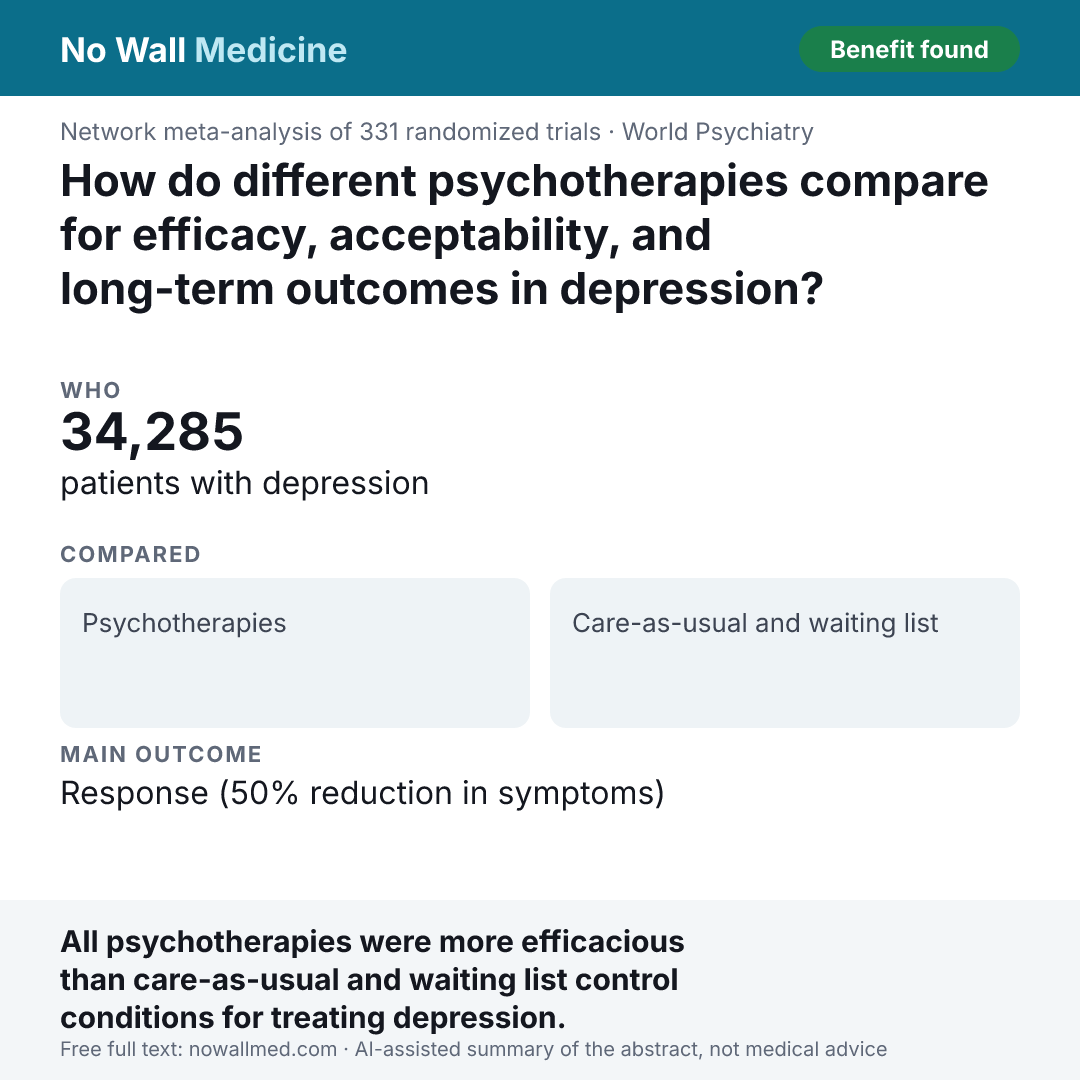
Clinical question: How do different psychotherapies compare for efficacy, acceptability, and long-term outcomes in depression?
Key points
- Researchers analyzed 331 randomized trials involving 34,285 patients to compare different types of psychotherapy for depression.
- All therapies were more effective than care-as-usual, though non-directive supportive counseling was less effective than all other therapies.
- Most therapies maintained significant effects at 12-month follow-up compared to care-as-usual, and no consistent differences in dropout rates were found.
Headline and key points written with AI from the paper’s abstract, with every number checked against it. Read the paper before relying on them.
Was this summary helpful?
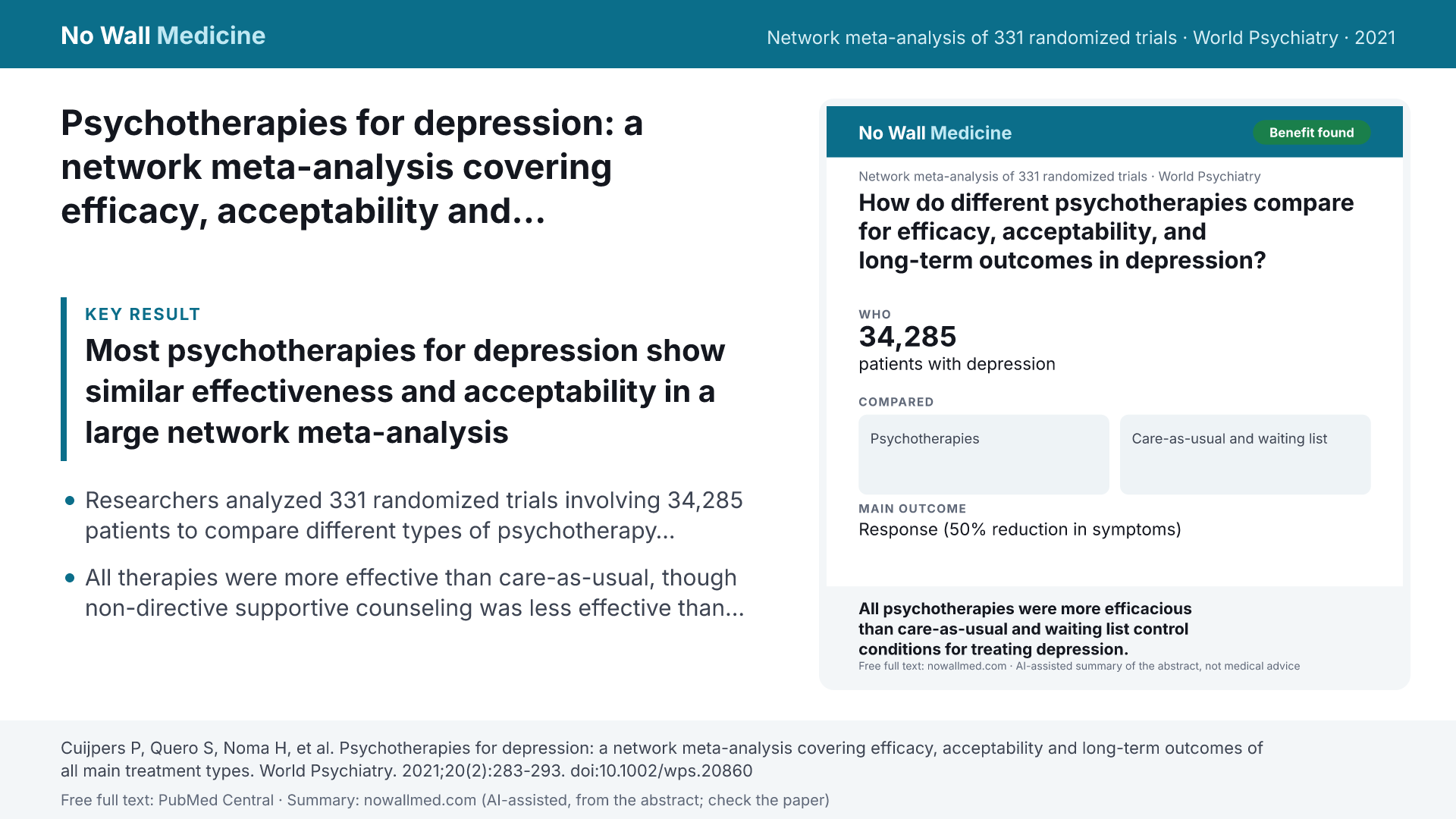
Headline, design, result, key points, caveat and citation as plain text.
Cite this article
Cuijpers P, Quero S, Noma H, et al. Psychotherapies for depression: a network meta-analysis covering efficacy, acceptability and long-term outcomes of all main treatment types. World Psychiatry. 2021. doi:10.1002/wps.20860
Spotted a mistake? Suggest a correction