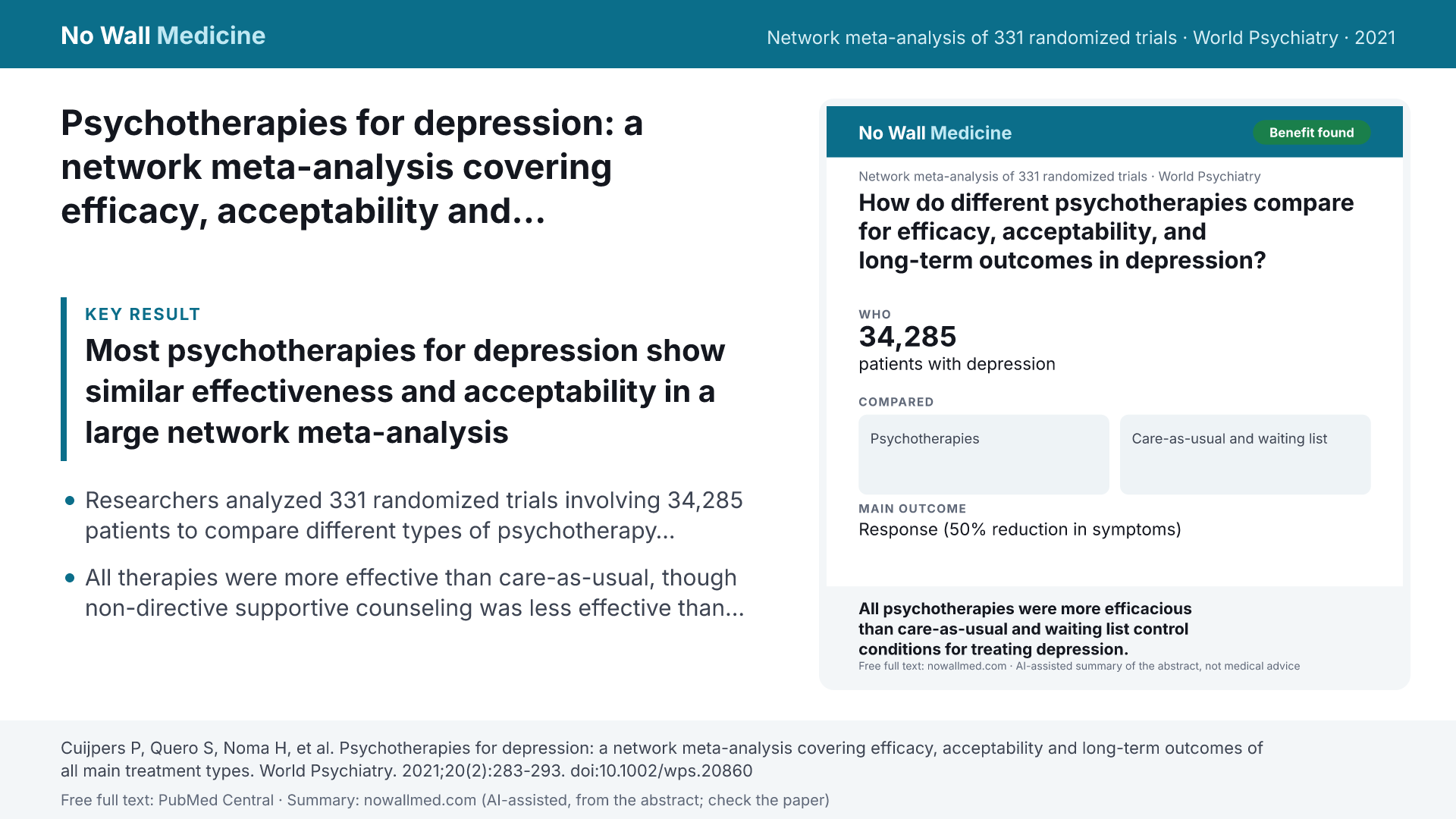
Psychotherapies for depression: a network meta-analysis covering efficacy, acceptability and long-term outcomes of all main treatment types
Key result: Most psychotherapies for depression show similar effectiveness and acceptability in a large network meta-analysis
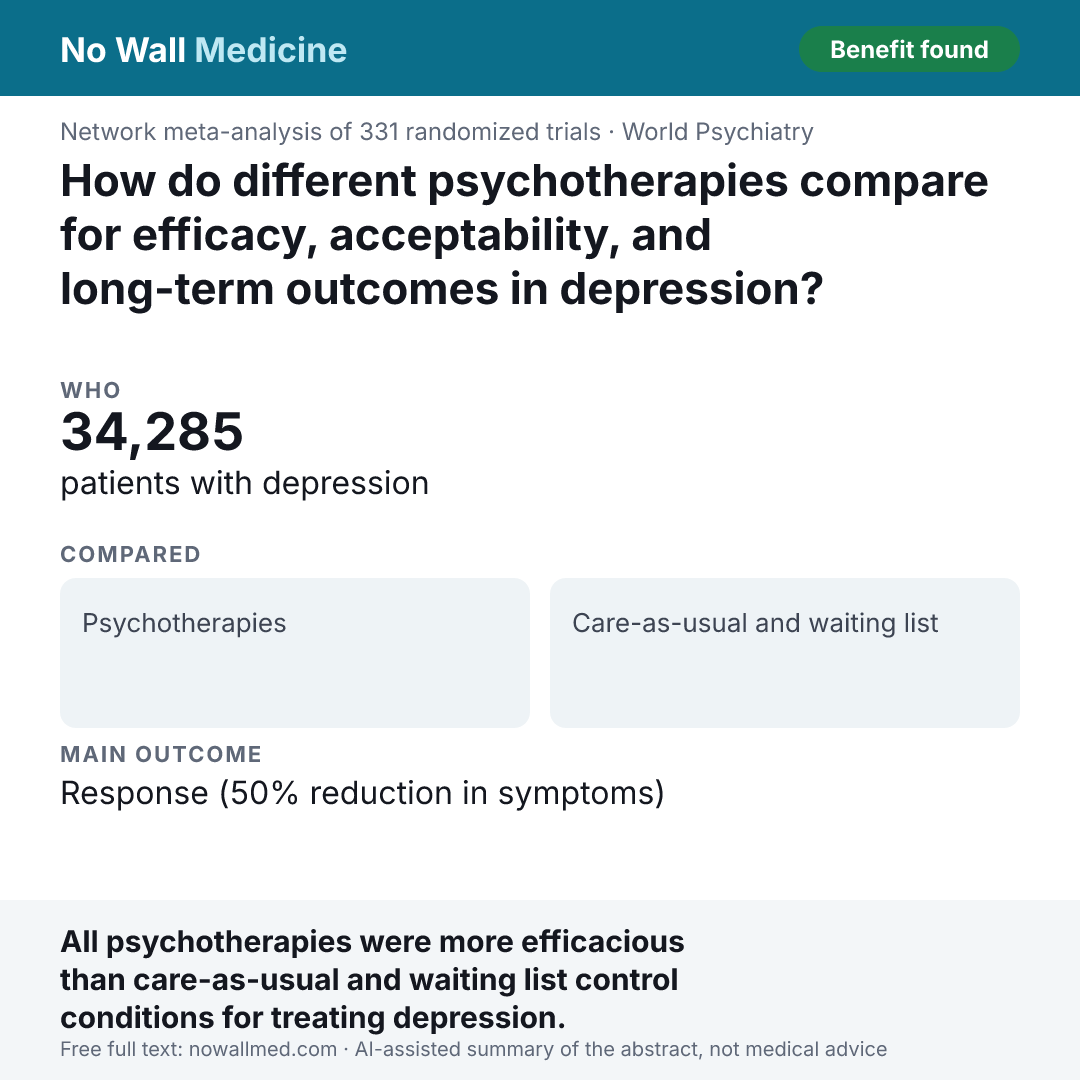
Network meta-analysis of 331 randomized trialsBenefit found
How do different psychotherapies compare for efficacy, acceptability, and long-term outcomes in depression?
Who
34,285
patients with depression
Compared
Psychotherapies
Care-as-usual and waiting list
Main outcome
Response (50% reduction in symptoms)
Bottom line: All psychotherapies were more efficacious than care-as-usual and waiting list control conditions for treating depression.
World Psychiatry · 2021-05-18 · Save PNG
Key points
- Researchers analyzed 331 randomized trials involving 34,285 patients to compare different types of psychotherapy for depression.
- All therapies were more effective than care-as-usual, though non-directive supportive counseling was less effective than all other therapies.
- Most therapies maintained significant effects at 12-month follow-up compared to care-as-usual, and no consistent differences in dropout rates were found.
Discussion prompts
- Would these patients look like yours? Who was left out?
- Is the main outcome one that matters to patients?
- Is the difference large enough to change what you do?
Cite: Cuijpers P, Quero S, Noma H, et al. Psychotherapies for depression: a network meta-analysis covering efficacy, acceptability and long-term outcomes of all main treatment types. World Psychiatry. 2021. doi:10.1002/wps.20860
Free full text: PubMed Central · Summary and visual abstract: nowallmed.com/a/psychotherapies-for-depression-a-network-meta-analysis-covering-n5fgsw/ (AI-assisted from the abstract; check the paper before relying on it).