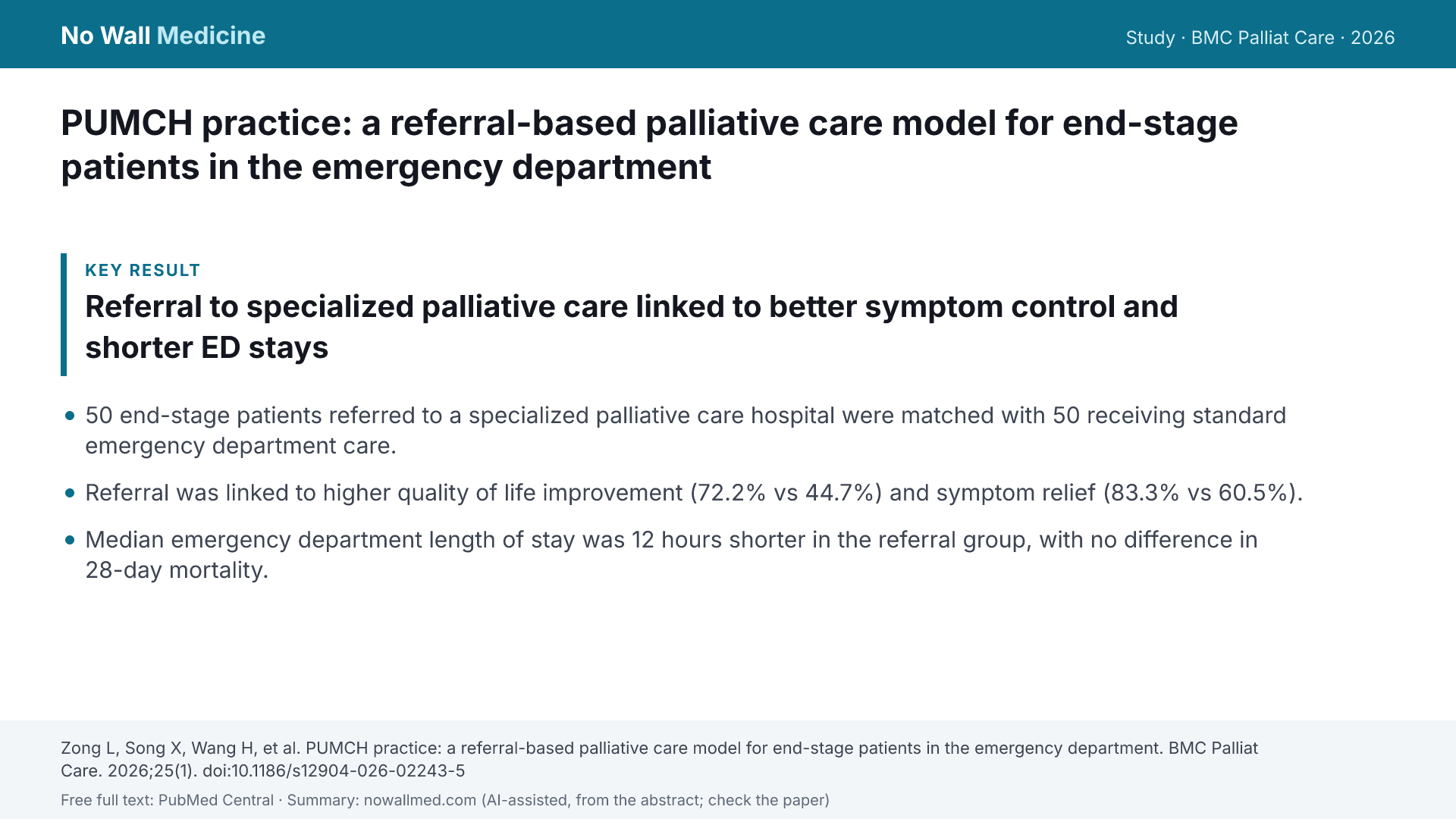
Referral to specialized palliative care linked to better symptom control and shorter ED stays
PUMCH practice: a referral-based palliative care model for end-stage patients in the emergency department
Why it matters: End-stage patients frequently visit emergency departments but rarely receive effective palliative care, contributing to overcrowding.
Key points
- 50 end-stage patients referred to a specialized palliative care hospital were matched with 50 receiving standard emergency department care.
- Referral was linked to higher quality of life improvement (72.2% vs 44.7%) and symptom relief (83.3% vs 60.5%).
- Median emergency department length of stay was 12 hours shorter in the referral group, with no difference in 28-day mortality.
Limitation the authors note: The study was a retrospective propensity score-matched cohort study.
Study type: Observational study: it can show a link, but not prove that one thing causes another.
Headline and key points written with AI from the paper’s abstract, with every number checked against it. Read the paper before relying on them.
Was this summary helpful?
Subject terms
Cite this article
Zong L, Song X, Wang H, et al. PUMCH practice: a referral-based palliative care model for end-stage patients in the emergency department. BMC Palliat Care. 2026. doi:10.1186/s12904-026-02243-5
Spotted a mistake? Suggest a correction