PUMCH practice: a referral-based palliative care model for end-stage patients in the emergency department
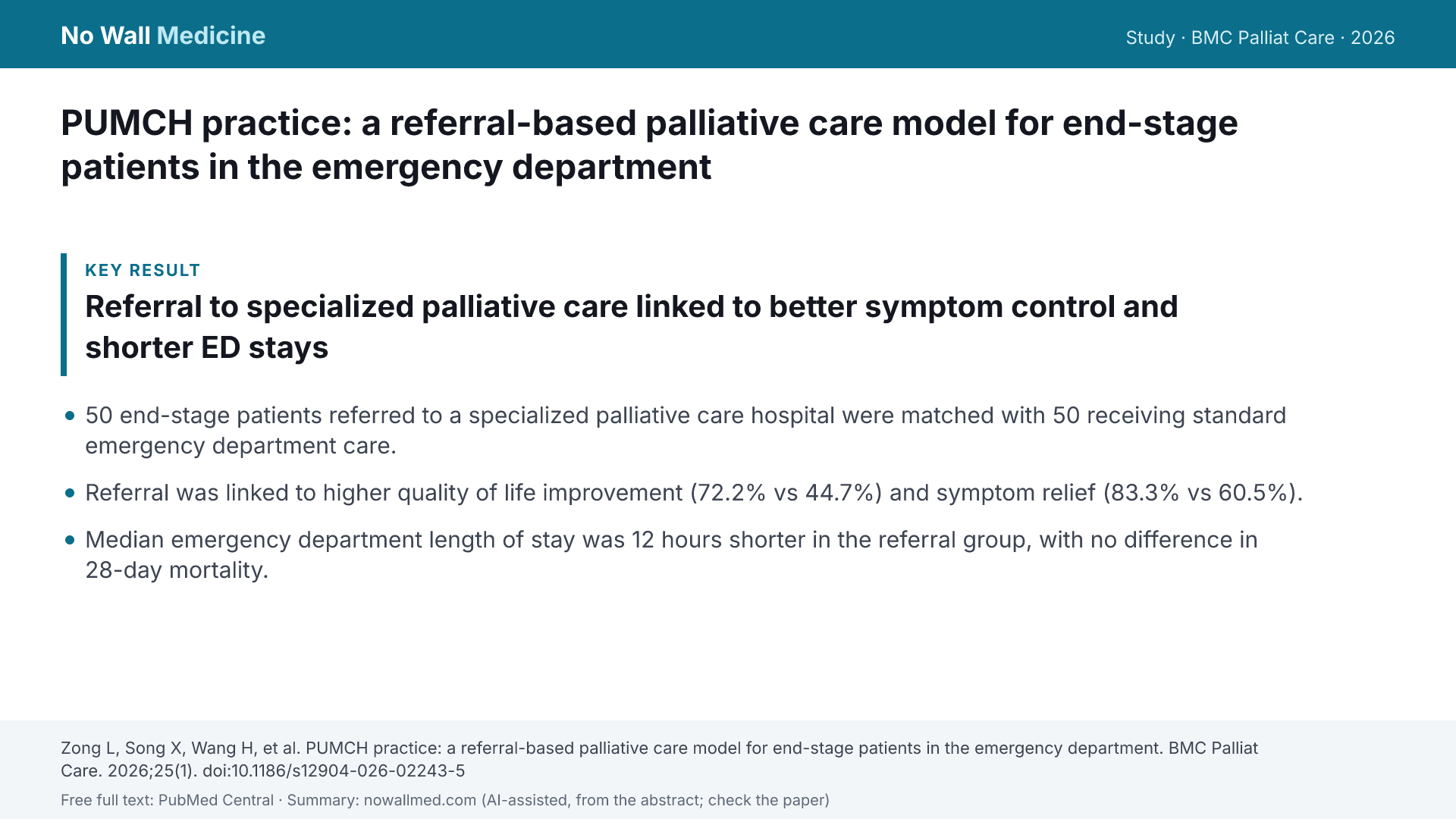
Key result: Referral to specialized palliative care linked to better symptom control and shorter ED stays
Key points
- 50 end-stage patients referred to a specialized palliative care hospital were matched with 50 receiving standard emergency department care.
- Referral was linked to higher quality of life improvement (72.2% vs 44.7%) and symptom relief (83.3% vs 60.5%).
- Median emergency department length of stay was 12 hours shorter in the referral group, with no difference in 28-day mortality.
Why it matters: End-stage patients frequently visit emergency departments but rarely receive effective palliative care, contributing to overcrowding.
Limitation the authors note: The study was a retrospective propensity score-matched cohort study.
Discussion prompts
- Would these patients look like yours? Who was left out?
- Is the main outcome one that matters to patients?
- Is the difference large enough to change what you do?
Cite: Zong L, Song X, Wang H, et al. PUMCH practice: a referral-based palliative care model for end-stage patients in the emergency department. BMC Palliat Care. 2026. doi:10.1186/s12904-026-02243-5
Free full text: PubMed Central · Summary and visual abstract: nowallmed.com/a/pumch-practice-a-referral-based-palliative-care-model-for-end-stage-uer5qt/ (AI-assisted from the abstract; check the paper before relying on it).