Quantification and impact of circulating cardiotonic steroids in the RATE-AF randomised trial of patients with atrial fibrillation and heart failure
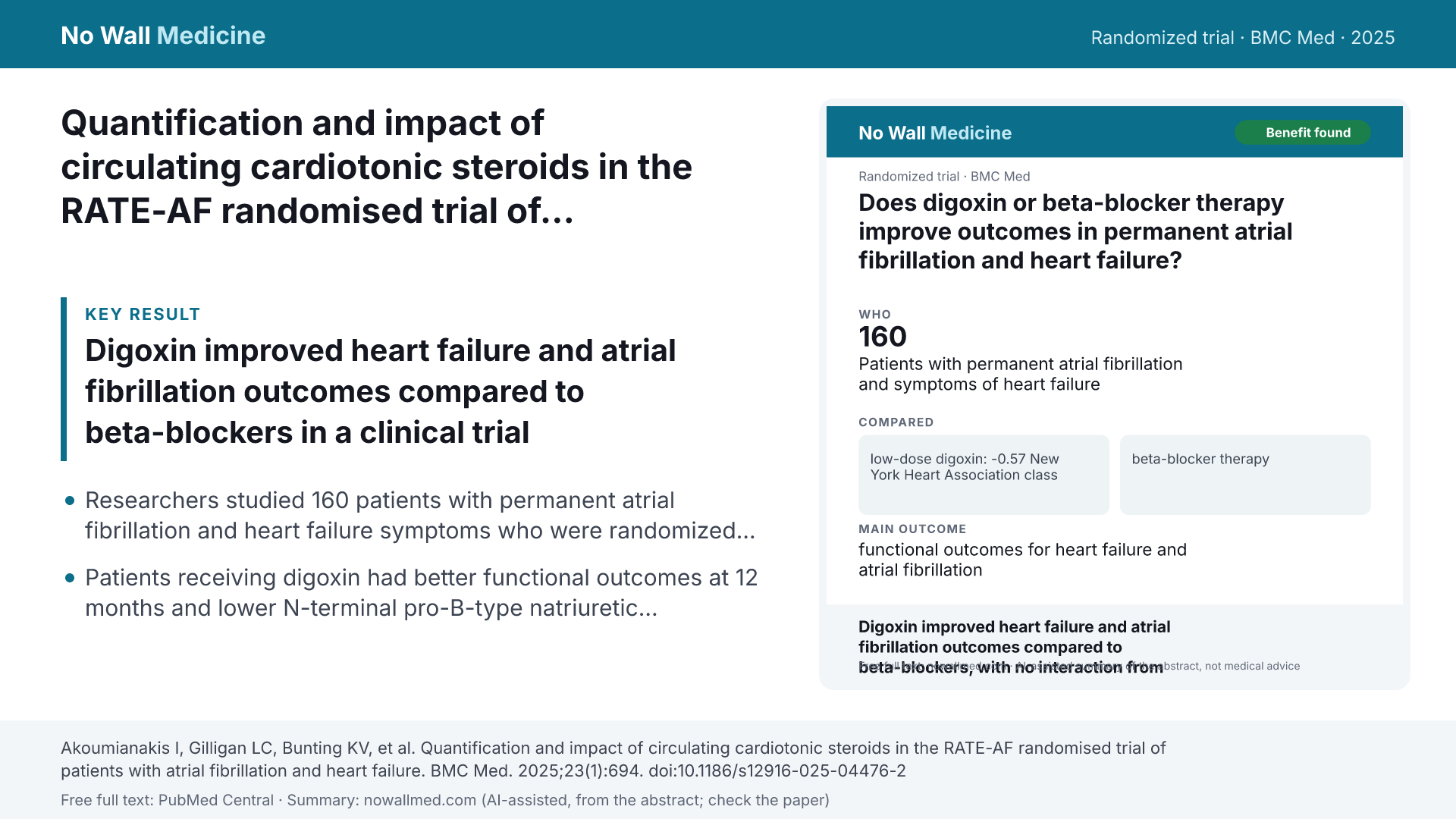
Key result: Digoxin improved heart failure and atrial fibrillation outcomes compared to beta-blockers in a clinical trial
Key points
- Researchers studied 160 patients with permanent atrial fibrillation and heart failure symptoms who were randomized to receive either low-dose digoxin or beta-blocker therapy.
- Patients receiving digoxin had better functional outcomes at 12 months and lower N-terminal pro-B-type natriuretic peptide levels compared to those receiving beta-blockers.
- Digoxin was associated with fewer adverse events and showed no interaction with baseline circulating cardiotonic steroids regarding patient outcomes.
Why it matters: The presence and role of endogenous digoxin-like cardiotonic steroids in humans is controversial.
Limitation the authors note: The study was limited by low circulating levels of cardiotonic steroids.
Discussion prompts
- Would these patients look like yours? Who was left out?
- Is the main outcome one that matters to patients?
- Is the difference large enough to change what you do?
Cite: Akoumianakis I, Gilligan LC, Bunting KV, et al. Quantification and impact of circulating cardiotonic steroids in the RATE-AF randomised trial of patients with atrial fibrillation and heart failure. BMC Med. 2025;23(1):694. doi:10.1186/s12916-025-04476-2
Free full text: PubMed Central · Summary and visual abstract: nowallmed.com/a/quantification-and-impact-of-circulating-cardiotonic-steroids-in-the-18g7oqi/ (AI-assisted from the abstract; check the paper before relying on it).