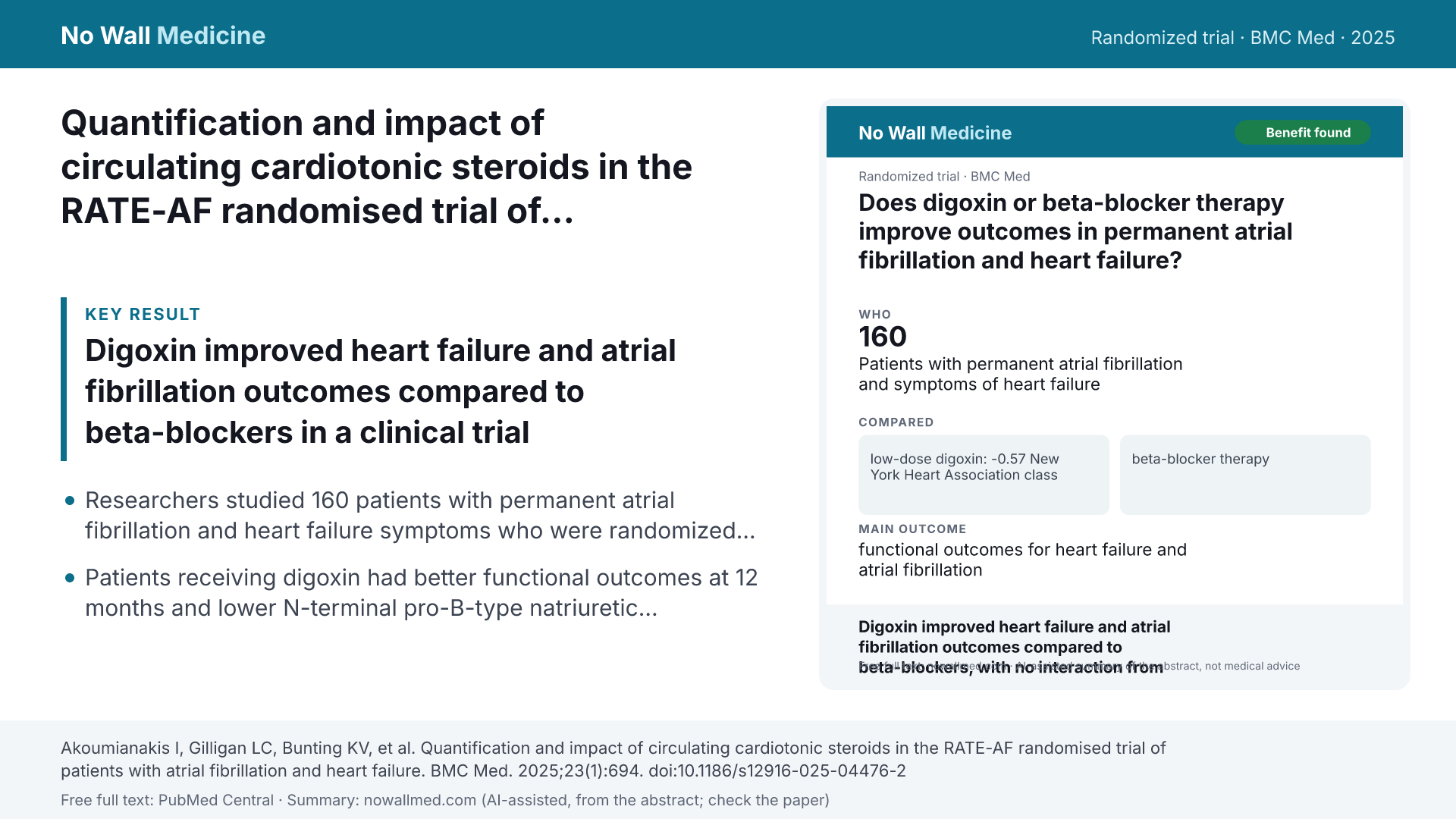
Digoxin improved heart failure and atrial fibrillation outcomes compared to beta-blockers in a clinical trial
Quantification and impact of circulating cardiotonic steroids in the RATE-AF randomised trial of patients with atrial fibrillation and heart failure
Randomized trialBenefit found
Does digoxin or beta-blocker therapy improve outcomes in permanent atrial fibrillation and heart failure?
Who
160
Patients with permanent atrial fibrillation and symptoms of heart failure
Compared
low-dose digoxin: -0.57 New York Heart Association class
beta-blocker therapy
Main outcome
functional outcomes for heart failure and atrial fibrillation
Result: hazard ratio -0.57 (95% CI -0.82 to -0.32)
Bottom line: Digoxin improved heart failure and atrial fibrillation outcomes compared to beta-blockers, with no interaction from endogenous cardiotonic steroids.
Limitation: limited by low circulating levels of cardiotonic steroids
BMC Med · 2025-12-29Download image
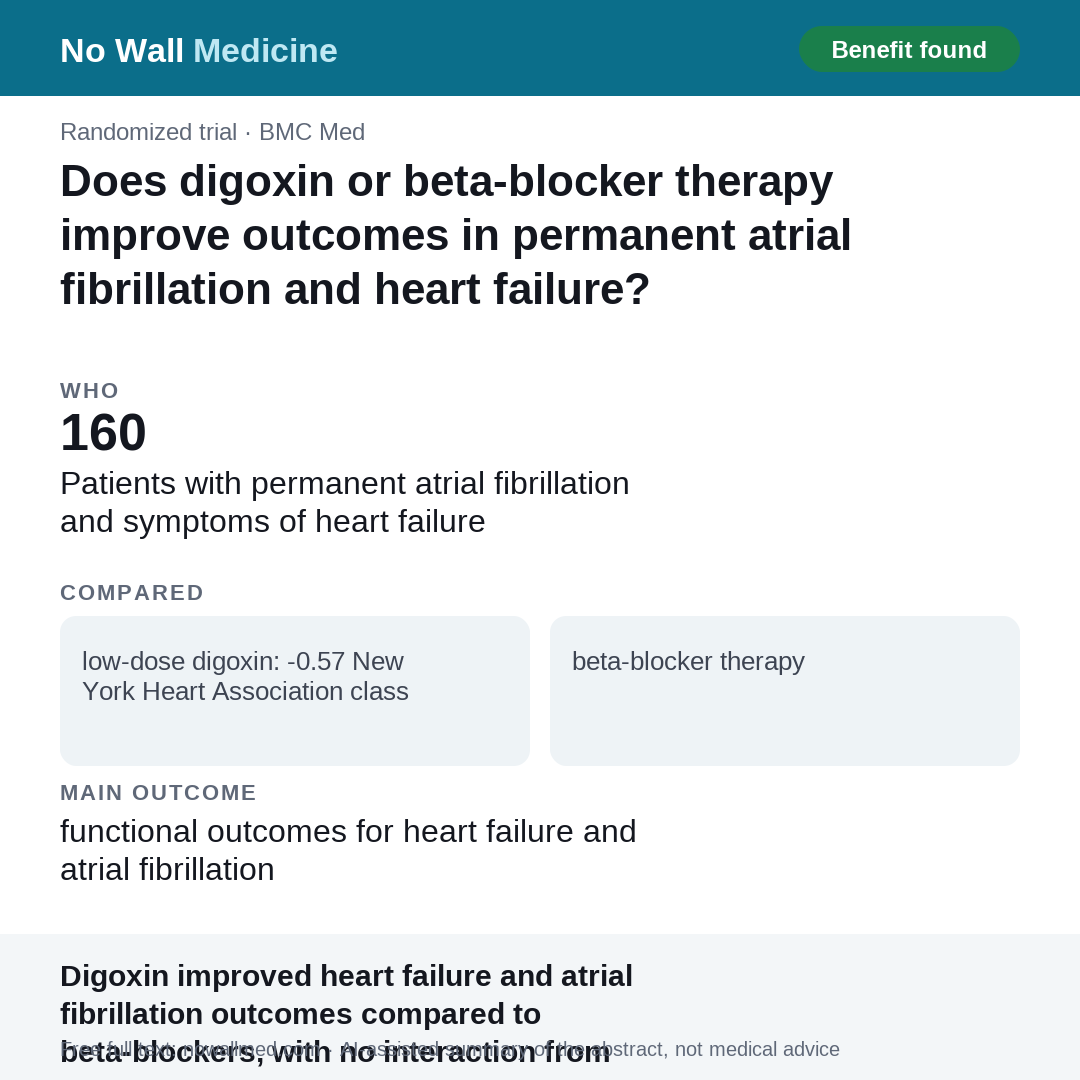
Clinical question: Does digoxin or beta-blocker therapy improve outcomes in permanent atrial fibrillation and heart failure?
Why it matters: The presence and role of endogenous digoxin-like cardiotonic steroids in humans is controversial.
Key points
- Researchers studied 160 patients with permanent atrial fibrillation and heart failure symptoms who were randomized to receive either low-dose digoxin or beta-blocker therapy.
- Patients receiving digoxin had better functional outcomes at 12 months and lower N-terminal pro-B-type natriuretic peptide levels compared to those receiving beta-blockers.
- Digoxin was associated with fewer adverse events and showed no interaction with baseline circulating cardiotonic steroids regarding patient outcomes.
Limitation the authors note: The study was limited by low circulating levels of cardiotonic steroids.
Headline and key points written with AI from the paper’s abstract, with every number checked against it. Read the paper before relying on them.
Was this summary helpful?
Subject terms
Cite this article
Akoumianakis I, Gilligan LC, Bunting KV, et al. Quantification and impact of circulating cardiotonic steroids in the RATE-AF randomised trial of patients with atrial fibrillation and heart failure. BMC Med. 2025. doi:10.1186/s12916-025-04476-2
Spotted a mistake? Suggest a correction