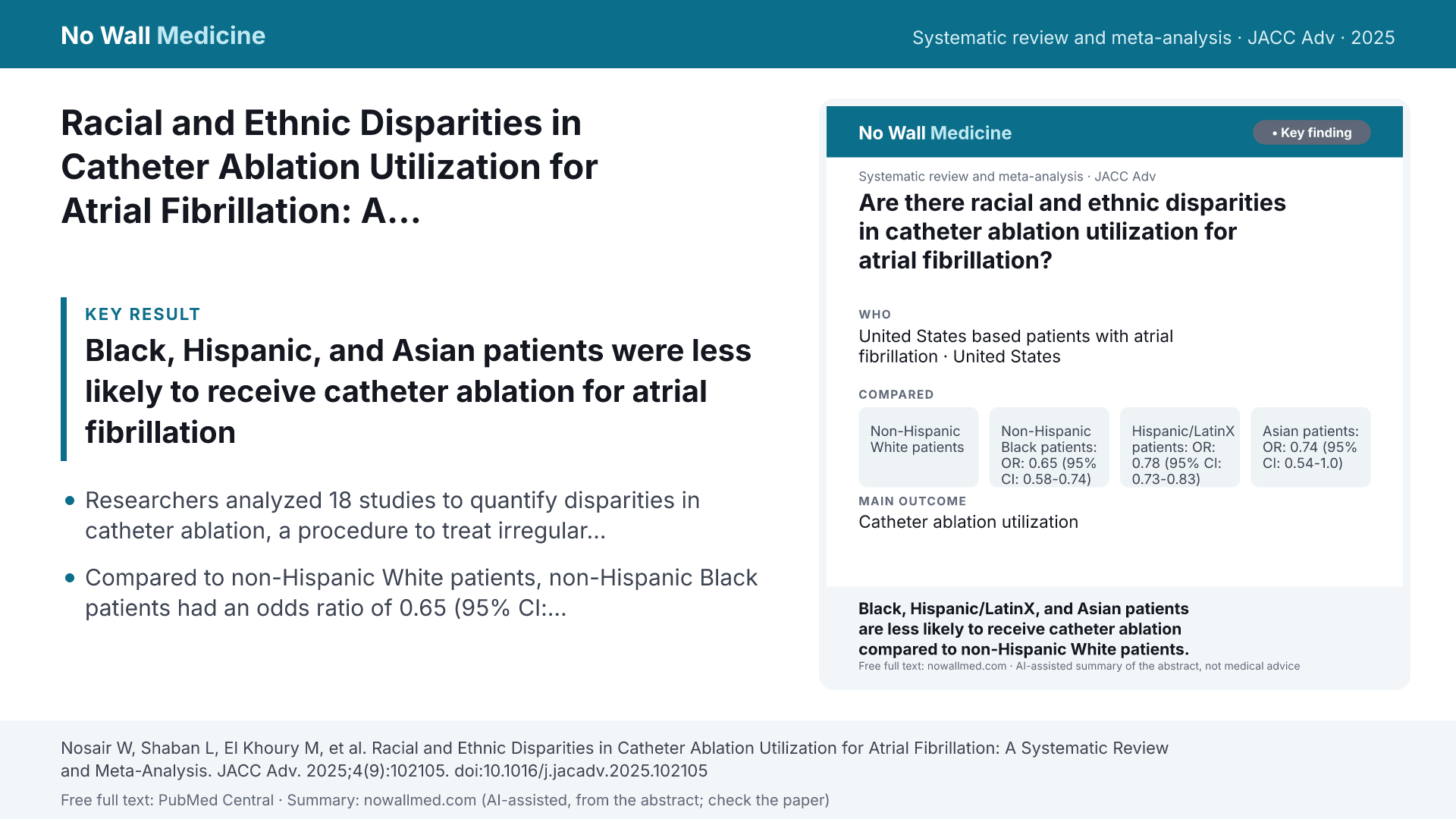
Racial and Ethnic Disparities in Catheter Ablation Utilization for Atrial Fibrillation: A Systematic Review and Meta-Analysis
Key result: Black, Hispanic, and Asian patients were less likely to receive catheter ablation for atrial fibrillation
Key points
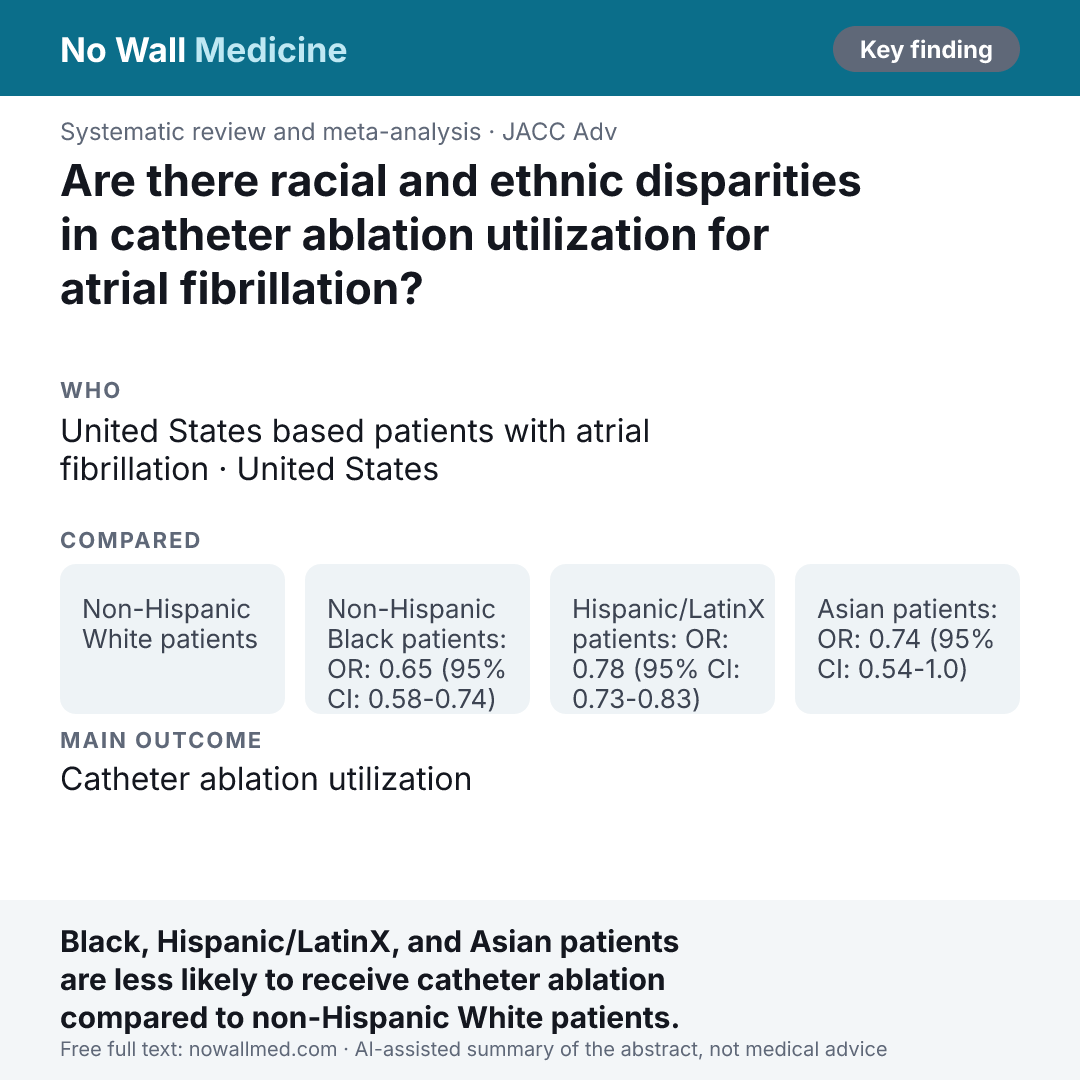
- Researchers analyzed 18 studies to quantify disparities in catheter ablation, a procedure to treat irregular heart rhythms, across different racial and ethnic groups in the United States.
- Compared to non-Hispanic White patients, non-Hispanic Black patients had an odds ratio of 0.65 (95% CI: 0.58-0.74), Hispanic/LatinX patients had 0.78 (95% CI: 0.73-0.83), and Asian patients had 0.74 (95% CI: 0.54-1.0).
- The meta-analysis found a high degree of between-study heterogeneity due to differences in study populations, methods, and how researchers adjusted for other variables.
Why it matters: Inconsistent estimates in existing research make it difficult to compare the scale of disparities and understand the root causes of unequal access to heart procedures.
Limitation the authors note: The authors noted a high degree of between-study heterogeneity likely caused by differences in source population, methods, and risk adjustment.
Discussion prompts
- Would these patients look like yours? Who was left out?
- Is the main outcome one that matters to patients?
- Is the difference large enough to change what you do?
Cite: Nosair W, Shaban L, El Khoury M, et al. Racial and Ethnic Disparities in Catheter Ablation Utilization for Atrial Fibrillation: A Systematic Review and Meta-Analysis. JACC Adv. 2025;4(9):102105. doi:10.1016/j.jacadv.2025.102105
Free full text: PubMed Central · Summary and visual abstract: nowallmed.com/a/racial-and-ethnic-disparities-in-catheter-ablation-utilization-for-1omm6ww/ (AI-assisted from the abstract; check the paper before relying on it).