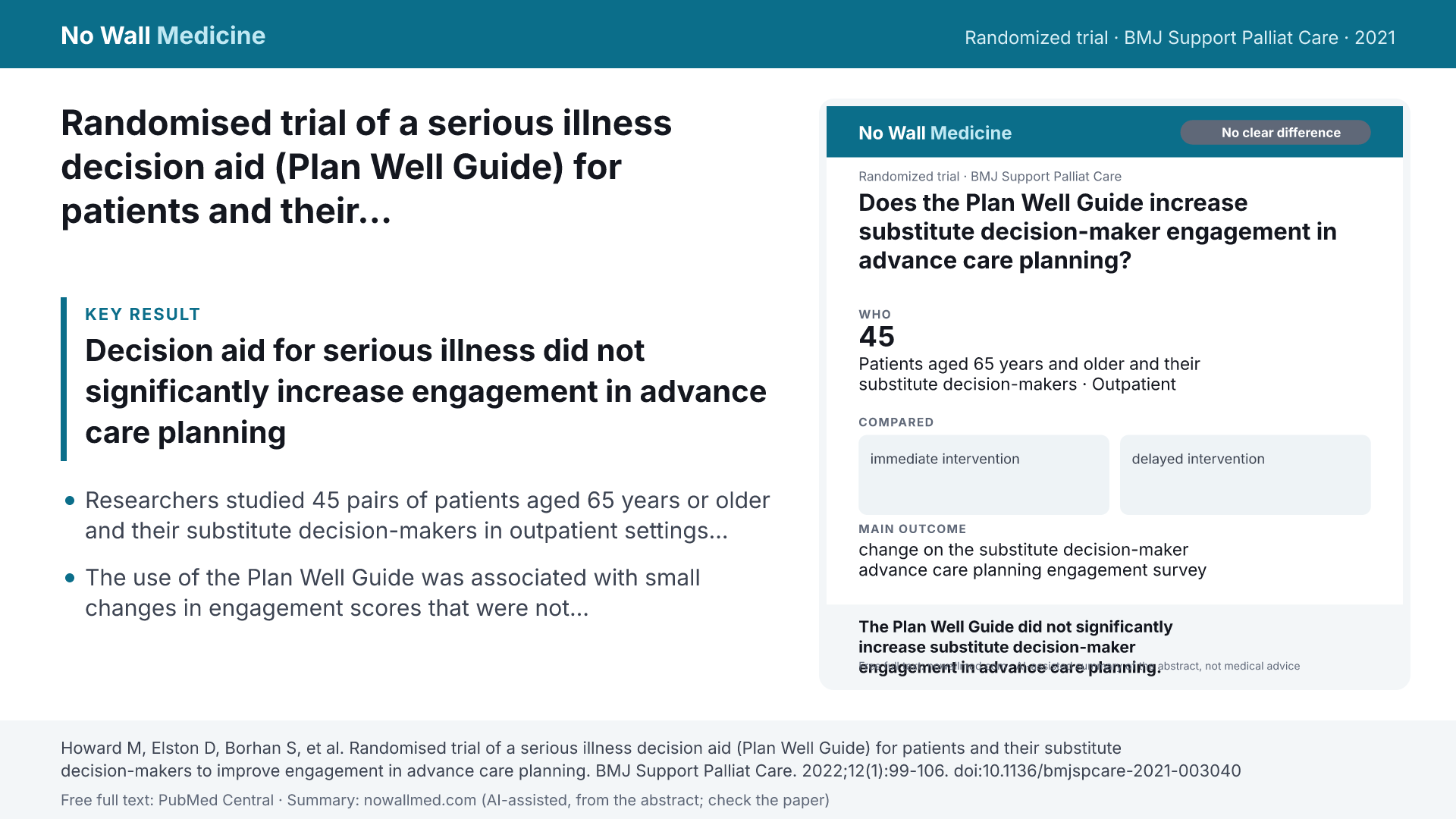
Randomised trial of a serious illness decision aid (Plan Well Guide) for patients and their substitute decision-makers to improve engagement in advance care planning
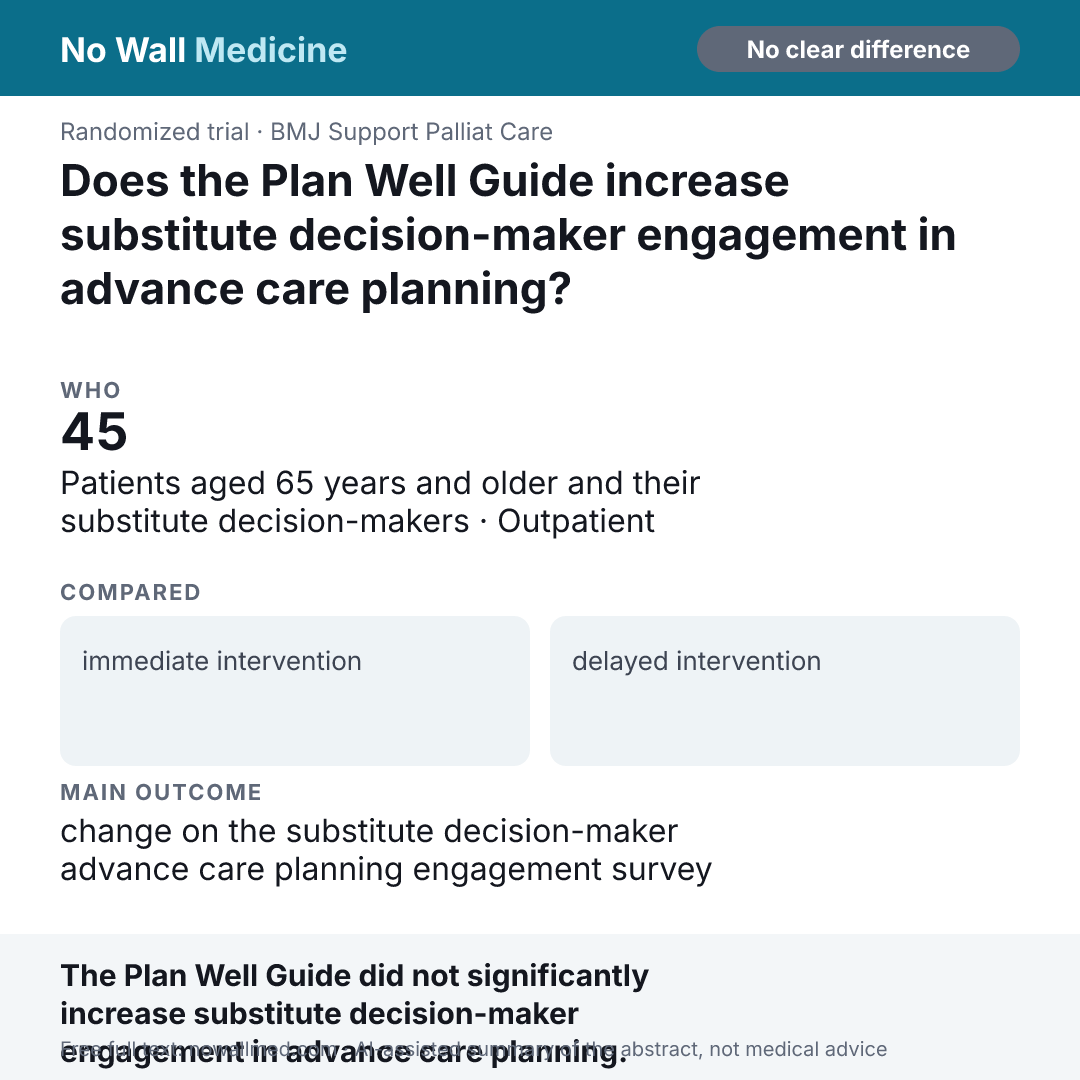
Key result: Decision aid for serious illness did not significantly increase engagement in advance care planning
Key points
- Researchers studied 45 pairs of patients aged 65 years or older and their substitute decision-makers in outpatient settings in Ontario, Canada.
- The use of the Plan Well Guide was associated with small changes in engagement scores that were not statistically significant (MD=+0.2 for substitute decision-makers and MD=+0.4 for patients).
- A subgroup analysis showed significant treatment effects in substitute decision-makers who had a lower-than-median baseline score.
Limitation the authors note: The trial was stopped early because of difficulties with enrolling and following up participants, resulting in a statistically underpowered study.
Discussion prompts
- Would these patients look like yours? Who was left out?
- Is the main outcome one that matters to patients?
- Is the difference large enough to change what you do?
Cite: Howard M, Elston D, Borhan S, et al. Randomised trial of a serious illness decision aid (Plan Well Guide) for patients and their substitute decision-makers to improve engagement in advance care planning. BMJ Support Palliat Care. 2022;12(1):99-106. doi:10.1136/bmjspcare-2021-003040
Free full text: PubMed Central · Summary and visual abstract: nowallmed.com/a/randomised-trial-of-a-serious-illness-decision-aid-plan-well-guide-ah771/ (AI-assisted from the abstract; check the paper before relying on it).